


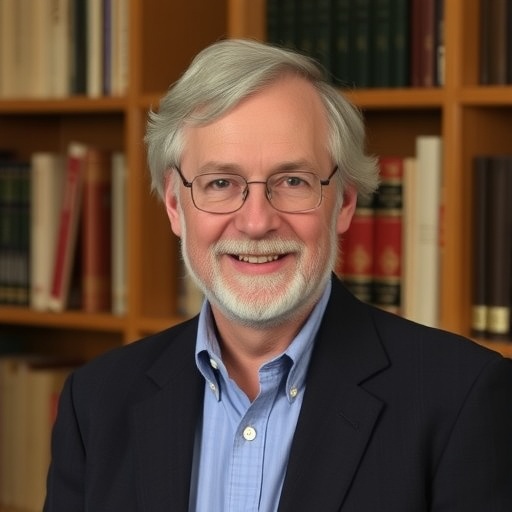
The American Association for the Advancement of Science (AAAS) has bestowed one of its most prestigious honors upon Professor John Bickle of Mississippi State University, electing him as a Fellow in recognition of his substantial contributions to the interdisciplinary nexus of philosophy, neuroscience, and the philosophy of science. This distinguished accolade celebrates individuals whose groundbreaking efforts have meaningfully propelled the advancement of scientific knowledge and its transformative applications, marking them as leaders within the global scientific community. AAAS, a highly respected scientific society established in 1848, began the fellowship tradition in 1874, and has since recognized exceptional contributors to various scientific domains.
Professor Bickle’s election to AAAS Fellow underscores decades of pioneering work that intricately weaves together philosophical inquiry and neuroscientific research. His trajectory represents a unique synthesis of humanities and STEM disciplines, illuminating the sophisticated ways in which foundational biological mechanisms underlie complex cognitive phenomena such as memory, language, and attention. Bickle’s work centers on reductive neuroscience, a rigorous scientific approach that seeks to elucidate how molecular and cellular processes in the brain give rise to emergent mental functions, bridging scales from neurobiology to phenomenology.
Since joining Mississippi State University in 2009, Bickle has significantly influenced both the academic environment and cross-disciplinary research through his leadership as head of the Department of Philosophy and Religion. His scholarship extends beyond traditional disciplinary boundaries, positioning him at the forefront of transdisciplinary collaborations that integrate philosophy, neurobiology, psychology, and cognitive science. This integrative perspective has facilitated novel interpretations of brain evolution and cognition, enhancing understanding of human behavior through comprehensive scientific and philosophical frameworks.
One remarkable aspect of Bickle’s career is his early engagement with neuroscience before the field emerged as a distinct scientific discipline. Holding a bachelor’s degree in philosophy and psychobiology from UCLA and advanced graduate degrees in philosophy with neurobiology concentrations from UC Irvine, he developed a keen awareness of the interconnectedness of biological and philosophical questions. His approach demonstrates that the division between STEM and humanities disciplines can be transcended to foster scientific innovations and conceptual clarity.
Bickle’s research extensively explores the molecular machinery of the brain, focusing on isolating and characterizing proteins that are pivotal for neurobiological function. This foundational work has critical implications for developing therapeutic strategies aimed at treating mental disorders, reflecting a translational dimension inherent in his scientific pursuits. By advancing knowledge of how brain mechanisms underpin cognitive functions, his research contributes to the evolving landscape of neuropharmacology and clinical neuroscience.
His academic output is prolific and impactful, including over 100 peer-reviewed articles and book chapters, alongside four influential books. Notably, his 2014 publication, “Engineering the Next Revolution in Neuroscience,” co-authored with Alcino J. Silva and Anthony Landreth, critically examines emerging methodologies and conceptual shifts driving contemporary neuroscience. This work highlights cutting-edge approaches ranging from genetic engineering to computational modeling, positioning neuroscience on the verge of transformative discoveries.
Bickle’s influence also extends into institutional and community development. He has played an instrumental role in establishing the Deep South Philosophy and Neuroscience Workgroup, a nonprofit organization that fosters collaborations among international stakeholders dedicated to bridging philosophical and neuroscientific research. This initiative exemplifies his commitment to building infrastructural platforms that support interdisciplinary dialogue and scientific progress on a regional and global scale.
Locally at Mississippi State University, Bickle actively mentors students and advocates for curricular innovations designed to broaden access to neuroscience education. He is a key proponent of the newly instituted applied neuroscience minor, a program crafted to accommodate diverse academic backgrounds and prepare students for careers at the intersection of brain science and applied technologies. This advancement reflects his vision for nurturing the next generation of scientists equipped to tackle complex neuroscientific challenges.
His esteemed reputation is further underlined by his recognition as an honorary life member of the Southern Society for Philosophy and Psychology, a distinction accorded to an elite group of social scientists nationwide. Moreover, his longstanding involvement with the AAAS, including serving as a representative of the American Philosophical Association, underscores his dedication to shaping the discourse at the interface of science and philosophy.
Professor Bickle’s upcoming formal recognition at the AAAS Fellows Forum in Washington, D.C., this May will not only celebrate his individual achievements but also spotlight the fertile ground where philosophy and neuroscience converge to yield novel insights. The hybridization of these fields, exemplified by Bickle’s work, epitomizes the cutting edge of scientific inquiry, where conceptual rigor meets empirical investigation.
With a career spanning over four decades, John Bickle exemplifies a scholar who defies disciplinary silos to pioneer integrative approaches that deepen our understanding of brain function and cognition. His ongoing efforts to link theoretical philosophy with experimental neuroscience redefine how the scientific community conceptualizes mental phenomena, promising to inspire future research and therapeutic innovations for years to come.
Cite Scienmag News
Courtney Benton. (March 26, 2026). Philosophy Professor Bickle Elected as Distinguished AAAS Fellow. Scienmag. https://scienmag.com/philosophy-professor-bickle-elected-as-distinguished-aaas-fellow/
Courtney Benton. "Philosophy Professor Bickle Elected as Distinguished AAAS Fellow." Scienmag, 26 March 2026, https://scienmag.com/philosophy-professor-bickle-elected-as-distinguished-aaas-fellow/. Accessed 4 September 2026.
Courtney Benton. "Philosophy Professor Bickle Elected as Distinguished AAAS Fellow." Scienmag. March 26, 2026. https://scienmag.com/philosophy-professor-bickle-elected-as-distinguished-aaas-fellow/


