


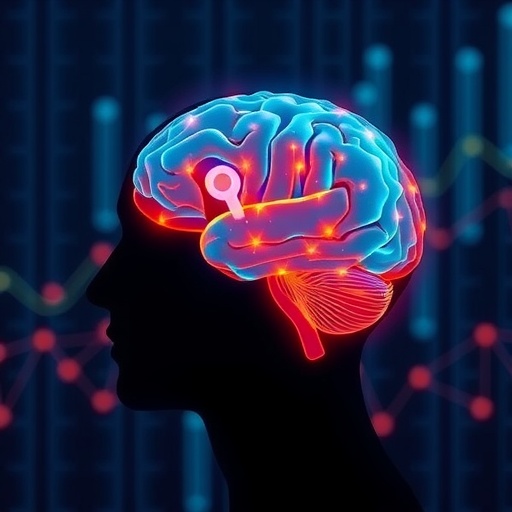
In a groundbreaking advancement that promises to reshape the landscape of mental health diagnostics, a team of researchers has unveiled an innovative method to predict depressive episodes with unprecedented accuracy. This pioneering approach elegantly integrates clinical data, cognitive assessments, biochemical markers, and neurophysiological measurements, marking a holistic stride in understanding and anticipating the onset of depression. Published recently in Translational Psychiatry, the study spearheaded by Sun, W., Yang, H., Sun, C., et al. harnesses the power of multifaceted data to confront one of the most pervasive and debilitating psychiatric conditions worldwide.
Depression, often characterized by episodic crippling mood disturbances, has long eluded precise predictive frameworks. Traditional diagnostic methods rely heavily on self-reported symptoms and clinical interviews, which are inherently subjective and episodic in nature. The new methodology challenges these limitations by adopting a data-driven, integrative model that synthesizes diverse biological and psychological indicators, striving to pinpoint depressive episodes before they fully manifest. This shift to a predictive paradigm could revolutionize how mental health professionals monitor patients, enabling timely interventions that may mitigate severity or prevent relapse altogether.
A cornerstone of this research lies in the amalgamation of clinical features that encapsulate patients’ symptomatic profiles and medical histories alongside cognitive characteristics that reflect their neuropsychological functioning. Cognitive impairments, particularly in domains such as attention, memory, and executive function, frequently precede and accompany depressive episodes. By systematically quantifying these cognitive signatures with standardized assessments, researchers have enriched their predictive arsenal, offering a nuanced understanding of individuals’ mental states beyond conventional symptom checklists.
Complementing clinical and cognitive data, the investigation probes into the realm of inflammatory biochemistry, focusing on inflammation-related proteins detectable in peripheral blood samples. The burgeoning field of psychoneuroimmunology has increasingly implicated systemic inflammation as a pivotal player in the pathophysiology of depression. Elevated cytokines and acute-phase proteins, such as interleukin-6 (IL-6) and C-reactive protein (CRP), serve as biomarkers that not only illuminate the biological undercurrents of mood disorders but also provide measurable targets for prediction. Incorporating these molecular indices, the study bridges the oft-siloed disciplines of psychiatry and immunology, fostering a more integrative biopsychosocial model.
Perhaps the most technologically compelling component originates from the utilization of electroencephalography (EEG) data. EEG, a non-invasive modality that records electrical activity in the brain, offers a real-time window into neural dynamics. The researchers meticulously analyzed EEG signals, extracting features related to brain oscillations and connectivity patterns that have been implicated in depression. Alterations in alpha, beta, and theta rhythms, along with disrupted network coherence, have previously been associated with affective disorders. By leveraging advanced signal processing algorithms and machine learning techniques, the study translates complex neural patterns into predictive metrics with clinical utility.
By integration, the multidisciplinary framework implemented exemplifies a sophisticated fusion of psychiatry, cognitive neuroscience, immunology, and computational analytics. Machine learning models synthesized these heterogeneous datasets, identifying subtle correlations and predictive signatures invisible to traditional statistical scrutiny. The predictive accuracy achieved surpassed previous benchmarks, underscoring the potential of such integrative methodologies to transform diagnostic and prognostic paradigms in psychiatry.
The implications of this research are profound. Accurate prediction of depressive episodes facilitates proactive, personalized care, ultimately reducing the burden on patients, caregivers, and healthcare systems. Early identification enables clinicians to tailor interventions—whether pharmacological, psychotherapeutic, or lifestyle-oriented—precisely when they are most effective, possibly curtailing the debilitating course of illness and improving long-term outcomes.
Moreover, this predictive capacity may aid in stratifying patients for clinical trials, ensuring homogeneity in study populations and enhancing the development of targeted therapies. It introduces possibilities for remote monitoring and telepsychiatric applications, where wearable EEG devices and blood tests could feed data into predictive algorithms, empowering patients and clinicians alike in managing mental health dynamically.
The study also opens avenues for exploring mechanistic pathways underlying depression. Understanding how inflammatory processes intertwine with neural circuit dysfunction and cognitive deficits could inspire novel therapeutic targets. It challenges the prevailing monoamine-centric hypotheses of depression, advocating for a broader, more systemic perspective on mood regulation and pathology.
Ethical and practical considerations accompany these technological advances. Ensuring data privacy, addressing potential biases in predictive models, and preventing stigmatization are paramount as psychiatry embraces big data and AI. Nonetheless, the promise of predictive precision offers a hopeful trajectory toward destigmatizing and demystifying mental illness.
While the research presents compelling progress, the authors acknowledge the necessity for replication in diverse populations and real-world clinical settings. Longitudinal studies tracking patients across varying stages of illness and recovery will be instrumental in refining the predictive models and verifying their generalizability.
In conclusion, this landmark study propels the field toward a future where depressive episodes might be anticipated with scientific rigor and preventative strategies deployed effectively. The convergent use of clinical phenotyping, cognitive profiling, inflammatory biomarkers, and EEG-driven neural metrics, synthesized through advanced computational tools, marks a paradigm shift in depression research and clinical practice. As mental health care steadily gravitates toward precision medicine, such integrative frameworks illuminate a promising path forward, melding cutting-edge research with tangible benefits for those grappling with depression worldwide.
Cite Scienmag News
Glenn Wilkins. (March 26, 2026). Predicting Depression Using Clinical, Cognitive, and EEG Data. Scienmag. https://scienmag.com/predicting-depression-using-clinical-cognitive-and-eeg-data/
Glenn Wilkins. "Predicting Depression Using Clinical, Cognitive, and EEG Data." Scienmag, 26 March 2026, https://scienmag.com/predicting-depression-using-clinical-cognitive-and-eeg-data/. Accessed 6 September 2026.
Glenn Wilkins. "Predicting Depression Using Clinical, Cognitive, and EEG Data." Scienmag. March 26, 2026. https://scienmag.com/predicting-depression-using-clinical-cognitive-and-eeg-data/


