


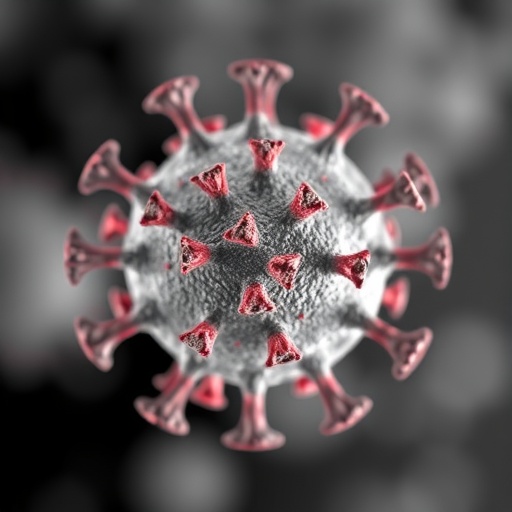
In an era where the complex interplay between persistent viral infections and immune system status is reshaping our understanding of chronic disease management, a groundbreaking study published in Nature Communications in 2026 illuminates the molecular underpinnings of latent cytomegalovirus (CMV) infection within the vulnerable population of people living with HIV (PLHIV). This meticulous research, accomplished by Nguyen, Zhang, Jiang, and colleagues, delves deep into the symbiotic relationship between HIV and CMV, shedding unprecedented light on the molecular signatures and causal factors that govern CMV latency—a state where the virus remains dormant yet poised to reactivate—and how these mechanisms are influenced by the immunocompromised environment of PLHIV.
The persistence of CMV, a member of the herpesvirus family, in latent form presents a significant clinical challenge, particularly among PLHIV, where immune dysregulation creates a fertile ground for viral reactivation and consequential morbidity. While previous clinical observations have linked CMV reactivation with exacerbated inflammation, cardiovascular complications, and accelerated HIV disease progression, the precise molecular landscape underpinning this latency remained elusive until now. Nguyen and team harnessed advanced multi-omics approaches, integrating transcriptomics, epigenomics, and proteomics data to unmask the intricate network of molecular players that enable CMV to evade immune surveillance and persist in a latent state despite systemic immune activation.
Central to their findings is the delineation of distinct epigenetic modifications deployed by CMV within host cells of PLHIV. The researchers identified a constellation of histone modifications and DNA methylation patterns that collectively install a repressive chromatin structure at viral gene loci, effectively silencing lytic cycle genes responsible for viral replication while preserving the expression of latency-associated transcripts. This epigenetic machinery operates in tandem with host immune factors that are modulated in the context of HIV infection, resulting in a fine-tuned equilibrium where CMV maintains latency without eliciting robust immune clearance or detectable viremia.
Intriguingly, the study unveils a subset of latent viral genomes preferentially residing in long-lived myeloid cells, such as monocytes and macrophages, rather than the lymphoid compartment traditionally implicated in HIV pathology. This cellular tropism shift suggests an adaptive viral strategy exploited by CMV to capitalize on the altered immune landscape in PLHIV. These myeloid reservoirs are characterized by unique transcriptional profiles that feature upregulated immune checkpoints and anti-apoptotic signals, providing a protective niche that shields latent viruses from both host immunity and antiretroviral therapy (ART).
The authors also explored the impact of systemic immune activation and inflammation inherent in chronic HIV infection on CMV latency, demonstrating that pro-inflammatory cytokines, including TNF-α and IL-6, can subtly modulate the latent viral epigenome. Instead of triggering full viral reactivation, these inflammatory signals appear to prime the latent genome into a poised state, increasing the likelihood of sporadic viral gene expression that may contribute to subclinical inflammation and immune system exhaustion in PLHIV. This nuanced interplay suggests that CMV latency is not merely a static state but a dynamic balance influenced by host-pathogen interactions and environmental cues.
Extending beyond molecular mechanisms, Nguyen and colleagues employed state-of-the-art single-cell RNA sequencing to capture the heterogeneity of CMV-infected cellular landscapes within PLHIV. They revealed that even within the same cellular population, latent CMV can exploit discrete transcriptional programs to modulate host cell metabolism, immune signaling pathways, and survival mechanisms. This cellular heterogeneity underscores the challenge in targeting latent CMV reservoirs therapeutically since the virus employs diverse survival tactics to withstand both immune pressure and ART.
One of the most striking revelations of the study is the identification of a molecular signature predictive of latent CMV burden among PLHIV, encompassing both host- and viral-derived biomarkers. This signature could pave the way for the development of novel diagnostic tools capable of quantifying latent CMV load and monitoring reactivation risk in clinical settings—a critical advancement given that current methods predominantly detect active viremia and fall short in assessing latent reservoirs. Early identification of individuals at risk for CMV reactivation could inform personalized therapeutic strategies, including tailored anti-CMV and immunomodulatory interventions.
The research also highlights potential therapeutic targets within the epigenetic landscape, proposing that agents capable of specifically modulating histone acetylation and DNA methylation could disrupt the viral latency machinery. Such an intervention approach may synergize with existing ART to curtail CMV-associated complications in PLHIV. However, the authors caution that indiscriminate targeting of epigenetic regulators could have broad effects on host gene expression; hence, the quest for highly selective latency-reversing agents remains paramount.
Furthermore, the study’s integrative approach brings into focus the importance of co-infections in shaping HIV disease trajectories. By elucidating how CMV intricately adapts its latency strategies within the immunological milieu of HIV infection, this research reinvigorates discussions on the clinical management of co-infections and underscores the need for comprehensive viral monitoring beyond HIV itself. CMV’s role as a modulator of immune senescence and inflammation in PLHIV could have far-reaching implications across aging research and chronic disease management.
This extensive molecular characterization complements burgeoning efforts to develop HIV cure strategies, particularly ‘shock and kill’ or ‘block and lock’ approaches aimed at eradicating or permanently silencing HIV reservoirs. Understanding CMV latency dynamics within the same cellular niches may aid in refining therapeutic regimens that concurrently address both viruses, optimizing immune restoration and reducing chronic inflammation.
Importantly, Nguyen et al.’s methodological framework employing multi-omics and single-cell technologies exemplifies the future of virology research, where dissecting virus-host interactions at unparalleled resolution can unravel complex latency paradigms. Such insights are critical for the design of next-generation diagnostics and therapeutics tailored to the molecular idiosyncrasies of chronic viral infections in immunocompromised populations.
The published work also calls attention to the global health burden posed by persistent co-infections like CMV in regions with high HIV prevalence, highlighting disparities in healthcare access and the pressing need for integrated care models that address complex viral interplay. As ART extends life expectancy for PLHIV worldwide, managing latent infections like CMV will increasingly become a linchpin in preventing non-AIDS comorbidities and enhancing quality of life.
Nguyen and colleagues’ study further sets a precedent for longitudinal monitoring of latent viral reservoirs, emphasizing that clinical management should extend beyond viral load suppression to include biomolecular surveillance capable of capturing latent infection dynamics. The predictive molecular signature discovered herein could facilitate such surveillance, enabling proactive interventions before overt clinical manifestations emerge.
In conclusion, this seminal work advances the forefront of virology by decoding the molecular logic of CMV latency within the context of HIV-induced immune dysfunction. It broadens our comprehension of viral persistence mechanisms, redefines therapeutic target landscapes, and compels the scientific community to consider the multifaceted implications of viral latency in chronic disease pathogenesis. As we stand on the cusp of precision medicine, insights from such comprehensive studies will be pivotal in steering personalized interventions that mitigate the burden of latent infections and improve health outcomes for millions worldwide.
Cite Scienmag News
Kristina Jarvis. (March 25, 2026). Unveiling Latent Cytomegalovirus in HIV Patients. Scienmag. https://scienmag.com/unveiling-latent-cytomegalovirus-in-hiv-patients/
Kristina Jarvis. "Unveiling Latent Cytomegalovirus in HIV Patients." Scienmag, 25 March 2026, https://scienmag.com/unveiling-latent-cytomegalovirus-in-hiv-patients/. Accessed 4 September 2026.
Kristina Jarvis. "Unveiling Latent Cytomegalovirus in HIV Patients." Scienmag. March 25, 2026. https://scienmag.com/unveiling-latent-cytomegalovirus-in-hiv-patients/


