


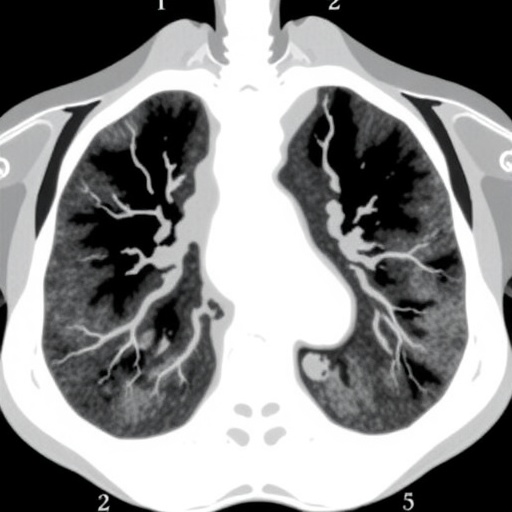
In a compelling new investigation published in JAMA Network Open, researchers have unveiled a critical insight into the long-term lung cancer risk in smokers who initially present with negative findings on low-dose computed tomography (LDCT) scans. This cohort study meticulously tracked a large population of smokers over multiple years, revealing that despite negative baseline LDCT results, these individuals manifest a significantly elevated risk of developing lung cancer after an interval surpassing two years post-screening.
This finding disrupts the conventional understanding that a negative LDCT screening confers prolonged respite from lung cancer risk, highlighting a latency period during which risk escalates substantially. The study’s longitudinal approach allowed the team to capture temporal dynamics in cancer incidence that are obscured in cross-sectional or short-term assessments, underscoring the necessity for recalibrated screening schedules tailored to individual risk trajectories.
Notably, the research illustrates that the heightened lung cancer risk in smokers becomes statistically significant only after two years from the baseline screening. This temporal pattern suggests that the cancer’s oncogenic processes may remain subclinical during the initial years, evading detection despite high-resolution imaging techniques. The implications of this latent period are profound for clinical practice since it challenges current screening paradigms that often advocate for annual imaging or, conversely, extended intervals after negative results.
From a technological standpoint, LDCT has been championed as a sensitive modality for early lung cancer detection, delivering detailed tomographic imaging with substantially reduced radiation exposure compared to conventional CT scans. However, the nuanced natural history of lung cancer development, especially in populations with substantial tobacco exposure, requires a more sophisticated interpretation of LDCT’s diagnostic window and its prognostic limitations.
The study prompts a reevaluation of existing screening guidelines, advocating for a more personalized model that integrates smoking history, cumulative tobacco exposure, and temporal changes in lung pathology, rather than a one-size-fits-all approach based on baseline imaging results alone. Such a precision medicine strategy could leverage biomarkers and risk stratification tools in conjunction with advanced imaging protocols to optimize surveillance frequency and early intervention.
Additionally, the cohort analysis confirms the continuous mutagenic impact of combustion products from tobacco, which perpetuate oncogenic alterations within pulmonary tissues long after cessation or initial negative imaging. This mechanistic insight underscores the importance of sustained vigilance in smokers, even when early screenings do not demonstrate malignancy.
The implications for public health policy are significant. With lung cancer remaining the leading cause of cancer-related mortality worldwide, enhancing screening efficacy through evidence-based interval adjustments may lead to earlier detection rates, improved patient prognosis, and reduced overall mortality. The study’s results pave the way for incorporating personalized risk assessments into national lung cancer screening programs, potentially improving resource allocation and minimizing unnecessary exposure to radiation.
Furthermore, these findings could stimulate technological innovations in imaging and computational analysis. Advanced tomographic modalities, coupled with artificial intelligence-driven image interpretation, could identify subtle, precancerous changes not apparent in conventional LDCT scans, further refining the stratification of high-risk individuals.
This research also shines a spotlight on the crucial role of longitudinal cohort studies in revealing complex, time-dependent disease dynamics that are often overlooked by shorter-term or cross-sectional designs. Through rigorous follow-up and comprehensive data collection, such studies generate invaluable insights that inform both clinical decision-making and public health strategies.
Finally, this study calls for enriched education among healthcare providers and patients about the persistent risks associated with smoking, emphasizing that negative initial screenings do not equate to immunity from lung cancer. It fosters a culture of continuous monitoring and proactive management tailored to individual risk profiles and temporal disease patterns.
Correspondence regarding this landmark study can be directed to Dr. Shaokai Zhang via shaokaizhang@126.com, who is the lead author orchestrating this pivotal research. The full article including detailed methodology, author contributions, funding sources, and disclosures is accessible upon embargo lift through the JAMA Network Open portal.
As the medical community digests these revelations, it becomes increasingly clear that the battle against lung cancer requires a dynamic, longitudinally informed approach where advanced imaging, personalized risk assessment, and vigilant follow-up converge to save lives and mitigate the devastating toll of this insidious disease.
Cite Scienmag News
Nathaniel Bowman. (March 20, 2026). Link Between Tobacco Smoking and Lung Cancer Risk Following Negative Initial Low-Dose CT Scan Results. Scienmag. https://scienmag.com/link-between-tobacco-smoking-and-lung-cancer-risk-following-negative-initial-low-dose-ct-scan-results/
Nathaniel Bowman. "Link Between Tobacco Smoking and Lung Cancer Risk Following Negative Initial Low-Dose CT Scan Results." Scienmag, 20 March 2026, https://scienmag.com/link-between-tobacco-smoking-and-lung-cancer-risk-following-negative-initial-low-dose-ct-scan-results/. Accessed 5 September 2026.
Nathaniel Bowman. "Link Between Tobacco Smoking and Lung Cancer Risk Following Negative Initial Low-Dose CT Scan Results." Scienmag. March 20, 2026. https://scienmag.com/link-between-tobacco-smoking-and-lung-cancer-risk-following-negative-initial-low-dose-ct-scan-results/


