


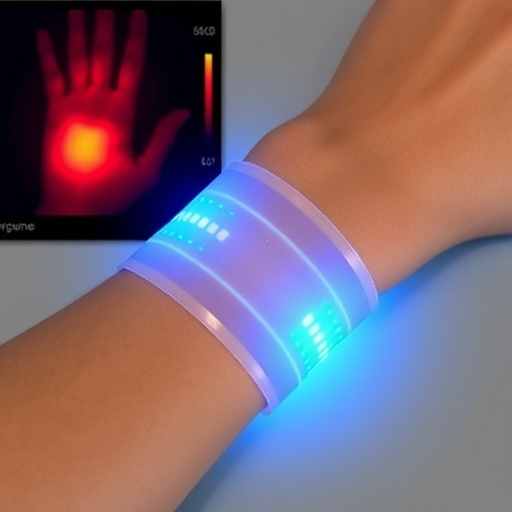
In a groundbreaking advancement that could revolutionize diabetic wound care and neuropathic pain management, researchers have unveiled a novel low-intensity focused ultrasound (LIFU)-activated piezoelectric gel bandage. This innovative approach leverages the synergetic interaction between ultrasound stimulation and piezoelectric biomaterials to expedite tissue repair while simultaneously alleviating chronic pain symptoms commonly afflicting diabetic patients. The study, published in Nature Communications in 2026, offers a visionary glimpse into the future of smart wound dressings—bringing unprecedented healing efficacy coupled with sophisticated pain control, all embedded in a wearable, biocompatible matrix.
Chronic wounds, particularly diabetic foot ulcers, pose one of the most daunting complications of diabetes mellitus, often leading to infection, prolonged hospitalization, and even amputation. Traditional treatment methods, including dressings, topical agents, and systemic therapies, have delivered incremental improvements but rarely address the underlying pathological milieu combining vascular insufficiency, impaired cellular regeneration, and persistent inflammation. The newly developed bandage aims to leapfrog these limitations by integrating mechanobiological principles with advanced piezoelectric technology, offering a dynamic environment conducive to cellular proliferation and extracellular matrix remodeling.
At the core of this technology is a piezoelectric gel formulated from biocompatible polymers embedded with piezoelectric nanoparticles. Piezoelectric materials generate electrical charges in response to mechanical deformation—here, triggered by externally applied low-intensity focused ultrasound waves. This electrical stimulation induces cellular responses pivotal for wound healing, such as enhanced fibroblast migration, keratinocyte proliferation, and angiogenesis. The gel’s viscoelastic properties ensure conformability and adherence to irregular wound surfaces, maintaining intimate contact necessary for therapeutic efficacy.
Low-intensity focused ultrasound serves as the remote activation source, delivering precisely tuned mechanical energy that penetrates tissue layers without causing thermal damage. Unlike high-intensity ultrasound, which may ablate tissue, LIFU operates at intensities that activate the piezoelectric materials without compromising tissue integrity. This spatiotemporally controlled stimulation not only triggers the piezoelectric gel’s electrical response but also enhances local blood microcirculation and modulates inflammatory cascades, creating an optimal biochemical and biophysical microenvironment for tissue regeneration.
The synergy between ultrasound and the piezoelectric gel creates a feedback loop wherein ultrasound-induced mechanical stress elicits piezoelectric charge generation. These charges propagate electrical signals at the wound site, stimulating endogenous cellular mechanisms fundamental to repair. This phenomenon mimics the body’s innate bioelectrical signaling pathways, long known to regulate wound healing, but previously inaccessible for therapeutic manipulation in chronic wounds.
In vivo experiments conducted on diabetic animal models demonstrated significant acceleration in wound closure rates compared to control groups receiving standard care. Histopathological analyses revealed increased density of capillary networks, reduced inflammatory cell infiltration, and enhanced collagen deposition within treated wounds. Furthermore, gene expression profiling indicated upregulation of growth factors such as VEGF and TGF-β, hallmark mediators of angiogenesis and tissue remodeling, confirming the upstream molecular effects instigated by the piezoelectric stimulation.
The low-intensity ultrasound activation introduces a valuable dimension of timed, non-invasive control over the wound healing process. Clinicians can modulate the ultrasound parameters—frequency, intensity, and duty cycle—to tailor treatment regimens according to wound severity and patient responsiveness. This adaptability could mark a significant stride toward personalized medicine in wound care, where healing trajectories are monitored and optimized in real time.
Beyond tissue repair, this study illuminates the piezoelectric gel bandage’s remarkable capability in providing neuropathic pain relief, a frequently overlooked yet debilitating condition among diabetic patients. Neuropathic pain arises from peripheral nerve damage and aberrant sensory signaling, often resilient to pharmacological intervention. The electrical stimulation generated by the piezoelectric gel modulates neuronal excitability and neurotransmitter release pathways, effectively dampening nociceptive signals and enhancing patient comfort during the healing process.
This dual functionality of the bandage—simultaneously accelerating wound healing and mitigating pain—represents a paradigm shift in holistic diabetic wound management. The chronicity of ulcerations combined with persistent neuropathic discomfort currently impose a substantial burden on quality of life, healthcare costs, and clinical resources. Integrating these therapeutic modalities into a single, wearable device offers an elegant and efficient solution.
The research team meticulously optimized the gel’s formulation to ensure biodegradability and minimal immunogenicity, essential attributes for clinical translation. The piezoelectric nanoparticles were uniformly dispersed within the polymer matrix to guarantee consistent charge generation, while the gel’s mechanical strength was tuned to prevent premature degradation during treatment cycles. Moreover, the bandage exhibited excellent storage stability and ease of application, important considerations for potential commercialization.
Mechanistic insights into the piezoelectric activation’s influence on cellular pathways were also elucidated. Electrical currents induced by the gel stimulated voltage-gated calcium channels on cell membranes, triggering intracellular cascades that promote proliferation and differentiation of key skin cells. Additionally, the electrical field facilitated macrophage polarization toward an anti-inflammatory M2 phenotype, crucial for resolving prolonged inflammation and enabling effective wound closure.
The deployment of LIFU further distinguished itself through its non-invasive nature and precise targeting capability. Ultrasound waves can be focused on wound areas several centimeters beneath the skin surface, bypassing intact epidermis and enabling therapy of deeper tissue layers involved in wound pathology. This non-contact stimulation minimizes infection risk and patient discomfort, critical factors in chronic wound environments predisposed to microbial colonization.
Safety assessments verified that repeated application of the combined ultrasound and piezoelectric gel system did not induce adverse tissue reactions or systemic toxicity. Biomarkers of oxidative stress and apoptosis remained within normal ranges, affirming the approach’s biocompatibility. Moreover, behavioral assays in animal models revealed significant reductions in allodynia and hyperalgesia, corresponding with the observed neuropathic pain relief.
This pioneering research heralds a new frontier in bioelectronic medicine, where interfacing materials science, ultrasound physics, and regenerative biology converge to address clinical challenges previously deemed intractable. The implications extend well beyond diabetic wound care, suggesting potential applications in burns, pressure ulcers, and even central nervous system injuries, where controlled electrical stimulation can modulate healing and functional recovery.
Looking forward, clinical trials will be paramount to validate these encouraging preclinical results. Considerations regarding dosage optimization, patient adherence, long-term efficacy, and integration with existing medical devices will shape the pathway to regulatory approval. Nevertheless, the prospect of a smart, activation-controlled dressing that not only heals but also soothes neuropathic pain heralds profound benefits for millions of patients globally.
In sum, the integration of low-intensity focused ultrasound with piezoelectric gel technology embodies a sophisticated, multifunctional strategy poised to transform diabetic wound treatment paradigms. By harnessing the power of mechanically induced electrical stimulation, this approach addresses both the biological complexity of chronic wounds and the symptomatic burden of neuropathic pain—offering a beacon of hope for improved patient outcomes and enhanced quality of life.
Cite Scienmag News
Ophelia Keating. (March 20, 2026). Ultrasound-Activated Gel Bandage Heals Diabetic Wounds. Scienmag. https://scienmag.com/ultrasound-activated-gel-bandage-heals-diabetic-wounds/
Ophelia Keating. "Ultrasound-Activated Gel Bandage Heals Diabetic Wounds." Scienmag, 20 March 2026, https://scienmag.com/ultrasound-activated-gel-bandage-heals-diabetic-wounds/. Accessed 5 September 2026.
Ophelia Keating. "Ultrasound-Activated Gel Bandage Heals Diabetic Wounds." Scienmag. March 20, 2026. https://scienmag.com/ultrasound-activated-gel-bandage-heals-diabetic-wounds/


