


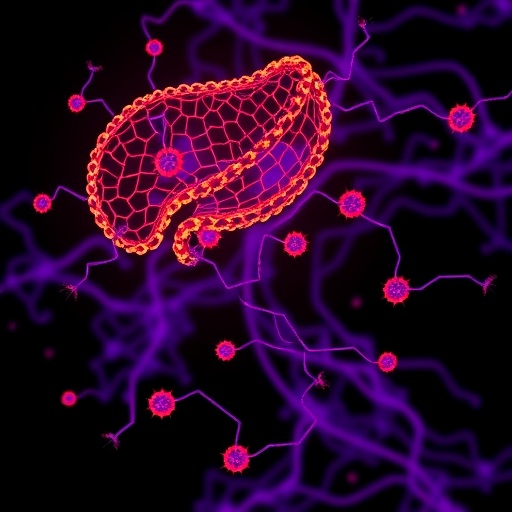
In a groundbreaking study published recently in Genes & Immunity, researchers have unveiled a novel mechanism by which heparin, a long-established anticoagulant, exerts significant protective effects against acute pancreatitis (AP). Acute pancreatitis, a severe and potentially life-threatening inflammatory condition, has long challenged the medical community due to its complex pathogenesis and limited effective therapies. This new research not only advances our understanding of the molecular underpinnings of AP but also highlights the therapeutic potential of targeting pyroptosis, a form of programmed cell death mediated by the NLRP3 inflammasome.
Acute pancreatitis is characterized by abrupt inflammation of the pancreas, often leading to extensive tissue damage and systemic inflammatory responses. At the heart of its pathophysiology lies the activation of the NLRP3 inflammasome, a multi-protein complex instrumental in triggering inflammatory cascades via pyroptosis—an inflammatory form of cell death distinct from apoptosis. The study utilized sophisticated in vivo and in vitro models, including Sprague Dawley rats and AR42J pancreatic acinar cells, to dissect the molecular relationships involved in NLRP3-dependent pyroptosis and the modulating role of heparin.
One of the most pivotal findings of the study is that heparin markedly attenuates AP by inhibiting the activation of the NLRP3 inflammasome. This inhibition was observed through a reduction in pyroptotic cell death, demonstrating that heparin’s beneficial impact extends beyond its conventional anticoagulant properties. The researchers employed assays such as TUNEL and propidium iodide staining to quantitatively and qualitatively assess cell death, while microscopic examinations confirmed reductions in pyroptotic morphology upon heparin treatment.
The molecular intricacies unraveled further identified the involvement of VIRMA, a key methyltransferase associated with m6A RNA modification, as a critical regulator in this pathway. VIRMA expression was found to be significantly upregulated in AP models, implicating its role in exacerbating disease progression. Intriguingly, overexpression of VIRMA negated the protective effects of heparin on pyroptosis, suggesting that VIRMA-driven pathways constitute an essential control point in the inflammatory cascade.
Delving deeper, the study pinpointed KAT2B, a histone acetyltransferase, as a downstream effector in the VIRMA-mediated modulation of pyroptosis. Knocking down KAT2B reversed the pyroptosis-promoting influence of VIRMA, clearly signifying that KAT2B acts as a molecular switch in this pathway. Further mechanistic analysis revealed that VIRMA enhances the stability of KAT2B mRNA by increasing its m6A methylation—an epitranscriptomic modification catalyzed by VIRMA which promotes binding of the ELAVL1 protein, a known mRNA stabilizer.
KAT2B upregulation, driven by VIRMA-dependent m6A modification, leads to increased acetylation of NLRP3 at lysine residue 694. This post-translational modification enhances NLRP3 inflammasome activity, thereby amplifying pyroptotic signaling. Heparin’s action appears to disrupt this axis by inhibiting VIRMA expression and activity, reducing KAT2B levels, and consequently diminishing NLRP3 acetylation. This multi-layered intervention blunts inflammasome activation, thereby reducing cellular pyroptosis and mitigating pancreatic inflammation.
The researchers substantiated their findings through co-immunoprecipitation (Co-IP) and RNA immunoprecipitation (RIP) assays that demonstrated the intimate interactions between VIRMA, KAT2B mRNA, and ELAVL1. Meanwhile, m6A RNA immunoprecipitation (MeRIP) assays confirmed the heightened methylation status of KAT2B transcripts in AP conditions. These comprehensive molecular approaches solidify the conceptual framework that heparin’s therapeutic effects operate via modulation of epitranscriptomic and post-translational modifications.
This study pioneers a conceptual shift by framing acute pancreatitis not merely as an inflammatory disease but as one heavily influenced by RNA methylation dynamics and chromatin remodeling enzymes. The identification of VIRMA and KAT2B as critical nodes opens a new vista for targeted therapeutic development, potentially extending the utility of epigenetic regulators in managing inflammation-driven diseases beyond pancreatitis.
Importantly, the authors also demonstrated that the introduction of wild-type NLRP3 could override heparin’s inhibitory effect on pyroptosis, while co-expression with KAT2B further potentiated this activation. This finding corroborates the functional significance of NLRP3 acetylation in pyroptotic initiation and highlights KAT2B as an amplifier of this process, integral to AP pathogenesis.
The translational implications of these findings are profound. Heparin, a widely used drug with a well-established safety profile, could be repurposed or optimized for treating acute pancreatitis through modulation of inflammasome-mediated pyroptosis. Such a strategy may reduce morbidity and mortality associated with AP, a condition currently managed largely by supportive care with no specific molecular therapy available.
Moreover, this research underscores the broader significance of inflammasome regulation by post-translational modifications, a rapidly evolving field with implications for numerous inflammatory and autoimmune diseases. Targeting the m6A methylation machinery represents a novel therapeutic avenue, and inhibitors or modulators of VIRMA function may emerge as promising candidates for clinical intervention.
Beyond its immediate clinical relevance, this study also enriches the fundamental understanding of how RNA modifications intersect with protein acetylation to regulate innate immune responses. This crosstalk exemplifies the multilayered regulation of cellular inflammatory programs and offers blueprinting for future research exploring RNA epigenetics in immune cell function.
The meticulous dissection of the heparin–VIRMA–KAT2B–NLRP3 axis advances a new paradigm in the management of acute pancreatitis by bridging molecular genetics, epigenetics, and immunology. This convergence not only elucidates the disease’s complex biology but also repositions a well-known drug within a modern molecular framework, poised to transform treatment approaches.
In conclusion, the work by Tang and colleagues heralds a significant advance in both the conceptual and therapeutic landscapes of acute pancreatitis. By elucidating the molecular basis of heparin’s anti-pyroptotic effects, the study lays a strong foundation for future clinical trials and drug development aimed at mitigating this devastating disease through modulation of inflammasome activity and epitranscriptomic regulation.
Cite Scienmag News
Ophelia Keating. (March 19, 2026). Heparin Blocks NLRP3-Driven Pyroptosis in Pancreatitis. Scienmag. https://scienmag.com/heparin-blocks-nlrp3-driven-pyroptosis-in-pancreatitis/
Ophelia Keating. "Heparin Blocks NLRP3-Driven Pyroptosis in Pancreatitis." Scienmag, 19 March 2026, https://scienmag.com/heparin-blocks-nlrp3-driven-pyroptosis-in-pancreatitis/. Accessed 5 September 2026.
Ophelia Keating. "Heparin Blocks NLRP3-Driven Pyroptosis in Pancreatitis." Scienmag. March 19, 2026. https://scienmag.com/heparin-blocks-nlrp3-driven-pyroptosis-in-pancreatitis/


