


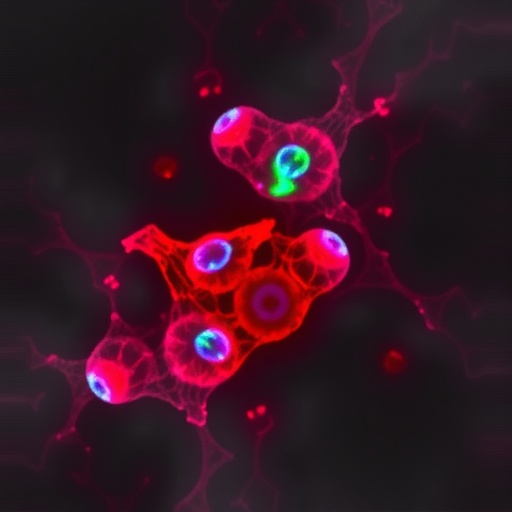
In a groundbreaking new study published in Cell Death Discovery, researchers have unveiled a promising molecular strategy to combat traumatic optic nerve injury—a leading cause of vision loss worldwide. The team, led by Shahror, Morris, Cunningham, and colleagues, has identified the deletion of histone deacetylase 3 (HDAC3) in myeloid cells as a potent neuroprotective mechanism that drastically mitigates damage following traumatic optic injury. This innovative approach signals a turning point in neuroprotection research, offering hope for therapies aimed at preserving vision after acute neuronal trauma.
Traumatic optic nerve injury (TONI) encompasses damage resulting from physical trauma to the optic nerve. The injury often triggers a cascade of neuroinflammatory processes, culminating in retinal ganglion cell (RGC) death and irreversible vision loss. Despite advances in understanding TONI’s pathophysiology, effective therapeutics remain elusive. The study in question delves into the immune system’s role, particularly focusing on myeloid cells—key players in innate immunity that populate the injured neural environment.
Histone deacetylases (HDACs) regulate gene expression by altering chromatin structure and are implicated in numerous neurodegenerative conditions. Among the class I HDAC enzymes, HDAC3 has attracted particular interest for its involvement in inflammatory responses. Shahror et al. hypothesized that HDAC3 in myeloid cells promotes pathological inflammation following optic nerve trauma, exacerbating neuronal loss. Using advanced genetic tools to selectively delete HDAC3 in these immune cells, the researchers probed the consequent effects on optic nerve injury outcomes.
The study deployed a mouse model that mimics human TONI, allowing precise manipulation of gene expression in myeloid cells. Animals with targeted deletion of HDAC3 were subjected to traumatic injury, followed by rigorous monitoring of retinal and optic nerve integrity. Remarkably, the ablation of HDAC3 in myeloid populations significantly enhanced survival of RGCs and preserved visual function compared to controls. This finding underscores the deleterious role HDAC3-containing myeloid cells play in driving optic nerve degeneration.
At the molecular level, HDAC3 deficiency altered the transcriptional landscape of myeloid cells, dampening pro-inflammatory cytokine secretion and fostering an environment conducive to neuronal recovery. The team identified downstream signaling changes that suppressed microglial activation and infiltration of peripheral macrophages to the injury site. This tempered immune response starkly contrasts the exacerbated neurotoxicity commonly observed after trauma, revealing HDAC3 as a critical regulator of myeloid cell behavior.
Intriguingly, the protective effects of myeloid HDAC3 deletion were associated with increased expression of neurotrophic factors, molecules essential for neuronal survival and axonal regeneration. This duality—dampening deleterious inflammation while promoting trophic support—may represent a unique advantage of targeting HDAC3 in myeloid cells. Such a multifaceted approach addresses the complex pathophysiology of traumatic optic injury more effectively than strategies solely focusing on neuroinflammation or neuroprotection.
The implications of these findings reach beyond ophthalmology. Myeloid cells and HDAC3 are similarly implicated in a spectrum of central nervous system (CNS) injuries, including spinal cord trauma and cerebral ischemia. As such, HDAC3 inhibition in myeloid populations could emerge as a universal therapeutic strategy for diverse neurotraumatic conditions. Targeted modulation of this pathway holds promise for attenuating secondary injury cascades that often dictate long-term outcomes.
From a translational standpoint, the study raises exciting prospects for drug development. Small molecule HDAC3 inhibitors, some already undergoing clinical trials for other indications, might be repurposed to treat TONI. However, systemic HDAC inhibition carries risks of off-target effects; thus, devising delivery systems or molecules that specifically target myeloid cells will be critical for clinical success. The researchers emphasize the importance of selective modulation to harness neuroprotection without compromising systemic immune function.
The rigor of Shahror et al.’s approach extends to their comprehensive phenotypic analyses, employing state-of-the-art imaging, electrophysiological recordings, and behavioral testing to assess vision. These multidimensional evaluations ensure that benefits reflect true functional preservation, not mere histological observations. The robust experimental design strengthens confidence in the therapeutic potential of myeloid HDAC3 deletion.
In shedding light on the nuanced role of immune cell epigenetics in optic nerve injury, the study illuminates a paradigm shift in neurotrauma research. Rather than viewing immune cells solely as destructive agents, this work highlights their plasticity and therapeutic manipulability. It invites a broader reexamination of how immune cell epigenetic regulators like HDAC3 influence neural outcomes and how these pathways can be harnessed for regenerative medicine.
As the field moves forward, further research will be necessary to unravel the complex network of genes and signaling pathways influenced by HDAC3 in myeloid populations. Delineating the intersection between epigenetic modulation, inflammation, and neurotrophic support offers fertile ground for discovery. Moreover, exploring combinatorial therapies that pair HDAC3 inhibition with neural repair strategies may unlock unprecedented restoration of vision after injury.
In conclusion, the meticulous work by Shahror and colleagues represents a significant advance in understanding and potentially treating traumatic optic nerve injury. By precisely targeting HDAC3 within myeloid cells, they have identified a molecular switch that protects neurons from secondary damage following trauma. This insight promises to pave the way for new, targeted neuroprotective therapies capable of mitigating vision loss from optic injuries, thus profoundly impacting patient care and quality of life.
Their novel findings will undoubtedly stimulate a wave of follow-up studies aimed at translating this bench-side discovery into bedside treatments. The prospect of preserving or even restoring vision after traumatic insult moves closer to reality, driven by sophisticated epigenetic interventions like myeloid HDAC3 modulation. This research exemplifies the power of integrating immunology, epigenetics, and neuroscience to tackle pressing clinical challenges.
As clinical interest intensifies, the ophthalmic community eagerly anticipates the development of HDAC3-targeted therapeutics and their evaluation in human trials. Success in this arena could transform management paradigms for optic nerve trauma and broader neurodegenerative disorders where inflammation is a key driver. Until then, the current study stands as a beacon of hope, illuminating pathways toward meaningful neuroprotection and functional recovery after devastating nervous system injuries.
Cite Scienmag News
Juliet Wilcox. (March 19, 2026). Myeloid HDAC3 Deletion Shields Against Optic Injury. Scienmag. https://scienmag.com/myeloid-hdac3-deletion-shields-against-optic-injury/
Juliet Wilcox. "Myeloid HDAC3 Deletion Shields Against Optic Injury." Scienmag, 19 March 2026, https://scienmag.com/myeloid-hdac3-deletion-shields-against-optic-injury/. Accessed 3 September 2026.
Juliet Wilcox. "Myeloid HDAC3 Deletion Shields Against Optic Injury." Scienmag. March 19, 2026. https://scienmag.com/myeloid-hdac3-deletion-shields-against-optic-injury/


