


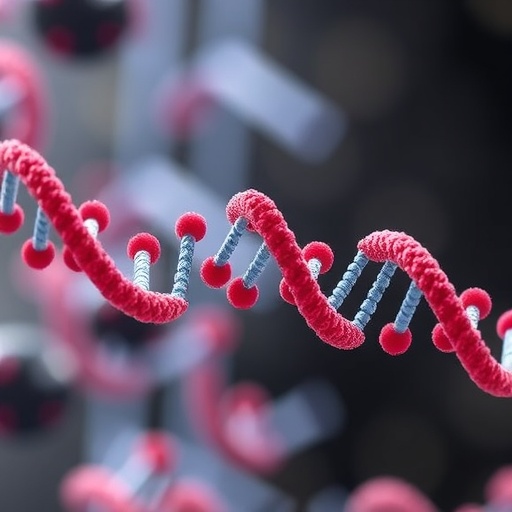
In a groundbreaking development that could reshape the fight against COVID-19 and related viral diseases, researchers have unveiled a synthetic G-quadruplex DNA molecule with potent inhibitory effects on the SARS-CoV-2 helicase enzyme. This discovery not only opens new avenues for antiviral drug design but also highlights the molecule’s multifaceted properties, including anti-inflammatory and antioxidative actions, making it a potential game-changer in therapeutic interventions.
SARS-CoV-2, the virus responsible for the ongoing global pandemic, relies heavily on its helicase enzyme—an essential molecular motor facilitating the unwinding of viral RNA during replication. By targeting this vital enzyme, scientists aim to disrupt the virus’s ability to reproduce within host cells. The newly synthesized G-quadruplex DNA exhibits a novel mechanism by specifically binding to and inhibiting the helicase, thereby halting viral proliferation at an early stage of infection.
The innovation stems from the specialized structure of G-quadruplexes—four-stranded DNA or RNA formations rich in guanine bases that stabilize nucleic acid configurations. These unique structural conformations have been increasingly recognized for their biological roles and as promising drug targets. The synthetic nature of this G-quadruplex DNA enables precise control over its stability and affinity, essential factors when designing molecules that can effectively interfere with viral enzymes.
Chemical characterization and biophysical assays have demonstrated that the synthetic G-quadruplex binds with high specificity to the SARS-CoV-2 helicase’s active sites, inhibiting its unwinding capability. This interaction impedes the helicase from processing viral RNA, a critical step required for viral genome replication and transcription. These findings were corroborated by enzyme kinetics studies, revealing a significant reduction in helicase activity even at low concentrations of the inhibitor.
Importantly, the inhibitory effects of this synthetic G-quadruplex DNA translate into substantial antiviral efficacy. In cultured human cell models infected with SARS-CoV-2, treatment with the molecule led to a marked decrease in viral load, demonstrating potent suppression of viral replication. This antiviral activity positions the G-quadruplex inhibitor as a promising candidate for further development into effective therapeutic agents.
Beyond its antiviral potential, the synthetic G-quadruplex DNA exhibits anti-inflammatory properties, addressing another critical aspect of COVID-19 pathophysiology. Severe cases of the disease are often characterized by hyperinflammatory responses, contributing to tissue damage and respiratory failure. The molecule modulates key inflammatory pathways, reducing the production of pro-inflammatory cytokines, thus potentially mitigating the cytokine storm phenomenon associated with critical illness.
Additionally, antioxidative effects of the synthetic G-quadruplex have been observed. Oxidative stress plays a pivotal role in viral pathogenesis and host tissue injury. By scavenging reactive oxygen species and enhancing endogenous antioxidant defenses, the molecule helps maintain cellular redox balance, thereby protecting cells from oxidative damage linked to viral infection and inflammation.
The dual antiviral and immunomodulatory profile of this synthetic G-quadruplex DNA introduces a multifaceted approach to combating SARS-CoV-2, a strategy that could prove vital against emerging variants and related coronaviruses. Its ability to simultaneously inhibit viral replication and control inflammatory and oxidative stress pathways underscores its therapeutic versatility and potential superiority over current mono-target drugs.
Structurally, the design of this synthetic G-quadruplex was optimized through iterative molecular modeling and synthesis, aiming for enhanced binding affinity and metabolic stability. These enhancements ensure the compound’s effectiveness within the physiological milieu, overcoming challenges typically faced by nucleic acid-based therapeutics, such as degradation and off-target effects.
Pharmacodynamic and safety profiles in preclinical evaluations reveal favorable characteristics. The synthetic G-quadruplex exhibited low cytotoxicity in host cells at therapeutic concentrations and demonstrated efficient cellular uptake. Such properties are critical for translational potential and underline the compound’s suitability for further clinical development.
The innovation also leverages cutting-edge delivery mechanisms to enhance bioavailability and target specificity. Encapsulation approaches and conjugation strategies are being explored to facilitate precise delivery to infected tissues, minimize systemic exposure, and amplify therapeutic indices.
This discovery emerges amid intense global efforts to diversify and enhance antiviral strategies. While vaccines remain the cornerstone of preventive measures, antiviral agents targeting viral replication and pathogenic mechanisms remain indispensable, especially for treating active infections and addressing viral mutations that partially escape vaccine-induced immunity.
Future directions include detailed in vivo studies to assess the therapeutic efficacy and safety of the synthetic G-quadruplex DNA in animal models of SARS-CoV-2 infection. Additionally, exploring synergistic effects with existing antiviral drugs could potentiate treatment outcomes and aid in overcoming drug resistance challenges.
Moreover, the potential extension of this approach to other viral helicases broadens the horizon of its impact. Considering the conserved nature of helicase enzymes among diverse viruses, this synthetic G-quadruplex platform holds promise as a foundational scaffold for a new class of broad-spectrum antiviral agents.
The multifaceted biological activities of the synthetic G-quadruplex DNA, combined with its high specificity and favorable safety profile, mark it as a milestone in nucleic acid-based therapeutics. Its development underscores the power of innovative molecular design and interdisciplinary research in addressing formidable biomedical challenges posed by emerging infectious diseases.
As the global scientific community continues to unravel the complexities of viral replication and host-pathogen interactions, discoveries such as this synthetic G-quadruplex DNA will undoubtedly serve as beacons guiding future antiviral drug discovery and development efforts toward more effective and resilient healthcare solutions.
Cite Scienmag News
Kristina Jarvis. (March 18, 2026). Synthetic G-Quadruplex DNA Inhibits SARS-CoV-2 Helicase. Scienmag. https://scienmag.com/synthetic-g-quadruplex-dna-inhibits-sars-cov-2-helicase/
Kristina Jarvis. "Synthetic G-Quadruplex DNA Inhibits SARS-CoV-2 Helicase." Scienmag, 18 March 2026, https://scienmag.com/synthetic-g-quadruplex-dna-inhibits-sars-cov-2-helicase/. Accessed 4 September 2026.
Kristina Jarvis. "Synthetic G-Quadruplex DNA Inhibits SARS-CoV-2 Helicase." Scienmag. March 18, 2026. https://scienmag.com/synthetic-g-quadruplex-dna-inhibits-sars-cov-2-helicase/


