


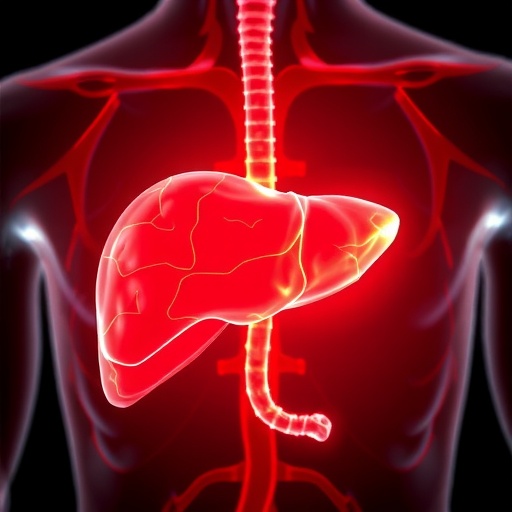
As global temperatures continue to soar, occupational exposure to high ambient heat has emerged as an insidious threat to human health, extending beyond the well-documented heat stroke and dehydration risks. Recent groundbreaking research published in the Journal of Exposure Science & Environmental Epidemiology elucidates a sophisticated link between sustained heat exposure in the workplace and liver function impairment. This new study, conducted by Yan, Yang, Li, and colleagues, unveils complex biological pathways that suggest chronic heat stress could compromise liver health through inflammatory mechanisms, with implications that ripple across occupational health policy and clinical practice.
The liver, a vital organ responsible for metabolic detoxification, protein synthesis, and immune modulation, appears particularly vulnerable to the physiologic stress imposed by prolonged heat exposure. Workers who endure high temperatures as part of their routine occupational environment, such as in foundries, construction sites, or agricultural fields, exhibit subtle yet measurable alterations in liver enzyme levels and function. These biochemical changes precede overt hepatic disease, signaling a potential silent epidemic of heat-induced liver dysfunction that has historically evaded recognition.
Yan et al.’s study adopts a robust epidemiological framework to explore the nuanced interplay between heat exposure, inflammatory cell dynamics, and liver function among an occupational cohort. Utilizing a cohort of heat-exposed workers alongside matched controls, the researchers meticulously quantified ambient heat indices alongside serial measurements of hepatic biomarkers and inflammatory cell profiles. The study’s novelty lies in investigating not only the direct association between heat and liver function but also the mediation role played by immune cell populations in this process.
At the core of the findings is the identification of elevated neutrophil and monocyte counts as pivotal mediators that bridge heat stress with liver enzyme abnormalities. These inflammatory cells, components of the innate immune system, appear activated by heat-induced cellular stress in peripheral tissues, subsequently infiltrating hepatic tissue and exacerbating local inflammation. This inflammatory cascade contributes to hepatocellular injury, as reflected by increased serum alanine aminotransferase (ALT) and aspartate aminotransferase (AST) levels. Such data fills a critical gap in understanding the microenvironmental crosstalk that translates external thermal burden into internal biochemical disruption.
The research further delves into the complex modification of risk by age, revealing that older workers exhibit amplified vulnerability to heat-mediated liver function perturbations. This moderation effect implicates age-related declines in thermoregulatory capacity, immunosenescence, and cumulative exposure history as crucial modulators of susceptibility. Older individuals’ diminished physiological resilience underscores the need for age-specific workplace interventions and heat stress mitigation policies aimed at safeguarding the aging workforce.
Beyond the cellular and epidemiological findings, the study sparks urgent discussions on occupational health governance. Current heat exposure guidelines primarily emphasize acute illness prevention, neglecting the stealthy, cumulative impact on chronic organ systems such as the liver. This research advocates for integrating routine liver function monitoring and inflammatory marker assessments into occupational health surveillance, particularly for heat-exposed populations in vulnerable age groups.
Technologically, the study leverages advanced biomonitoring and statistical mediation models to dissect the multifactorial pathways linking environment to organ dysfunction. The integration of continuous ambient temperature logging with periodic blood sampling exemplifies the cutting-edge methodology required to unravel complex exposure-health outcome relationships. Such methodological rigor sets a new standard for environmental health research, reinforcing the necessity of multidimensional assessment approaches.
On a molecular level, the findings provoke a reevaluation of heat stress beyond its thermodynamic parameters. Heat induces protein misfolding, membrane disruption, and oxidative stress at the cellular level, triggering innate immune responses that, in susceptible individuals, cascade into systemic inflammation. These molecular perturbations likely underpin the inflammatory cell recruitment observed and the consequent hepatic insults. This mechanistic insight offers fertile ground for future investigations targeting molecular therapeutics to mitigate heat-induced liver injury.
The public health ramifications are profound, particularly as climate change forecasts predict increased frequency, intensity, and duration of heatwaves globally. Millions of workers exposed to elevated ambient temperatures face potential long-term liver health consequences previously unaccounted for. This study presses for proactive heat adaptation strategies in occupational settings, encompassing engineering controls, work-rest cycles, hydration protocols, and possibly pharmacological interventions to attenuate inflammatory responses.
Moreover, the research encourages cross-disciplinary collaboration, bridging occupational medicine, environmental epidemiology, immunology, and hepatology. Such collaboration is essential to develop integrative models that accurately predict individual and population-level risk stemming from thermal occupational hazards. Validation of these findings in diverse populations and incorporating genetic predisposition factors remain critical next steps.
The publication’s impact extends to regulatory bodies tasked with updating occupational health standards. With evidence mounting that chronic heat exposure exerts tangible, deleterious effects on liver function via inflammation, policymakers must recalibrate workplace safety mandates. This includes broadening heat exposure assessments to encompass chronic outcomes and enhancing worker education about subtle health effects beyond immediate heat illnesses.
Clinicians also gain valuable insights, as recognition of heat-associated hepatic dysfunction may alter diagnostic vigilance and management of workers presenting with unexplained liver enzyme elevation. Routine occupational history taking should incorporate detailed environmental exposure assessment, and clinicians may need to collaborate with occupational health specialists to devise comprehensive care plans.
In addition, the study paves the way for exploring potential biomarkers indicative of early heat-induced hepatic injury. The inflammatory cells identified as key mediators could serve as accessible markers for surveillance, enabling early intervention before irreversible liver damage ensues. Development of such biomarkers would revolutionize preventive occupational health screening in heat-exposed workers.
Educational initiatives informed by this research can empower workers to recognize early signs of heat-related liver dysfunction and engage in protective behaviors. Efforts must address vulnerable subpopulations, including older employees and those with preexisting liver conditions, to mitigate exacerbated risks. Amplifying awareness at grassroots and organizational levels is vital to translate scientific findings into tangible health improvements.
In essence, Yan and colleagues have catalyzed a paradigm shift in understanding occupational heat exposure, transcending classical heat illnesses to reveal underlying inflammatory-mediated hepatic compromise. Their work represents a critical nexus connecting climate change, occupational health, immunology, and hepatology, providing a compelling framework to confront emerging health challenges posed by our warming planet. As the global workforce adapts to new thermal realities, integrating these insights will be paramount to preserving lifelong liver health.
With climate change relentlessly intensifying, the urgency of this research cannot be overstated. Occupational heat exposure is not merely a transient hazard but a chronic health detriment capable of inflicting systemic organ damage. Addressing this requires a holistic approach encompassing research, policy, clinical practice, and worker empowerment. Yan et al.’s study is a clarion call—heeding it may well safeguard millions of workers against the invisible, creeping scourge of heat-provoked liver dysfunction.
Cite Scienmag News
Arden W. (March 17, 2026). High Heat Impacts Liver Function: Inflammation and Age. Scienmag. https://scienmag.com/high-heat-impacts-liver-function-inflammation-and-age/
Arden W. "High Heat Impacts Liver Function: Inflammation and Age." Scienmag, 17 March 2026, https://scienmag.com/high-heat-impacts-liver-function-inflammation-and-age/. Accessed 29 August 2026.
Arden W. "High Heat Impacts Liver Function: Inflammation and Age." Scienmag. March 17, 2026. https://scienmag.com/high-heat-impacts-liver-function-inflammation-and-age/


