


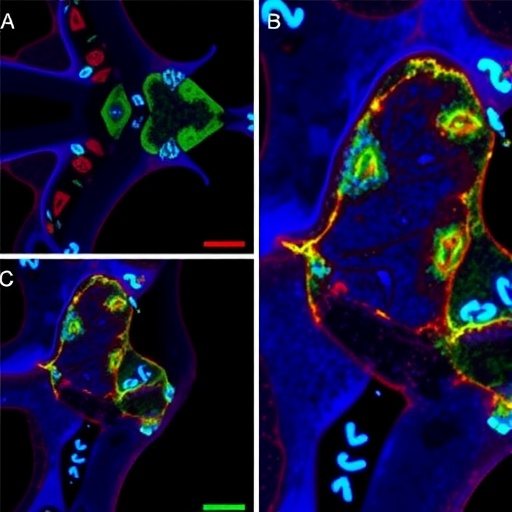
In a groundbreaking study recently published in Experimental & Molecular Medicine, researchers have unveiled a novel regulatory pathway critical to understanding the metabolic reprogramming that occurs in polycystic kidney disease (PKD). The study, led by Collier et al., reveals intricacies in cellular metabolism governed by the transcription factor GLIS3 and its influence on PKM2, a key metabolic enzyme. This discovery sheds light on the molecular underpinnings of PKD pathogenesis and presents new avenues for therapeutic intervention.
PKD is a genetic disorder characterized by the formation of multiple cysts in the kidneys, leading to progressive renal failure. Despite significant clinical attention, the precise metabolic alterations driving cyst formation have remained elusive. The current research addresses this gap by delineating how metabolic control mediated by GLIS3 affects the expression and function of pyruvate kinase M2 (PKM2), an enzyme notorious for its role in glycolysis and metabolic flexibility.
PKM2 has long been recognized for its dual roles—catalyzing a key step in glycolysis and functioning as a transcriptional coactivator that modulates gene expression. However, its role in kidney pathology, particularly in the context of PKD, had not been fully elucidated until now. Collier and colleagues convincingly demonstrate that GLIS3 binds to regulatory regions of the PKM2 gene, subsequently regulating its expression in kidney cells under metabolic stress conditions typical of cystic kidneys.
The study employed state-of-the-art molecular biology techniques, including chromatin immunoprecipitation assays and gene knockdown experiments, to verify GLIS3’s direct interaction with the PKM2 promoter. This direct regulation suggests a tight transcriptional control mechanism that adapts cellular metabolism in response to pathological cues. Such findings underscore GLIS3 as a pivotal player—potentially a master regulator—of metabolic reprogramming in diseased renal tissue.
One of the most intriguing findings was the shift in PKM2 isoforms influenced by GLIS3 activity. The team observed enhanced expression of the PKM2 dimeric form, known for its lower enzymatic activity but greater capacity to translocate into the nucleus where it promotes gene expression related to cell proliferation and survival. This shift appears to facilitate the metabolic flexibility necessary for cyst-lining cells to thrive, proliferate, and resist apoptotic signals, thus fueling cyst expansion.
Further metabolic assays revealed significant rewiring of glycolytic flux in cystic kidney cells, linked inextricably to the GLIS3-PKM2 axis. Abnormal metabolic states such as these are hallmarks of many proliferative diseases, including cancer, but their specific roles in PKD offer fresh perspectives on disease progression mechanisms. The research group also associated these metabolic shifts with increased anabolic processes, including nucleotide and lipid synthesis, supporting heightened cellular proliferation demands.
The implications of these findings are manifold. Firstly, they suggest that targeting the GLIS3-PKM2 regulatory axis could effectively disrupt the metabolic adaptations that sustain cyst growth, offering a novel therapeutic target. Currently, treatment options for PKD are limited, focusing mainly on symptom management rather than disease modification. Therapies designed to modulate PKM2 activity or GLIS3’s transcriptional control may halt or slow cyst progression by starving cystic cells of their metabolic flexibility.
Moreover, by elucidating the molecular crosstalk between transcriptional regulators and metabolic enzymes, this research enriches our broader understanding of metabolic diseases. It highlights how transcription factors like GLIS3 can orchestrate metabolic networks pivotal for cell fate and function, which might extend beyond renal pathology to other metabolic and proliferative disorders.
Importantly, the study provides a compelling argument for revisiting metabolic enzyme isoforms in the context of chronic diseases. PKM2’s role in PKD mirrors its function in cancer metabolism, where the enzyme acts as a metabolic switch toggling between energy production and biosynthesis. This parallel opens exciting possibilities for cross-disciplinary therapeutic research and drug repurposing, where oncology drugs targeting metabolic enzymes might find applications in nephrology.
The researchers also report that GLIS3 itself may be regulated by upstream signaling pathways responsive to environmental stress or intracellular metabolic cues. This layered regulatory structure suggests that therapeutic strategies might need to consider not only PKM2 but also the upstream modulators of GLIS3 to achieve robust clinical outcomes. Understanding these signaling cascades may also reveal biomarkers for early detection or disease monitoring.
Another critical aspect of the study is the use of advanced metabolic flux analysis combined with genetic and proteomic profiling to map the impact of altered GLIS3 and PKM2 expression on kidney function and structure. The integration of these multidisciplinary approaches allowed the team to capture both the functional and phenotypic consequences of metabolic reprogramming, providing a comprehensive view of disease biology.
In addition to molecular insights, the researchers validated their discoveries in animal models genetically engineered to mimic human PKD. These in vivo studies confirmed that modulating GLIS3 expression significantly altered PKM2 levels, cyst formation rates, and renal function metrics. Such translational relevance strengthens the potential clinical applicability of GLIS3/PKM2-targeted interventions.
Moving forward, the authors stress the importance of developing small molecules or biological agents capable of targeting the GLIS3-PKM2 axis with high specificity and minimal off-target effects. Such developments will require a sophisticated understanding of GLIS3’s structure, its DNA-binding motifs, and the protein-protein interactions governing PKM2 function. Drug discovery efforts may also benefit from structural biology and computational modeling to design effective compounds.
In summary, Collier et al.’s pioneering research highlights a previously unappreciated metabolic regulatory pathway in polycystic kidneys, orchestrated by GLIS3’s control over PKM2 expression and activity. By illuminating this axis, the study not only expands our fundamental understanding of renal pathophysiology but also paves the way for novel diagnostics and targeted treatments. As PKD remains a significant cause of morbidity worldwide, insights into its metabolic basis herald a new dawn for precision medicine in nephrology.
The integration of metabolic reprogramming principles with gene regulation mechanisms showcased in this study exemplifies the future of biomedical research—where cross-talk between metabolism, epigenetics, and transcriptional control is unraveled to decode complex diseases. This breakthrough positions GLIS3 and PKM2 at the frontier of metabolic research and offers hope for innovative therapies that can alter the course of polycystic kidney disease.
Cite Scienmag News
Violet Ashdown. (March 13, 2026). GLIS3 Controls PKM2 in Polycystic Kidney Metabolism. Scienmag. https://scienmag.com/glis3-controls-pkm2-in-polycystic-kidney-metabolism/
Violet Ashdown. "GLIS3 Controls PKM2 in Polycystic Kidney Metabolism." Scienmag, 13 March 2026, https://scienmag.com/glis3-controls-pkm2-in-polycystic-kidney-metabolism/. Accessed 28 August 2026.
Violet Ashdown. "GLIS3 Controls PKM2 in Polycystic Kidney Metabolism." Scienmag. March 13, 2026. https://scienmag.com/glis3-controls-pkm2-in-polycystic-kidney-metabolism/


