


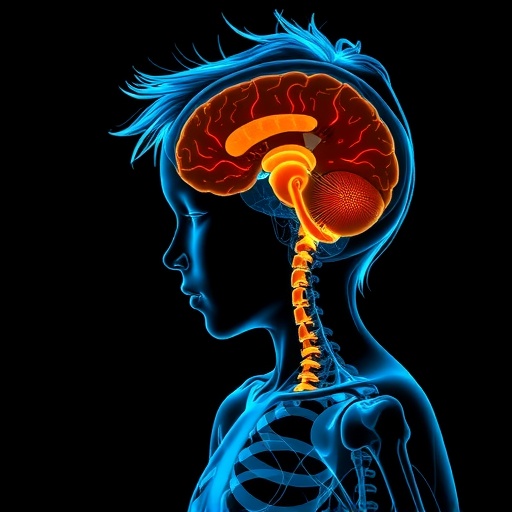
A groundbreaking new study has begun to unravel the complex interplay between neurodevelopmental disorders and muscular health in children, with a specific focus on attention-deficit/hyperactivity disorder (ADHD) and sarcopenia. This investigation sheds critical light on the overlooked physical dimensions of ADHD, offering novel insights into how this common childhood condition might be intricately linked with muscle degradation, a condition typically associated with aging. The research, spearheaded by Zhang, Xl., Zhou, Y., Wang, Y., and colleagues, pioneers a comprehensive exploration into the body composition, symptomatology, functional capacities, and comorbidities characteristic of children diagnosed with both ADHD and sarcopenia.
ADHD, widely recognized for its hallmark symptoms of inattentiveness, hyperactivity, and impulsivity, has traditionally been studied from a neurological and psychological perspective. However, this case-control study shifts the investigative lens towards systematic physiological outcomes, highlighting muscular decline as a potentially significant facet of the disorder. Sarcopenia, a syndrome marked by progressive and generalized loss of skeletal muscle mass and strength, is typically discussed in the context of geriatric health but its emergence in pediatric populations with ADHD is a novel aspect warranting urgent scientific attention.
The authors meticulously examined a cohort of pediatric patients, exploring alterations in body composition through advanced imaging and biomarker analyses. The results unveiled a striking prevalence of sarcopenic characteristics within the ADHD population compared to their neurotypical peers. This attenuation in muscle mass was found to correlate with exacerbated core ADHD symptoms, suggesting a potential bidirectional relationship in which neuromuscular health influences neurobehavioral outcomes and vice versa.
In addition to quantifying muscle loss, the study delved into functional impairments, uncovering that children with both ADHD and sarcopenia exhibited pronounced difficulties in motor coordination, endurance, and overall physical performance. These deficits could exacerbate the challenges faced by these children in their daily activities, academic settings, and social interactions, thereby amplifying the disability burden associated with ADHD.
The research also thoroughly documented a spectrum of comorbidities accompanying this dual diagnosis, ranging from metabolic imbalances to psychosocial complications. The intertwining of these health issues signals a multifaceted pathophysiology that transcends traditional disciplinary boundaries, calling for integrative treatment strategies that address both neurological and muscular domains concurrently.
From a mechanistic standpoint, the study hypothesizes that chronic inflammation, alterations in hormonal levels, and impaired mitochondrial function may underpin the muscle atrophy observed in these children. These factors are known to intersect with neurodevelopmental pathways, potentially creating a vicious cycle of declining neuromuscular integrity and worsening behavioral symptoms. Such insights invite a reevaluation of current ADHD management paradigms to incorporate physical health assessments and interventions.
The case-control design employed fortifies the validity of the findings, effectively distinguishing ADHD-specific sarcopenic features from those attributable to general pediatric population variances. By matching cases and controls across demographic and anthropometric parameters, the study establishes a robust comparative framework that reinforces the clinical significance of the observed muscular deficits.
Importantly, this exploration paves the way for innovative therapeutic avenues. Interventions traditionally reserved for sarcopenia, including resistance training, nutritional augmentation, and pharmacologic agents targeting muscle preservation, may offer adjunctive benefits in mitigating ADHD symptom severity and improving overall functional outcomes. Conversely, modulating ADHD-related neurochemical imbalances might exert favorable effects on muscle metabolism, signifying a promising cross-disciplinary synergy.
The implications of these findings extend into public health and educational domains as well. Enhanced screening for sarcopenic signs among children diagnosed with ADHD could enable earlier detection and prompt multidisciplinary interventions, ultimately reducing long-term disability. Educators and caregivers might also benefit from awareness about the potential physical limitations faced by these children, adapting their support accordingly to foster inclusion and resilience.
Future research trajectories must aim to elucidate longitudinal trajectories of muscle health in ADHD populations, defining critical windows for intervention and identifying biomarkers predictive of sarcopenia onset. Investigations into genetic predispositions and environmental influences will further contextualize the interplay between neurobehavioral traits and musculoskeletal integrity.
As the scientific community grapples with the heterogeneity of ADHD presentations, this study underscores the importance of adopting a holistic approach that integrates musculoskeletal health into the broader ADHD clinical picture. Such an approach promises to refine diagnostic criteria, personalize treatment protocols, and improve prognostic accuracy.
The study’s publication in Pediatric Research marks a significant milestone in pediatric neuropsychiatry and musculology, heralding a new era of interdisciplinary inquiry. Zhang and colleagues have set a powerful precedent for future investigations aiming to bridge gaps between seemingly disparate biological systems, advancing our understanding of child health in profound ways.
In conclusion, the discovery of sarcopenia’s role in children with ADHD challenges prevailing paradigms and expands the clinical conceptualization of ADHD beyond cognitive and behavioral spectra. By illuminating the physical substrates linked with ADHD symptom severity and functional impairments, this research opens up transformative possibilities for integrated care models, ultimately aiming to enhance quality of life for affected children and their families.
As these insights disseminate through the scientific and medical communities, they promise to catalyze a paradigm shift—recognizing muscular health as an essential dimension of neurodevelopmental disorders. The journey now begins toward translating these revelations into practical interventions that holistically address the multifactorial needs of children living with ADHD.
Cite Scienmag News
Denise Maddox. (March 13, 2026). ADHD and Sarcopenia in Children: Clinical Traits Revealed. Scienmag. https://scienmag.com/adhd-and-sarcopenia-in-children-clinical-traits-revealed/
Denise Maddox. "ADHD and Sarcopenia in Children: Clinical Traits Revealed." Scienmag, 13 March 2026, https://scienmag.com/adhd-and-sarcopenia-in-children-clinical-traits-revealed/. Accessed 3 September 2026.
Denise Maddox. "ADHD and Sarcopenia in Children: Clinical Traits Revealed." Scienmag. March 13, 2026. https://scienmag.com/adhd-and-sarcopenia-in-children-clinical-traits-revealed/


