


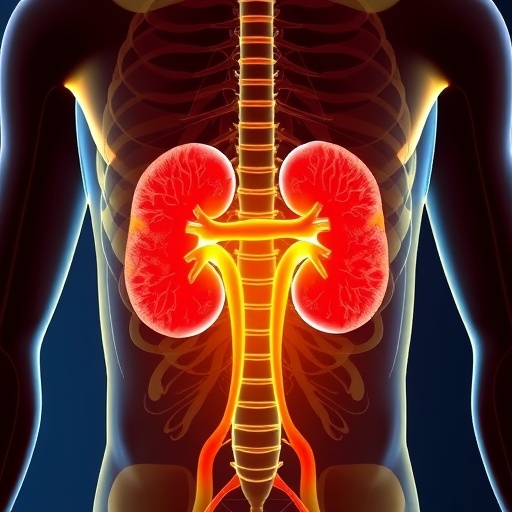
In the evolving landscape of pediatric nephrology, accurately determining the duration of Continuous Kidney Support Therapy (CKST) remains a critical yet complex challenge. A groundbreaking study by Bjornstad, Mohamed, and Sanderson, published in Pediatric Research, delves into the predictive power of urine neutrophil gelatinase-associated lipocalin (NGAL) as a biomarker for guiding CKST duration and its timely discontinuation in children. This research represents a significant leap toward personalized treatment regimens that could revolutionize outcomes for pediatric patients requiring kidney support.
CKST, a vital intervention used primarily in acute kidney injury cases, supports renal function continuously over extended periods. While life-saving, CKST comes with substantial risks and complications, including infection, electrolyte imbalance, and vascular access issues. Therefore, optimizing the duration of therapy becomes paramount — both in avoiding premature cessation that could exacerbate kidney injury and in preventing unnecessary prolongation with its associated hazards. The study by these researchers tackles this nuanced problem by focusing on the biomarker urine NGAL, which has shown promise in reflecting kidney stress and injury dynamically.
Urine NGAL emerges from neutrophils and renal tubular cells, swiftly rising in response to ischemic and nephrotoxic insults. Unlike traditional kidney function markers such as serum creatinine, which lag behind actual injury, NGAL levels can offer real-time insight into renal tubular injury. In this context, the researchers explore how serial measurements of urinary NGAL can provide a precise biological signal indicative of renal recovery, which is crucial for safely determining when CKST can be discontinued without risk of rebound injury or loss of kidney function.
Through meticulously designed prospective observational studies, Bjornstad and colleagues collected urine samples from pediatric patients undergoing CKST due to acute kidney injury. These samples were analyzed at multiple time points to track NGAL trajectories relative to other clinical parameters. The core focus was to identify whether trends in urine NGAL concentrations could reliably predict renal recovery, thereby signaling the optimal window for therapy cessation. Encouragingly, their findings demonstrate that downward trends in urinary NGAL sharply correlate with improved kidney function and patient outcomes.
Additionally, the study addresses the heterogeneity of acute kidney injury etiologies and their impact on NGAL dynamics. For example, ischemic causes may result in different NGAL kinetics compared to toxic or infectious insults. By incorporating stratified analyses, the authors establish that urine NGAL’s predictive accuracy extends across various clinical scenarios, enhancing its utility as a universal biomarker for CKST guidance. This versatility supports the feasibility of integrating NGAL measurements into routine clinical practice for diverse pediatric populations.
In practical terms, the application of urine NGAL-guided decision making offers a path away from reliance on less sensitive markers or rigid time-based protocols. Currently, clinicians often depend on fixed CKST durations or clinical judgment that may fail to capture nuanced kidney healing phases. The ability to monitor NGAL levels provides an objective, biologically grounded framework that can tailor therapy length on an individual basis, potentially minimizing CKST exposure and attendant risks while ensuring sufficient renal support.
Importantly, the authors also incorporate machine learning algorithms to enhance predictive modeling. By combining urine NGAL measurements with clinical variables such as fluid balance, hemodynamics, and biochemical indices, their computational approach achieves unprecedented predictive accuracy. These models could serve as decision-support tools, alerting practitioners to readiness for CKST discontinuation or the need for extended therapy. The integration of advanced analytics represents an innovative fusion of biomarker science and data technology, paving the way for smarter, evidence-driven kidney care.
Moreover, the study highlights the cost-effectiveness aspect of NGAL monitoring. Although biomarker assays add upfront expense, the reduction in CKST duration and prevention of complications could translate into significant healthcare savings. Fewer days on dialysis reduce resource utilization, shorten hospital stays, and improve patient quality of life. These economic considerations bolster the case for widespread adoption of urine NGAL assays as a standard component of pediatric kidney injury management.
Ethical dimensions also surface in the discussion, particularly concerning minimizing the emotional and physical burden on young patients and their families. Prolonged CKST can be distressing, with invasive lines and frequent adjustments. Being able to confidently discontinue therapy sooner based on robust biological markers relieves families from prolonged uncertainty and potential trauma. This compassionate perspective reinforces the broader societal value of the research.
Despite the promising outcomes, the authors acknowledge certain limitations requiring further exploration. Larger multicenter trials are needed to validate these findings across diverse healthcare settings and patient demographics. Additionally, standardized assay platforms and NGAL cut-off thresholds must be established to ensure consistency and reproducibility. Addressing these gaps will be crucial before universal clinical implementation can be realized.
The study’s impact resonates beyond pediatrics, inviting parallel investigations into adult populations and into chronic kidney disease scenarios where continuous renal replacement therapies are also prevalent. Understanding how urine NGAL behaves in these contexts could expand its utility and improve kidney support therapy optimization across age groups and clinical conditions. Thus, the research opens important avenues for future interdisciplinary collaboration.
In summary, Bjornstad, Mohamed, and Sanderson have advanced the frontier of kidney support science by harnessing urine NGAL as an insightful biomarker to finely tune Continuous Kidney Support Therapy duration. Their sophisticated methodology, blending biomarker biology with computational analytics, charts a visionary roadmap toward precision nephrology. This innovation promises not only to enhance clinical outcomes but also to redefine standards of care, reducing unnecessary treatment burden while safeguarding renal recovery in vulnerable pediatric patients.
As awareness of urine NGAL’s predictive role grows, it is poised to transform CKST management paradigms globally. Physicians, families, and healthcare systems stand to benefit from this leap forward in personalized kidney care — a triumph born from the marriage of molecular insight, technological prowess, and compassionate clinical practice. The potential for reducing childhood morbidity, shortening hospitalizations, and optimizing resource usage heralds a new era of pediatric nephrology driven by data-informed decision making.
The implications stretch well beyond the present day, suggesting a future where continuous renal therapies are no longer protracted and guesswork-ridden but are instead carefully calibrated with precision biomarkers at the bedside. This would mark a profound shift in treating acute kidney injury, culminating in enhanced survival, fewer complications, and improved long-term prognosis for children worldwide. The study’s visionary approach thus represents a landmark in the quest for smarter, more humane kidney support therapies.
By enabling clinicians to wield objective and timely insights into renal status, urine NGAL monitoring could become a cornerstone of holistic kidney care, underpinning clinical pathways that adapt fluidly to each patient’s unique trajectory. Such advances underscore the vital importance of biomarker research in addressing complex medical challenges, bridging the gap between molecular mechanisms and bedside decision making in acute care scenarios.
Ultimately, the integration of urine NGAL with continuous renal support protocols exemplifies the transformative potential of precision medicine. It exemplifies how harnessing specific biochemical signals can illuminate the murky terrain of kidney injury management, empowering caregivers with data-driven clarity amid the complexities of critical illness. This innovation stands as a beacon for future explorations aimed at improving pediatric outcomes through rigorous science coupled with compassionate innovation.
Cite Scienmag News
Denise Maddox. (March 12, 2026). Urine NGAL Guides Continuous Kidney Support Duration. Scienmag. https://scienmag.com/urine-ngal-guides-continuous-kidney-support-duration/
Denise Maddox. "Urine NGAL Guides Continuous Kidney Support Duration." Scienmag, 12 March 2026, https://scienmag.com/urine-ngal-guides-continuous-kidney-support-duration/. Accessed 4 September 2026.
Denise Maddox. "Urine NGAL Guides Continuous Kidney Support Duration." Scienmag. March 12, 2026. https://scienmag.com/urine-ngal-guides-continuous-kidney-support-duration/


