


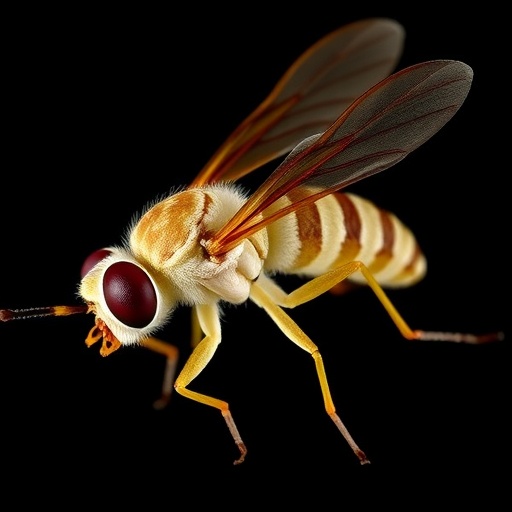
In a groundbreaking study poised to reshape our understanding of Parkinson’s disease, researchers have harnessed the power of behavioral screening in the humble fruit fly, Drosophila melanogaster, to delineate distinct molecular subgroups linked to Parkinsonism. This novel approach offers fresh insights into the heterogeneity of Parkinson’s disease and opens up unprecedented avenues for targeted therapeutics. The work, published in Nature Communications by Kaempf, Valadas, Robberechts, and colleagues, underscores the fruit fly’s increasingly pivotal role as a model organism in neurodegenerative disease research.
Parkinson’s disease, long characterized by its motor symptoms such as tremors, rigidity, and bradykinesia, is increasingly recognized as a complex syndrome with varied molecular underpinnings. Traditional approaches, heavily reliant on mammalian models, often struggle to encapsulate this heterogeneity, obscuring the path to precise treatments. The current study’s employment of behavioral phenotyping in Drosophila — a model championed for its genetic tractability and rapid lifecycle — circumvents these obstacles by providing a high-throughput framework to classify Parkinsonism on a molecular level.
The researchers utilized an extensive battery of behavioral assays specifically designed to measure locomotion, response to environmental stimuli, and circadian rhythm disturbances, all key phenotypes associated with Parkinson’s pathology. By rigorously quantifying these behavioral outputs across numerous genetically distinct fly lines carrying Parkinson’s-associated mutations, the team successfully grouped the mutations into molecularly defined subcategories. This stratification is pivotal because it reflects underlying pathogenic mechanisms that might be masked in broader clinical categorizations.
Delving more deeply into the mechanistic insights, the study illustrated how different genetic variants resulted in distinctive disruptions of neural circuits governing motor function. Particularly compelling was the correlation between specific behavioral deficits and unique molecular signatures in dopaminergic neurons—cells critically affected in Parkinson’s disease. Through advanced transcriptomic profiling, the researchers mapped these disruptions to alterations in gene expression pathways involved in mitochondrial function, protein degradation, and synaptic plasticity.
The integration of behavioral data with molecular profiling underscored the heterogeneity of Parkinsonism, showing that a one-size-fits-all therapeutic approach is unlikely to succeed. Instead, each subgroup identified through this screening corresponded to a distinct molecular cascade, suggesting that tailored interventions targeting these specific pathways could enhance treatment efficacy. This paradigm shift is reminiscent of oncology’s transition to personalized medicine, heralding a similar revolution for neurodegenerative disorders.
Methodologically, the study’s use of Drosophila as a translational model is notable. The fly’s relatively simple nervous system, with about 100,000 neurons, allowed for precise genetic manipulations and interrogation of neuronal circuits in real time. CRISPR-based gene editing and RNA interference were employed to modulate gene expression selectively, facilitating causal interpretation of observed behavioral phenotypes. This level of control is challenging in mammalian systems but crucial for unraveling complex disease biology.
Equally significant was the application of machine learning algorithms to analyze the voluminous behavioral data. Automated video-tracking systems recorded nuanced fly movements, which were then processed through classifiers trained to detect subtle behavioral impairments indicative of Parkinsonism. This quantitative, unbiased approach minimized human error and subjectivity in phenotyping, elevating the robustness of subgroup classification.
Beyond the molecular and phenotypic delineation, the study also explored how environmental factors exacerbate or mitigate Parkinsonian symptoms in different subgroups. Exposure to oxidative stressors, dietary alterations, and pharmacological agents revealed that flies harboring distinct molecular mutations exhibited variable sensitivity profiles. These findings hint at the fruitful integration of gene-environment interactions in future research and therapeutic design.
The implications of these findings extend beyond Parkinson’s research per se. This study exemplifies how model organisms combined with state-of-the-art behavioral and molecular tools can disentangle complex neurological diseases’ heterogeneity. Furthermore, establishing robust phenotypic subgroups provides a scaffold for biomarker discovery, potentially enabling early diagnosis and staged intervention in human patients.
While the study offers exciting new horizons, the authors acknowledge limitations inherent to the Drosophila model. Differences in brain structure and lifespan necessitate cautious extrapolation to human pathology. However, the conservation of key molecular and cellular pathways lends credibility to the translational potential of the work. Follow-up studies using mammalian models and patient-derived cells are planned to validate and expand upon these foundational findings.
The publication also sparks discussions around the broader use of behavioral screening in neurodegenerative disease classification. Traditional biochemical markers, while informative, often fail to capture dynamic disease processes. Behavior, as an integrative phenotype, reflects the culmination of molecular, cellular, and system-level dysfunction, offering a holistic window into disease progression. Leveraging such integrative approaches could transform preclinical studies and accelerate therapeutic discovery.
From a therapeutic development perspective, the detailed molecular stratification unveiled by this screening provides a roadmap for drug repurposing efforts. Compounds known to modulate specific pathways implicated in the subgroups could be prioritized for clinical trials, potentially expediting the availability of personalized treatment options. This precision approach contrasts sharply with previous, less targeted strategies that yielded modest benefits at best.
Moreover, the study’s high-throughput behavioral platform is adaptable to screening large compound libraries, enabling rapid phenotypic drug screens. This scalability positions the platform as a powerhouse tool in the race to find effective Parkinson’s disease interventions. Coupled with advances in gene therapy and gene editing, the personalized therapies envisaged could soon transition from conceptual frameworks to clinical realities.
In sum, this study by Kaempf and colleagues represents a paradigm-shifting advancement in Parkinson’s disease research. By integrating behavioral phenotyping with molecular profiling in Drosophila, it provides the neurodegenerative community with a powerful strategy to classify, understand, and ultimately treat the multifaceted disease more effectively. This work not only illuminates the diverse nature of Parkinsonism but also exemplifies the transformative potential of combining classical model systems with cutting-edge technologies.
The viral potential of this research lies not only in its scientific novelty but also in its capacity to inspire hope for millions affected by Parkinson’s worldwide. As the field moves towards tailored, mechanism-driven therapies, studies such as this stand at the forefront of a new era in neurodegenerative disease management. The fusion of behavioral science, molecular biology, and computational analysis crystallizes into a beacon guiding future exploration and intervention.
As this research gains traction, the ripple effects across biomedical sciences promise to be profound. The framework established could inform studies on other complex brain disorders, from Alzheimer’s disease to amyotrophic lateral sclerosis, underscoring the universal value of detailed behavioral and molecular subgrouping. Ultimately, this represents a cornerstone in the ongoing quest to decipher the enigmatic interplay between genes and behavior in health and disease.
Cite Scienmag News
Diana Fleming. (March 11, 2026). Behavioral Screening Reveals Parkinsonism Subgroups in Drosophila. Scienmag. https://scienmag.com/behavioral-screening-reveals-parkinsonism-subgroups-in-drosophila/
Diana Fleming. "Behavioral Screening Reveals Parkinsonism Subgroups in Drosophila." Scienmag, 11 March 2026, https://scienmag.com/behavioral-screening-reveals-parkinsonism-subgroups-in-drosophila/. Accessed 5 September 2026.
Diana Fleming. "Behavioral Screening Reveals Parkinsonism Subgroups in Drosophila." Scienmag. March 11, 2026. https://scienmag.com/behavioral-screening-reveals-parkinsonism-subgroups-in-drosophila/


