


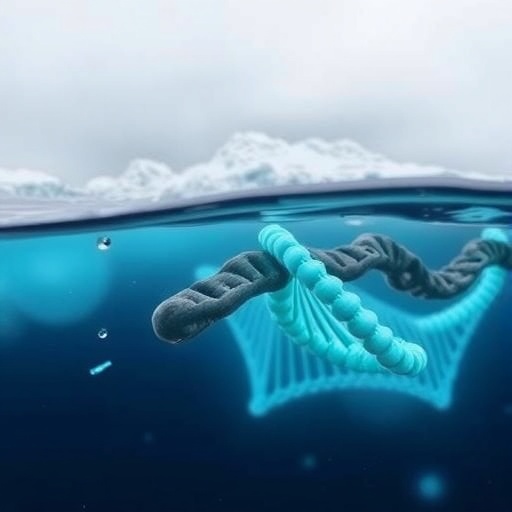
The Southern Ocean, an immense expanse of frigid waters encircling Antarctica, is pivotal in regulating the Earth’s climate. Its significance lies not only in its vast size but also in its extraordinary capacity to absorb heat and carbon dioxide from the atmosphere, acting as a crucial buffer against climate change. Central to this function are microbial communities—specifically, phytoplankton and other microscopic organisms—that drive biogeochemical cycles by sequestering carbon through photosynthesis and other metabolic processes. Despite the importance of these microorganisms, their diversity and genetic makeup have remained largely enigmatic, limiting our comprehension of how they influence and respond to climate dynamics.
Recently, a landmark study has shed new light on the microbial biodiversity of the Southern Ocean by conducting the most comprehensive genetic survey of planktonic communities to date. Spearheaded by biogeochemist Nicolas Cassar of Duke University, along with a consortium of international scientists including those from the European Institute for Marine Studies, this research harnessed cutting-edge DNA sequencing technologies to unravel the genomic fabric of Southern Ocean microbes. The findings were published in Nature Communications on March 9, 2026, unveiling gene sequences previously undocumented in existing marine genetic catalogs.
The research was built on samples collected during the Antarctic Circumnavigation Expedition, a three-month voyage between late 2016 and early 2017 that systematically harvested water from varied depths and locales throughout the Southern Ocean. This expedition meticulously captured the rich microbial diversity thriving across distinct water masses characterized by unique physical and chemical properties. By sequencing environmental DNA extracted from these samples, the team was able to construct a detailed genetic inventory, mapping thousands of microbial genes and identifying novel genetic elements that could redefine current understanding of marine microbial ecology.
One of the most striking revelations from the study was the discovery that at least one-third of the genes detected were absent from all previously known marine gene catalogs. This glaring gap highlights a vast, uncharted realm of microbial life and suggests that the Southern Ocean harbors a unique genetic reservoir, potentially encoding metabolic pathways and adaptive strategies specifically tailored to extreme polar environments. Such insights compel a re-evaluation of the ocean’s role in global carbon cycling and hint at numerous unknown mechanisms by which microbes interact with their environment.
Further analysis revealed that microbial communities in the Southern Ocean are not homogenously distributed. Instead, these communities cluster into distinct ecosystems closely aligned with water mass characteristics, including temperature gradients, depth, and circulation patterns. Some microbial consortia inhabit cold, nutrient-rich surface waters where photosynthetic activity predominates, while others thrive in deeper, darker layers where alternative metabolic processes, such as chemosynthesis, become paramount. These spatial patterns underscore the complexity of microbial habitats and their potential to influence localized and global biogeochemical fluxes.
Delving deeper, the research team employed sophisticated bioinformatics tools to classify genes based on functional traits, enabling them to infer the ecological roles of diverse microbial populations. Genes associated with carbon fixation, nitrogen metabolism, and nutrient assimilation were found to vary considerably between water masses, painting a dynamic picture of microbial adaptation and specialization. The study thereby illuminates how genetic diversity directly relates to the ocean’s capacity to modulate greenhouse gases and maintain ecosystem stability under climate stressors.
This pivotal work opens new avenues for climate modeling, which traditionally has relied on broad assumptions regarding microbial activity. Incorporating detailed genetic data into Earth system models could dramatically enhance predictions of the Southern Ocean’s response to ongoing climate change. Understanding the genetic mechanisms that control microbial functions allows for more accurate forecasting of carbon sequestration efficiency, heat uptake, and feedback loops that may either mitigate or exacerbate global warming.
Moreover, identifying unique genes adapted to polar conditions presents exciting prospects for biotechnology. Enzymes and biochemical pathways optimized for extreme cold could inspire innovations ranging from industrial catalysts to novel pharmaceuticals. The genetic insights from this study thus resonate beyond ecological implications, offering a glimpse into the molecular ingenuity evolved by life in one of Earth’s most challenging habitats.
The study’s success also underscores the importance of international collaboration and advanced marine expeditions in exploring Earth’s last frontiers. The integration of high-throughput DNA sequencing with comprehensive environmental sampling exemplifies the cutting edge of marine science, enabling researchers to decode complex ecosystems at unprecedented scales. As technology continues to advance, similar explorations in other under-studied oceanic regions promise to further unravel the mysteries of microbial biodiversity and its climatic impacts.
Looking ahead, the team aims to deepen investigations into the role of specific genes and microbial taxa, moving from cataloging genetic diversity to experimentally validating their functions. Such research will be instrumental in discerning how microbial communities adapt to environmental changes, including warming temperatures and shifting nutrient regimes. Ultimately, these efforts strive to illuminate the feedback mechanisms that govern the Southern Ocean’s influence on Earth’s climate trajectory.
In summary, this groundbreaking genetic survey elevates our understanding of how microscopic marine life contributes to planetary health and climate regulation. By revealing a trove of previously unknown genetic material, the study not only fills critical gaps in marine microbiology but also emphasizes the Southern Ocean’s central role in biogeochemical cycles. As the climate crisis intensifies, knowledge gleaned from such research will be vital in shaping mitigation strategies and safeguarding the resilience of oceanic ecosystems.
News Publication Date: March 9, 2026
Web References:
https://rdcu.be/e7HBd
http://dx.doi.org/10.1038/s41467-026-69584-w
References:
Faure E, Pommellec J, Noel C, et al. Water Mass Specific Genes Dominate the Southern Ocean Microbiome. Nature Communications. Published online March 9, 2026.
Cite Scienmag News
Juliet Wilcox. (March 10, 2026). Scientists Reveal Hidden Genetic Diversity in Antarctic Waters. Scienmag. https://scienmag.com/scientists-reveal-hidden-genetic-diversity-in-antarctic-waters/
Juliet Wilcox. "Scientists Reveal Hidden Genetic Diversity in Antarctic Waters." Scienmag, 10 March 2026, https://scienmag.com/scientists-reveal-hidden-genetic-diversity-in-antarctic-waters/. Accessed 4 September 2026.
Juliet Wilcox. "Scientists Reveal Hidden Genetic Diversity in Antarctic Waters." Scienmag. March 10, 2026. https://scienmag.com/scientists-reveal-hidden-genetic-diversity-in-antarctic-waters/


