


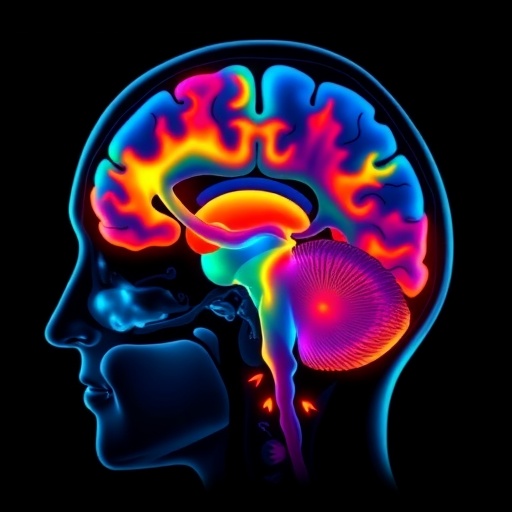
Traumatic brain injury (TBI) remains one of the leading causes of death and disability worldwide, leaving survivors grappling with devastating neurological consequences. A critical threat in the management of severe TBI is the development of refractory intracranial hypertension, a condition where intracranial pressure (ICP) relentlessly increases despite initial surgical intervention. This dangerous escalation often necessitates a secondary, more aggressive surgical procedure known as decompressive craniectomy (DC). The urgency and unpredictability of this secondary intervention have posed significant challenges for clinicians, leaving them with precious little time to act as patient conditions deteriorate rapidly.
Amidst these challenges, neuroscientists and clinicians have been on the quest for predictive tools that can identify patients at risk of needing secondary DC early enough to enable preventive measures. A pioneering study led by Dr. Zhongyi Sun at Central South University, China, unveils promising advances in this domain through the integration of radiomics and machine learning. Radiomics, a frontier technique, entails the extraction of vast quantitative data from medical images—data that describe the subtle textural, morphological, and intensity-based features of brain tissue and lesions that lie beyond the perceivable scope of the naked eye.
The research team analyzed computed tomography (CT) scans obtained before surgical hematoma evacuation in TBI patients who had initially undergone craniotomy with bone flap replacement. The cohort consisted of 65 adult individuals, some of whom later required secondary DC due to unmanageable intracranial hypertension. From each CT scan, more than a hundred distinct radiomic features were meticulously extracted, encompassing nuanced characteristics of both hemorrhagic lesions and surrounding cerebral edema. These features included shape descriptors, intensity heterogeneity metrics, and texture attributes that reflect microenvironmental heterogeneity linked to pathological processes.
To harness the predictive potential of these data, the team deployed sophisticated machine learning algorithms to construct models assessing the likelihood of secondary DC necessity. Traditional models grounded on demographic and clinical variables alone exhibited limited predictive capacity, underscoring their inadequacy in forecasting such complex outcomes. However, the models rooted in radiomic signatures demonstrated robust predictive accuracy, effectively differentiating patients destined for secondary surgical intervention. When these imaging-derived features were synergistically combined with select clinical data, model performance further improved, highlighting the complementary nature of radiomics alongside standard clinical assessments.
These findings evoke a transformative perspective in the management of TBI. As Dr. Sun elucidates, the aspiration is to transition from a reactive to a proactive treatment paradigm, enabling clinicians to identify patients at imminent risk for critical ICP elevation well before clinical deterioration ensues. This shift could allow for preemptive adjustments in monitoring strategies, optimization of pharmacological therapies, and judicious timing of surgical interventions, ultimately mitigating secondary brain injury and improving patient prognoses.
Beyond the immediate clinical advantages, the fusion of radiomics and machine learning aligns with the broader evolution of neurosurgery and critical care into data-driven disciplines. By converting routine neuroimaging into quantitative biomarkers of disease progression, this approach could standardize risk stratification in trauma centers worldwide. It holds the potential to streamline neurosurgical decision-making, foster interdisciplinary collaboration between radiologists, neurosurgeons, and data scientists, and spearhead the development of personalized therapeutic strategies tailored to the unique radiomic profile of each patient.
Moreover, the radiomics-based model underscores the critical role of artificial intelligence (AI) in reshaping future neurosurgical practice. As AI continues to penetrate medical imaging, it promises faster, more accurate interpretations that can anticipate adverse clinical trajectories. In TBI, where time is brain, such predictive analytics could mean the difference between irreversible damage and functional recovery. Automated pipelines for radiomic feature extraction and real-time risk scoring could soon be integrated into hospital workflows, augmenting clinician expertise with cutting-edge computational insights.
The implications also extend to healthcare systems and resource allocation. Earlier identification of high-risk patients may facilitate more efficient deployment of intensive care resources, optimize surgical scheduling, and reduce healthcare costs associated with emergency reoperations and prolonged ICU stays. Furthermore, by improving survival and neurofunctional outcomes, these advances have the potential to ameliorate the long-term socio-economic burden TBI imposes on patients, families, and societies.
Dr. Sun’s team acknowledges current limitations, including the relatively small sample size and single-center nature of the study. They advocate for future multicenter investigations involving larger, diverse patient populations that will validate and refine the model’s predictive accuracy. Additionally, technological advancements in automated image analysis and cross-platform compatibility will be vital in translating these research findings into real-world clinical tools seamlessly integrated with existing neuroimaging systems.
The journey to transform the paradigm of traumatic brain injury management through predictive modeling is emblematic of the broader revolution occurring at the intersection of medicine, computational science, and engineering. This pioneering study exemplifies how harnessing high-dimensional imaging data with AI can illuminate hidden biological signals, enabling clinicians to foresee and forestall life-threatening complications. As these techniques mature, they promise to usher in an era of precision neurosurgery, where individualized care plans informed by quantitative imaging could dramatically enhance patient survival and quality of life.
Dr. Sun remarks poignantly on the societal impact of this work: “Traumatic brain injury disproportionately affects young populations and carries lifelong repercussions. Developing anticipatory clinical tools is imperative not only for saving lives but also for preserving the dignity and potential of countless individuals altered by brain trauma.” This vision reflects an inspiring commitment to leveraging technological innovation to serve humanity’s most vulnerable.
In sum, the integration of radiomics and machine learning represents a groundbreaking stride in neuroscience, offering a powerful predictive lens through which the perilous course of secondary intracranial hypertension following TBI can be foreseen. This approach moves beyond conventional clinical indicators, empowering practitioners with data-driven foresight and enhancing the delicate art of neurosurgical decision-making. As the field advances, such innovations hold profound promise to fundamentally improve outcomes in traumatic brain injury – a testament to human ingenuity in the face of nature’s most daunting challenges.
News Publication Date: January 8, 2026
References: DOI: 10.1186/s41016-025-00423-5
Cite Scienmag News
Cassandra Pierce. (March 10, 2026). New Radiomics Model Offers Prediction of Secondary Decompressive Craniectomy, Study Reveals. Scienmag. https://scienmag.com/new-radiomics-model-offers-prediction-of-secondary-decompressive-craniectomy-study-reveals/
Cassandra Pierce. "New Radiomics Model Offers Prediction of Secondary Decompressive Craniectomy, Study Reveals." Scienmag, 10 March 2026, https://scienmag.com/new-radiomics-model-offers-prediction-of-secondary-decompressive-craniectomy-study-reveals/. Accessed 5 September 2026.
Cassandra Pierce. "New Radiomics Model Offers Prediction of Secondary Decompressive Craniectomy, Study Reveals." Scienmag. March 10, 2026. https://scienmag.com/new-radiomics-model-offers-prediction-of-secondary-decompressive-craniectomy-study-reveals/


