


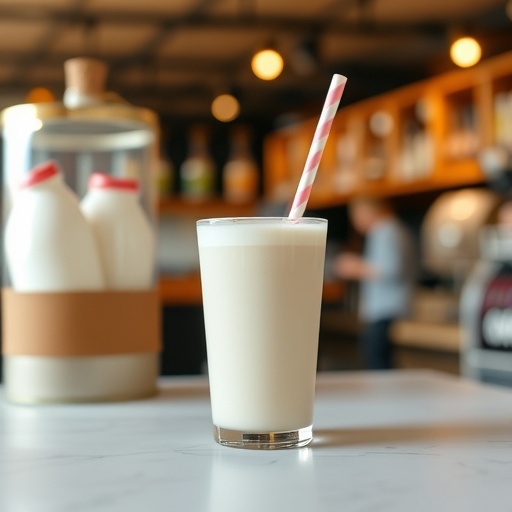
In recent years, the ubiquitous coffee shop experience has evolved significantly, not just in the complexity of brewing methods and specialty beans, but also in the seemingly simple choice of milk added to each cup. For many customers, the decision to add dairy milk or a plant-based alternative has become a nuanced one, laden with considerations of flavor profiles, nutritional content, digestibility, environmental impact, and, increasingly, personal health conditions such as lactose intolerance. A groundbreaking study published in the Journal of Dairy Science by Elsevier sheds critical light on how these factors interplay to shape consumer behavior in coffee shops, revealing hidden market dynamics and uncovering a significant, often overlooked niche of lactose-sensitive consumers.
The study delves into the intricate decision-making processes of coffee drinkers when faced with an expanding repertoire of milk options. In traditional settings, dairy milk was the default—a straightforward choice linked to familiarity and taste expectations. However, the rise of plant-based milks, a category encompassing almond, soy, oat, and other non-dairy alternatives, has introduced a new complexity. These alternatives bring their own unique taste signatures and nutritional considerations, many capturing consumer interest due to perceptions of healthfulness or sustainability. Yet, the research confirms that these factors alone do not fully explain why certain customers opt for dairy over plant-based options or vice versa.
Central to the investigation is the impact of lactose intolerance—a condition affecting an estimated 65% of the global adult population to varying degrees—on milk choice in coffee beverages. Lactose intolerance historically limited the comfort and enjoyment of dairy products for many consumers. While many coffee shops now offer lactose-free dairy milk, a modified product in which lactose has been enzymatically reduced or eliminated, this option remains surprisingly underutilized and under-promoted in many markets. The study’s findings reveal that access to lactose-free milk could notably shift consumer preferences and drive increased foot traffic to establishments that prioritize its availability.
Through a combination of consumer surveys, preference testing, and behavioral analysis, the research team quantified how much lactose intolerance affects milk choice. They found a distinct cohort of coffee drinkers who, when given access to lactose-free dairy milk, expressed a strong preference for this product over plant-based alternatives. For these consumers, lactose-free milk offers the taste and mouthfeel associated with traditional dairy but without the digestive discomfort caused by lactose. This nuance is crucial, as it challenges the prevailing assumption that lactose-intolerant customers automatically gravitate toward plant-based milk or simply avoid milk-inclusive drinks altogether.
Moreover, the sensory appeal of lactose-free milk in coffee plays a significant role. Milk’s role in coffee is not merely functional but sensory—it balances acidity, enhances mouthfeel, and delivers a creamy texture that defines certain popular drinks such as lattes and cappuccinos. Many plant-based milks, despite their rising popularity, offer divergent sensory profiles that do not always replicate these classic dairy characteristics. The study highlights that while oat milk, for example, has gained traction for its creamy consistency, it does not fully satisfy all consumers, particularly those who previously preferred the traditional dairy taste but could not tolerate lactose.
The research also sheds light on socio-economic variables influencing milk choice. Consumers with higher disposable incomes and greater health awareness were more likely to experiment with plant-based milks, influenced by factors like environmental concerns and perceived health benefits. In contrast, lactose-free dairy milk appeals strongly to pragmatic consumers seeking to solve the immediate problem of lactose intolerance without sacrificing established taste preferences or paying premiums often associated with plant-based alternatives. This bifurcation in the market hints at an opportunity for coffee shops to segment their offerings and marketing strategies more effectively.
Another important dimension addressed in the study is the nutritional differences between milk types. Dairy milk is a robust source of protein, calcium, and several micronutrients, while plant-based milk alternatives vary widely in these metrics depending on the base ingredient and fortification practices. Lactose-free milk retains these nutritional advantages, which can sway health-conscious consumers who are not willing to compromise on dietary intake. This factor is critical because it intersects with the broader trend of consumers scrutinizing ingredient quality and health impacts more rigorously than ever before.
The implications for coffee shops and the broader hospitality industry are profound. The revelation that lactose-free milk availability could boost customer satisfaction and foot traffic suggests that many outlets may be missing out on a significant customer base. Given the competitive nature of modern coffee culture, where consumers prize not only quality but also customization and inclusivity, integrating lactose-free options more visibly and prominently into menus could be a decisive advantage.
Furthermore, the study touches on the importance of effective communication and consumer education. Many lactose-intolerant customers are either unaware of lactose-free dairy milk or mistakenly assume that only plant-based alternatives can meet their dietary needs. Coffee shops equipped with better-trained staff and clearer signage could thus enhance customer experience, reduce confusion, and increase order satisfaction. This, combined with wider availability, could catalyze a shift in consumer loyalty patterns, especially in urban centers with high health-conscious demographics.
From a technical perspective, lactose-free milk is produced by adding lactase enzymes to conventional milk, which hydrolyzes lactose, converting it into simpler sugars like glucose and galactose that are easily digestible. This enzymatic process does not significantly alter the protein matrix or texture of milk, preserving its functional qualities for frothing and blending in coffee drinks. The study emphasizes that this technical stability is a key advantage over some plant-based milks, which can behave unpredictably under heat or during steaming, leading to less consistent coffee preparation outcomes.
The environmental impact angle, often heralded in discussions around plant-based milk, is nuanced within the context of this study. While plant-based options generally have lower greenhouse gas emissions per liter compared to conventional dairy, lactose-free milk retains many of the sustainability benefits associated with dairy production improvements and waste reduction through the extended use of lactose-intolerant milk streams. Hence, lactose-free milk could represent a practical compromise—offering digestive comfort, maintained sensory quality, and moderated environmental impact.
Ultimately, this research contributes a vital piece to the evolving puzzle of consumer behavior in the coffee industry. It challenges coffee shops, product developers, and marketers to reconsider the assumptions underlying milk options and to recognize that lactose-free dairy milk is not merely a niche product but a potentially pivotal offering that aligns technological food innovation with unmet consumer demand. The study’s rigorous data provide a compelling case for reengineering coffee menus and supply chains to better serve a broader spectrum of taste and health preferences.
As coffee culture continues to diversify and mature globally, understanding the complex matrix of consumer preferences will be essential for businesses seeking competitive advantage. The introduction and promotion of lactose-free milk options represents a strategic frontier—one that could redefine not only what customers order but also how they experience the quintessential ritual of coffee drinking. This insight from the Journal of Dairy Science underscores the importance of ongoing research at the intersection of food science, nutrition, and consumer behavior, illuminating pathways toward more inclusive and satisfying coffee experiences worldwide.
News Publication Date: Not specified in the provided content.
Web References: Not specified in the provided content.
References: Published in the Journal of Dairy Science by Elsevier.
Keywords
Coffee culture, lactose intolerance, lactose-free dairy milk, plant-based milk alternatives, consumer behavior, sensory analysis, nutritional comparison, enzymatic lactose hydrolysis, dairy science, sustainable food innovation.
Cite Scienmag News
Denise Maddox. (March 9, 2026). Lactose-Free Milk: A New Boost for Dairy Consumption and Coffee Shop Visits Among Coffee Lovers. Scienmag. https://scienmag.com/lactose-free-milk-a-new-boost-for-dairy-consumption-and-coffee-shop-visits-among-coffee-lovers/
Denise Maddox. "Lactose-Free Milk: A New Boost for Dairy Consumption and Coffee Shop Visits Among Coffee Lovers." Scienmag, 9 March 2026, https://scienmag.com/lactose-free-milk-a-new-boost-for-dairy-consumption-and-coffee-shop-visits-among-coffee-lovers/. Accessed 4 September 2026.
Denise Maddox. "Lactose-Free Milk: A New Boost for Dairy Consumption and Coffee Shop Visits Among Coffee Lovers." Scienmag. March 9, 2026. https://scienmag.com/lactose-free-milk-a-new-boost-for-dairy-consumption-and-coffee-shop-visits-among-coffee-lovers/


