


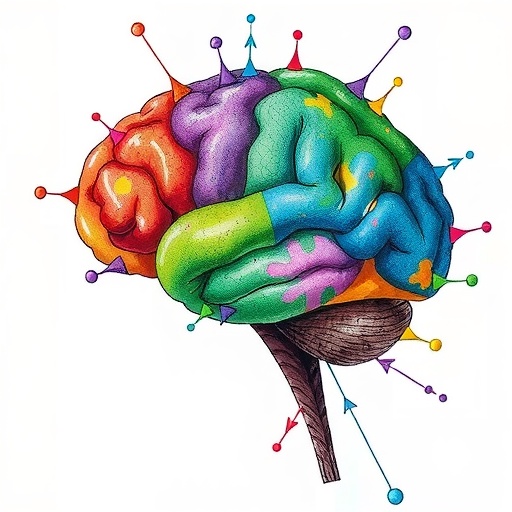
In the complex landscape of autism research, the persistent challenge has been addressing the vast heterogeneity within the autism spectrum. Traditionally, efforts have concentrated on identifying subtypes or filtering out variability as noise in attempts to find unifying mechanisms. However, a groundbreaking 2026 study published in Nature Mental Health by Lin, Breakspear, and Mottron proposes a revolutionary shift in perspective. They argue that instead of eliminating variability, science should embrace and rigorously investigate it, recognizing idiosyncrasy—unique, stable neural and behavioral signatures in autistic individuals—as the critical signal rather than statistical error. This insight has profound implications for how we conceptualize autism and approach its study.
The authors introduce the idea of autism not as a categorical disorder or a simple, continuous dimension but as a dynamic system characterized by a fundamentally altered neurodevelopmental trajectory. Drawing from principles in dynamical systems theory, they explain that autism emerges through stochastic processes that generate both a central prototype and a spectrum of highly individualized outcomes. This distribution of outcomes is distinct because it features heavy-tailed variability, meaning that extreme and diverse manifestations are not just noise but integral parts of the autistic experience. This contrasts sharply with the common Gaussian model, where traits distribute symmetrically around a mean and extremes are rare exceptions.
This reframing challenges dominant paradigms of autism research. Group-average analyses, which have underpinned decades of investigation, often obscure meaningful individual differences. By focusing on averages, researchers inadvertently discard the nuances essential for understanding autism’s underlying mechanisms. Lin and colleagues advocate for adopting analytical frameworks that can capture non-Gaussian variability—methods capable of modeling idiosyncratic distributions that reflect the richness and complexity inherent to autistic neural and cognitive profiles.
Moreover, this perspective advances the notion that autistic development proceeds along unique stochastic trajectories shaped by probabilistic neural dynamics. Instead of deterministic pathways leading to fixed outcomes, the brain’s development in autism is influenced by complex feedback loops, nonlinear interactions, and threshold effects that create a spectrum of idiosyncratic phenotypes. These threshold effects indicate that certain subtle changes in neurodevelopment can have outsized impacts, giving rise to varied clinical presentations that defy neat categorization into subtypes or simple dimensions.
This conceptual framework also has critical implications for diagnosing and supporting autistic individuals. By prioritizing the uniqueness of each autistic brain, it calls for personalized evaluation approaches that move beyond one-size-fits-all diagnostic criteria. Capturing and interpreting the distinct neural and behavioral patterns of individuals can inform more tailored interventions, fostering supportive environments that align with their specific profiles and needs.
From a scientific vantage point, the shift toward embracing idiosyncrasy compels a reconsideration of research methodologies. It demands sophisticated statistical models and computational tools, including machine learning techniques designed to handle heavy-tailed distributions and multiscale dynamical patterns. Such tools can disentangle complex patterns in neuroimaging, cognitive testing, and behavioral data that were previously overlooked due to traditional linear and average-focused analyses.
Beyond research, this paradigm bridges an important gap between biomedical science and the neurodiversity movement. The latter emphasizes the acceptance and value of neurological differences rather than pathologizing them. Recognizing idiosyncrasy as a fundamental aspect of autistic neurodevelopment aligns with this ethos and supports a more inclusive scientific understanding that respects individuality and diversity.
Importantly, the study highlights why decades of attempts to subtype autism have met frustration and limited success. The expectation that discrete subtypes exist in a neatly separable manner is incompatible with the observed data patterns. Instead, the presence of overlapping distributions with embedded threshold effects naturally produces clustered but fuzzy groupings, explaining why subtyping efforts yield inconsistent and often contradictory results.
The authors also contend that embracing structured variability can illuminate the paradoxes that have long puzzled the field. For instance, the coexistence of shared autistic traits across individuals alongside profound differences has been difficult to reconcile. Viewing these traits as emerging from stochastic dynamical trajectories clarifies how commonalities and extreme divergences coexist as features of the same developmental process.
This approach carries practical benefits beyond theoretical clarity. Personalized profiles of idiosyncrasy support precision medicine initiatives, allowing clinicians to identify key neural and cognitive signatures that guide bespoke therapies and educational strategies. It encourages building individualized support systems that harness strengths and accommodate challenges unique to each autistic person.
Furthermore, this model opens avenues for novel experimental designs. Instead of averaging data across broad samples, future studies might focus on single-case or small-n intensive designs complemented by sophisticated modeling to elucidate the mechanisms driving each individual’s development. Such an approach promises richer data and greater explanatory power regarding the fundamental nature of autism.
The dynamical systems perspective also invites integrating knowledge across multiple levels of analysis—from genetics and neurobiology to cognition and behavior. By recognizing that stochastic developmental processes propagate through these layers, research can construct more comprehensive and mechanistic models that reflect the intricate interplay shaping autism.
Ultimately, this article by Lin, Breakspear, and Mottron offers a transformative lens for the autism field. It challenges long-held assumptions and provides a compelling rationale for reconceptualizing autism as a unique and structured landscape of individual brain development rather than a disorder defined by fitting into predefined categories or dimensions. This framework heralds a promising future for more nuanced research, personalized clinical care, and deeper societal understanding of autistic diversity.
As the scientific community grapples with the complexity of the autistic brain, these insights serve as a clarion call to shift paradigms—from attempting to tame variability as mere noise to embracing it as the core signature necessitating exploration. This reframing not only advances science but aligns with evolving perspectives advocating for neurodiversity and a more compassionate approach toward supporting autistic individuals throughout their lives.
In summary, by elevating idiosyncrasy from statistical noise to the signal, this innovative framework redefines how we understand and study autism. It urges a move away from averaged group data toward highly individualized, nuanced analyses that capture the true richness of autistic neurodevelopment. This transformation paves the way for breakthroughs in both basic science and clinical practice, promising a science of autism that respects and embraces its profound diversity.
Cite Scienmag News
Cassandra Pierce. (March 9, 2026). From Autism’s Diversity to Unique Brain Signatures. Scienmag. https://scienmag.com/from-autisms-diversity-to-unique-brain-signatures/
Cassandra Pierce. "From Autism’s Diversity to Unique Brain Signatures." Scienmag, 9 March 2026, https://scienmag.com/from-autisms-diversity-to-unique-brain-signatures/. Accessed 4 September 2026.
Cassandra Pierce. "From Autism’s Diversity to Unique Brain Signatures." Scienmag. March 9, 2026. https://scienmag.com/from-autisms-diversity-to-unique-brain-signatures/


