


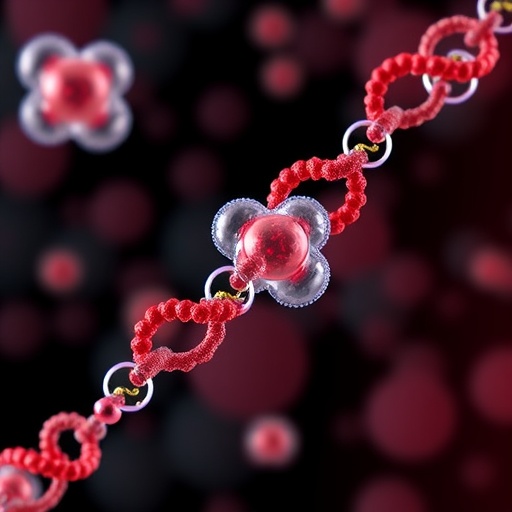
In a groundbreaking advancement poised to elevate the precision and efficacy of nucleic acid therapeutics, researchers have developed a novel protocol for fabricating targeted lipid nanoparticles (tLNPs) functionalized with antibodies to dramatically enhance cellular specificity. This innovative technique addresses one of the most enduring challenges in nanoparticle-mediated delivery: overcoming the liver’s dominant passive uptake, which often necessitates prohibitively high doses to achieve effective transfection in specific cell types. By cleverly harnessing receptor-mediated endocytosis, these tLNPs promise to revolutionize how genetic information is delivered in vivo, marking a milestone towards personalized, precision medicine.
Lipid nanoparticles have emerged as versatile and powerful vehicles for delivering RNA-based drugs and vaccines, such as the recent mRNA COVID-19 vaccines, thanks to their ability to encapsulate nucleic acids and protect them from degradation. However, intravenous administration of conventional LNPs tends to result in significant accumulation in the liver due to nonspecific uptake by Kupffer cells and hepatocytes. This phenomenon limits the therapeutic window, as only a small fraction of administered particles reaches the intended target cells in peripheral tissues or diseased sites. Thus, there has been a pressing need to devise strategies that redirect LNPs away from indiscriminate liver clearance towards targeted delivery.
The team behind the new protocol has introduced a modular yet robust workflow that allows researchers to conjugate whole antibodies or antibody fragments directly onto the surface of LNPs, thereby enabling the nanoparticles to engage specific cellular receptors and be internalized selectively by desired cell populations. This receptor-mediated endocytosis mechanism enhances uptake in less accessible or traditionally difficult-to-transfect cells, shedding light on pathways previously elusive for nucleic acid delivery.
Importantly, their methodology does not require specialized industrial-grade equipment, making it widely accessible to academic and clinical laboratories worldwide. Through a meticulously detailed process spanning antibody preparation and labeling, conjugation to lipid particles, purification, characterization, and subsequent in vivo and ex vivo validation, the researchers provide a comprehensive how-to blueprint. This scalable approach is integral to accelerating translational research efforts where rapid prototyping and testing of targeted nanocarriers can be performed with standard bench-top setups.
The practical merits of this antibody-functionalized LNP technology were demonstrated in several compelling in vivo models. For instance, conjugation of antibodies against platelet endothelial cell adhesion molecule 1 (PECAM-1) to lung-tropic LNPs resulted in a remarkable fivefold increase in lung transfection compared to non-targeted counterparts. This finding highlights the enormous potential for treating pulmonary diseases, including genetic disorders and cancers, by precise gene editing or mRNA delivery strategies that require high tissue specificity.
Simultaneously, targeting the liver, a prime organ for metabolic and genetic therapeutic interventions, was enhanced by twentyfold through conjugation with anti-epidermal growth factor receptor (EGFR) antibodies on liver-tropic LNPs. Such level of enhancement could significantly reduce the doses of therapeutics needed, thus potentially minimizing systemic side effects and immunogenicity. It also opens new avenues for treating liver-associated pathologies such as hepatocellular carcinoma and inherited metabolic diseases with unprecedented specificity.
The versatility of the protocol was further validated in ex vivo settings involving primary human T cells, a notoriously challenging target for nucleic acid delivery due to their immune functions and stringent uptake barriers. Here, anti-CD5 antibody-modified LNPs achieved a 4.5-fold increase in cellular uptake and significantly boosted mRNA transfection levels. This breakthrough paves the way for next-generation immunotherapies, including engineered T cell-based treatments where precise genetic modification is crucial.
Crucially, the modular design of this platform offers universal compatibility with any LNP composition or antibody choice, providing researchers with the freedom to adapt the system for diverse therapeutic objectives. Whether the payload is mRNA, siRNA, or other nucleic acid formats, this protocol ensures targeted delivery that can be tailored towards various disease contexts and cell types, dramatically broadening the horizon of RNA therapeutics.
By enhancing targeting efficiency, this method also promises to alleviate one of the key bottlenecks in nucleic acid drug development—the high systemic doses and consequent toxicities required to overcome non-specific organ accumulation. The ability to harness natural receptor-ligand interactions to mediate cellular internalization with whole antibodies ensures strong binding avidity and specificity, overcoming limitations observed with other targeting ligands such as peptides or aptamers.
This pioneering work delivers not only a detailed scientific protocol but also sets a new standard for reproducibility and robustness in manufacturing tLNPs for therapeutic administration. Providing step-by-step guidance on antibody preparation, labeling, LNP conjugation, and thorough characterization ensures that researchers can reliably produce functionalized nanoparticles suitable for rigorous preclinical studies and rapid clinical translation.
Moreover, the implications of this technology reach far beyond the immediate application of nucleic acid delivery—it serves as a cornerstone for expanding the functional landscape of nanomedicine. By marrying bioconjugation chemistry with innovative nanocarrier design, this approach offers a versatile toolkit for targeting diverse cellular pathways and enhancing intracellular delivery efficiency in a range of biomedical contexts.
Looking ahead, the researchers emphasize that their protocol’s adaptability allows integration with emerging nucleic acid therapies targeting a variety of diseases, including genetic disorders, cancers, infectious diseases, and autoimmune conditions. The modular nature encourages swift incorporation of new antibodies as novel cellular targets are discovered, providing a dynamic platform to swiftly respond to evolving therapeutic challenges.
In summary, the preparation of antibody-functionalized lipid nanoparticles marks a significant leap forward in the precision delivery of nucleic acid medicines. This protocol not only overcomes the substantial hurdle of liver-dominant clearance but also amplifies target-cell engagement and transfection efficiency at reduced doses. The promise to dramatically enhance the therapeutic index of RNA-based interventions will undoubtedly invigorate efforts to bring personalized gene therapies closer to clinical reality.
As nucleic acid-based treatments continue their rapid ascent in biomedical innovation, the availability of reliable, efficient, and targeted delivery systems such as these tLNPs will be a decisive factor in their success. The described strategy heralds a new era where genetic payloads can be delivered with surgical precision, maximizing therapeutic benefits while minimizing unintended effects, ultimately transforming the future landscape of medicine.
Cite Scienmag News
Juliet Wilcox. (March 9, 2026). Designing Targeted Lipid Nanoparticles for Precise Gene Delivery. Scienmag. https://scienmag.com/designing-targeted-lipid-nanoparticles-for-precise-gene-delivery/
Juliet Wilcox. "Designing Targeted Lipid Nanoparticles for Precise Gene Delivery." Scienmag, 9 March 2026, https://scienmag.com/designing-targeted-lipid-nanoparticles-for-precise-gene-delivery/. Accessed 3 September 2026.
Juliet Wilcox. "Designing Targeted Lipid Nanoparticles for Precise Gene Delivery." Scienmag. March 9, 2026. https://scienmag.com/designing-targeted-lipid-nanoparticles-for-precise-gene-delivery/


