


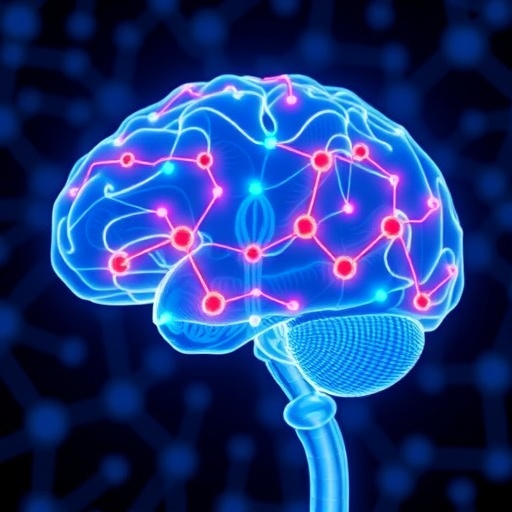
In a groundbreaking new study published in Translational Psychiatry, researchers have unveiled intricate neurophysiological mechanisms underlying ketamine’s rapid antidepressant effects in patients with treatment-resistant depression (TRD). The investigation meticulously explores how ketamine modulates electroencephalographic (EEG) resting state connectivity at the source level, shedding light on the complex brain network dynamics that may explain the rapid mood improvements witnessed clinically. This study marks a significant advance in our understanding of ketamine’s action on brain function, potentially charting a course toward more effective interventions for notoriously recalcitrant depressive disorders.
Treatment-resistant depression represents a major clinical challenge, affecting individuals who have not responded to multiple conventional antidepressant therapies. The urgency to find novel pharmacological strategies has driven ketamine into the spotlight due to its remarkable rapid-onset antidepressant properties, which contrast starkly with the delayed effects typical of standard treatments. Despite widespread clinical use of ketamine, the precise cerebral mechanisms driving its antidepressant efficacy have remained elusive. This study bridges a critical gap by analyzing source-based EEG connectivity patterns, offering a window into the functional brain alterations elicited by ketamine during resting state.
The research team harnessed advanced EEG source localization techniques to dissect the spatial and temporal signatures of brain activity modulated by ketamine administration. Instead of relying solely on surface electrode data, the approach models cortical and subcortical neural sources underlying recorded signals, thereby facilitating a more granular appreciation of functional connectivity changes. This advance allows for the identification of specific brain regions whose interactive dynamics are altered following ketamine treatment, moving beyond traditional EEG analyses to yield a network-centric view of brain function modulation in TRD.
Central to the findings is the observation that ketamine induces distinct patterns of altered functional connectivity across several key resting state networks implicated in mood regulation and cognitive processing. Notably, regions within the default mode network (DMN), salience network, and frontoparietal control network exhibited significant modulation post-infusion, suggesting ketamine’s influence disrupts pathological connectivity states commonly observed in depressive disorders. The study underscores how reconfiguration of these networks may underpin the rapid alleviation of depressive symptoms and cognitive rigidity characteristic of TRD.
Moreover, the researchers elucidated that ketamine’s effects extended beyond localized regional changes, influencing the integrative communication pathways between distant cortical and subcortical nodes. The enhancement and attenuation of specific long-range connections indicate that ketamine fosters a functional reboot of the brain’s intrinsic connectivity architecture. The reset-like effect challenges the conventional monoaminergic hypotheses of depression, positing instead that network-level plasticity and dynamic reshaping of neural circuitry are fundamental to therapeutic response.
The temporal dynamics captured by continuous EEG monitoring revealed that ketamine’s modulatory impact unfolds swiftly within minutes after administration, consistent with the drug’s rapid clinical action profile. These early connectivity alterations were predictive of subsequent mood improvements, suggesting an electrophysiological biomarker for treatment efficacy. This temporal precision lends credence to the theory that ketamine facilitates prompt disruption of maladaptive neural circuits, enabling restoration of more flexible and adaptive brain states.
Complementing the neurophysiological data, the study integrates symptomatology scales corroborating the robust antidepressant response in the cohort. Not only were symptom severity scores significantly reduced following ketamine infusion, but these reductions bore strong correlations with connectivity changes measured by source-based EEG. This multimodal convergence lends powerful translational significance, linking brain network recalibration directly with clinical outcomes and highlighting candidate neural substrates for targeted interventions.
In parsing the receptor-level underpinnings of these network shifts, the authors discuss ketamine’s antagonism at NMDA glutamate receptors, a mechanism distinct from traditional antidepressants which predominantly modulate monoaminergic neurotransmission. This glutamatergic modulation likely triggers downstream synaptic plasticity events and neurotrophic factor release, fostering the observed functional connectivity remodeling. The interplay of these molecular cascades and their reflection at the macroscale network level represent a cutting-edge frontier in depression research.
Importantly, the study’s methodology exemplifies how EEG, a non-invasive and cost-effective neuroimaging modality, can be harnessed to probe brain network dynamics with high temporal resolution. The source-based connectivity paradigm offers a scalable tool for future clinical trials, enabling real-time monitoring of treatment effects and personalization of therapeutic regimens for TRD patients. The potential to integrate such biomarkers into clinical workflows promises to revolutionize psychopharmacology.
Looking forward, the authors advocate extending these investigations to longitudinal designs assessing the persistence of connectivity changes and their relationship with sustained remission phases. Equally, expanding research paradigms to examine ketamine’s differential effects in various depression subtypes and comorbid neuropsychiatric conditions will enhance the granularity of mechanistic insights. This study catalyzes a paradigm shift, transitioning from symptom-centric to circuit-level conceptualizations of depression and its treatment.
The ramifications of this research transcend ketamine alone. By elucidating how rapid plasticity induced at the network scale can mediate therapeutic outcomes, these findings pave the way for the development of next-generation treatments aimed at harnessing neurocircuit modulation. Neuromodulatory approaches such as transcranial magnetic stimulation or novel glutamatergic agents could be optimized using similar EEG-derived connectivity markers, revolutionizing personalized psychiatry.
In light of the global burden imposed by depression, innovations promising expedited and durable responses are critically needed. This study’s demonstration of electrophysiological signatures predictive of ketamine’s efficacy carries immense translational potential for refining diagnostic classification and guiding clinical decision-making. The fusion of neurophysiology, computational modeling, and clinical psychiatry embodied here exemplifies the interdisciplinary approach needed to conquer complex mental illnesses.
The granular insights afforded by source-resolved EEG connectivity analyses represent a major leap toward unraveling the enigmatic neurobiology of depression and rapidly acting therapeutics. As neuroscience progresses beyond static brain maps to embrace dynamic functional interactions, studies such as this will be instrumental in transforming how mental disorders are conceptualized and treated. Ketamine’s story is emblematic of the power of modern neurotechnology to unlock brain circuits and deliver hope for millions.
Ultimately, this seminal work not only decodes ketamine’s immediate impact on brain communication but also provides a blueprint for future investigations seeking to demystify the circuit mechanisms underlying other psychiatric medications. The prospect of personalized interventions guided by individualized brain network signatures signals a new era in psychiatry where efficacy and speed of response are dramatically enhanced. This research exemplifies how convergent technologies can generate paradigm-shifting insights into the human mind and its disorders.
As research continues, integrating genetic, molecular, and electrophysiological data will further refine our understanding of treatment response heterogeneity. The path forward illuminated by this study empowers a hope-filled vision for psychiatry: that through precision diagnostics and targeted circuit modulation, even the most treatment-resistant depressive episodes may increasingly succumb to efficacious intervention. This heralds a transformative future for patients and clinicians alike, propelled by pioneering work such as this.
Cite Scienmag News
Glenn Wilkins. (March 7, 2026). Ketamine’s Impact on Brain Connectivity in Resistant Depression. Scienmag. https://scienmag.com/ketamines-impact-on-brain-connectivity-in-resistant-depression/
Glenn Wilkins. "Ketamine’s Impact on Brain Connectivity in Resistant Depression." Scienmag, 7 March 2026, https://scienmag.com/ketamines-impact-on-brain-connectivity-in-resistant-depression/. Accessed 4 September 2026.
Glenn Wilkins. "Ketamine’s Impact on Brain Connectivity in Resistant Depression." Scienmag. March 7, 2026. https://scienmag.com/ketamines-impact-on-brain-connectivity-in-resistant-depression/


