


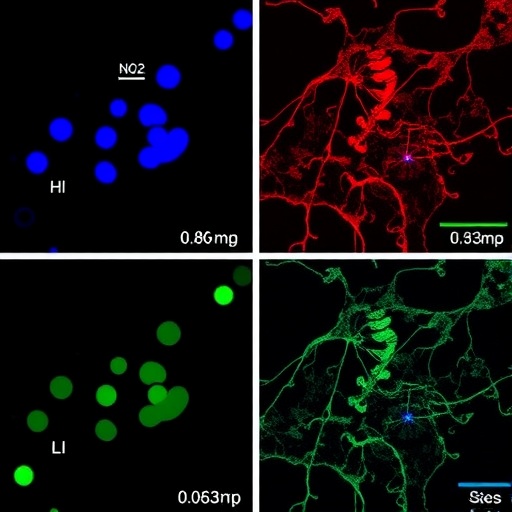
In a groundbreaking development with profound implications for regenerative medicine, researchers have pioneered an innovative method for generating human dorsal spinal GABAergic progenitors, advancing the quest to treat spinal cord injury (SCI). This advancement, reported by Feng, Wan, Peng, and colleagues, marks a significant leap forward by offering a more efficient and scalable approach to derive specialized neuronal cells critical for spinal cord repair. Published in Experimental & Molecular Medicine in March 2026, the study addresses longstanding challenges in neural regeneration by focusing on the nuanced complexity of dorsal spinal cord neurogenesis, specifically harnessing GABAergic progenitors known for their inhibitory modulation within neural circuits.
Spinal cord injuries remain one of the most debilitating conditions, often resulting in permanent sensory and motor deficits owing to limited natural regenerative capacity in the central nervous system. The heterogeneity of spinal neurons and their intricate developmental pathways have impeded the production of targeted progenitors capable of integrating into damaged tissue and restoring function. The innovation in this research revolves around manipulating human pluripotent stem cells (hPSCs) under meticulously defined conditions, steering them along developmental trajectories that mimic natural dorsal spinal cord differentiation. This process ensures the resultant progenitor cells exhibit hallmark markers and functional attributes consistent with endogenous dorsal GABAergic interneurons.
What sets this study apart is its comprehensive protocol combining signaling pathway modulation—via precise timing and dosage of morphogens like Sonic Hedgehog (Shh), retinoic acid (RA), and Wnt signaling components—with novel culturing strategies. These include temporal control over patterning cues and refinement of the progenitor maturation environment, which collectively optimize cell yield and purity. This heralds an unprecedented scalability in producing dorsal spinal GABAergic progenitors suitable for both experimental modeling and therapeutic transplantation purposes.
The therapeutic promise of dorsal spinal GABAergic progenitors lies in their inherent role in inhibitory neurotransmission, regulating excitability and synaptic integration within spinal circuits. Following injury, loss of inhibitory control can lead to spasticity, neuropathic pain, and dysfunctional reflexes. By replenishing this vital cell population, the approach aims not merely to replace lost neurons but to reestablish the delicate balance necessary for functional recovery. Moreover, the capacity of these progenitors to respond to injury-induced signaling and integrate synaptically heightens their potential efficacy.
In their extensive characterization, Feng and colleagues demonstrate that derived progenitors express transcription factors such as Ptf1a, Lhx1/5, and Gad1, embodying the molecular signature of dorsal spinal GABAergic neurons. Electrophysiological analyses confirm their ability to generate inhibitory postsynaptic currents, ensuring functional relevance. Importantly, in vivo transplantation into SCI animal models reveals robust survival, migration, and integration capacities. Treated animals exhibited improved locomotor patterns and reduced neuropathic pain symptoms, providing compelling evidence of therapeutic benefit.
Beyond cell transplantation, these GABAergic progenitors serve as vital experimental platforms for studying human spinal cord development and pathophysiology. Their derivation opens avenues for high-throughput drug screening to identify compounds that promote inhibitory neuron function or mitigate maladaptive plasticity post-injury. Furthermore, understanding the molecular cues governing their differentiation deepens insights into congenital spinal disorders and regenerative biology.
Technically, the researchers innovated on standard differentiation protocols by temporal modulation of the Shh pathway using small molecules, delicately balancing dorsal-ventral patterning signals. This contrasts with traditional approaches predominantly targeting ventral progenitors, emphasizing the importance of dorsal inhibitory neurons often overlooked in previous regenerative studies. The utilization of transcriptomic profiling and single-cell analyses validated the homogeneity and lineage specificity of the progenitor populations—a vital factor for reproducible therapeutic applications.
The translational potential is immense. Spinal cord injury patients currently face dismal prognoses with limited options beyond supportive care. Cell-based therapies offer hope but have been hampered by inefficiencies in generating suitable neuronal subtypes. By addressing the complexities of dorsal spinal neurogenesis, this study lays a foundation for clinical strategies that harness human GABAergic progenitors to restore impaired circuitry. Future clinical trials will be crucial to establish safety, dosing, and functional integration in humans.
Regulatory perspectives will need to navigate challenges intrinsic to stem cell-derived products, including graft stability, tumorigenic risk, and immune compatibility. The study’s demonstration of reproducible batch production and rigorous quality control will be pivotal in meeting these criteria. Additionally, combining progenitor transplantation with rehabilitative regimens or bioengineered scaffolds may potentiate regenerative outcomes, paving the way for next-generation combinatorial treatments.
From a neuroscience standpoint, this research unravels the developmental logic of spinal inhibitory neuron specification, which has implications extending beyond trauma. Conditions such as spasticity, chronic pain syndromes, and neurodegenerative diseases characterized by inhibitory dysfunction may benefit from insights gained here. It signals a paradigm shift emphasizing the restoration of neuronal diversity rather than nonspecific neuronal replacement.
Looking forward, the exploration of gene editing tools like CRISPR alongside this progenitor derivation platform could further refine functional properties or introduce protective traits against hostile injury microenvironments. Advances in bioengineering, such as organ-on-a-chip technologies incorporating these progenitors, promise sophisticated disease models to probe SCI mechanisms and test novel therapeutics in vitro.
The ethical dimensions surrounding stem cell therapies must continue to be addressed, ensuring informed consent, equitable access, and transparent reporting of outcomes in clinical contexts. This work exemplifies responsible innovation, coupling robust preclinical validation with considerations for patient safety.
In sum, Feng et al.’s study is a landmark contribution to spinal cord regenerative medicine, translating developmental neuroscience into tangible therapeutic avenues. The efficient generation of human dorsal spinal GABAergic progenitors signals a new era in repairing the injured spinal cord, with the potential to alleviate suffering and restore quality of life for millions globally. As this technology evolves, it embodies the quintessential promise of regenerative medicine: to replace the irreparable and unlock the body’s latent capacity for self-healing.
—
Cite Scienmag News
Cassandra Pierce. (March 7, 2026). Efficient Production of Human Spinal GABAergic Progenitors. Scienmag. https://scienmag.com/efficient-production-of-human-spinal-gabaergic-progenitors/
Cassandra Pierce. "Efficient Production of Human Spinal GABAergic Progenitors." Scienmag, 7 March 2026, https://scienmag.com/efficient-production-of-human-spinal-gabaergic-progenitors/. Accessed 3 September 2026.
Cassandra Pierce. "Efficient Production of Human Spinal GABAergic Progenitors." Scienmag. March 7, 2026. https://scienmag.com/efficient-production-of-human-spinal-gabaergic-progenitors/


