


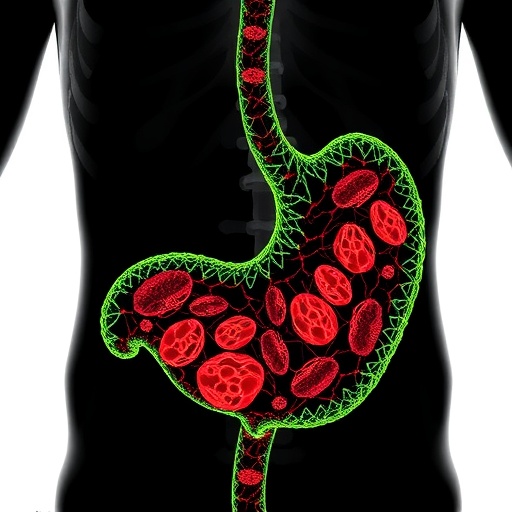
In a groundbreaking study that sheds light on the elusive mechanisms underlying gastric cancer metastasis, researchers at Kanazawa University’s Cancer Research Institute and Nano Life Science Institute (WPI-NanoLSI) have uncovered a pivotal role played by ligand-dependent Wnt signaling in orchestrating the tumor microenvironment. This discovery not only revolutionizes our understanding of metastatic progression but also spotlights novel therapeutic avenues aimed at halting the spread of one of the world’s deadliest cancers.
Gastric cancer continues to pose a formidable global health challenge, largely due to its propensity to metastasize to distant organs such as the liver. While oncogenic driver mutations have been extensively characterized, the microenvironmental factors enabling disseminated cancer cells to establish thriving colonies remain enigmatic. The new study decisively implicates the Wnt signaling pathway—a critical mediator of stem cell biology and tissue homeostasis—in remodeling the stromal landscape that facilitates metastatic colonization.
Central to the researchers’ approach was the utilization of advanced organoid models derived from mouse gastric epithelium, genetically engineered to bear mutations in Kras, Tgfbr2, and Trp53 (KTP organoids). A modified version, termed WKTP, was further endowed with the capacity to produce Wnt ligands. Upon splenic transplantation, only the WKTP organoids engendered extensive liver metastases, underscoring the necessity of extracellular Wnt ligand signaling in metastatic seeding.
Delving deeper, the team unveiled a sophisticated crosstalk between cancer cells and the surrounding stromal fibroblasts. Tumor-secreted Wnt ligands were found to activate Wnt signaling cascades in these fibroblasts, synergizing with TGF-β pathways to induce the expression of hyaluronan synthase 2 (Has2). The resultant production and accumulation of hyaluronan in the metastatic niche emerged as a lynchpin in creating a hospitable microenvironment that nurtures metastatic tumor outgrowth.
Intriguingly, the activation of Wnt signaling purely within tumor cells failed to recapitulate the metastatic potential observed when stromal fibroblasts were also activated. This pivotal finding delineates a paradigm shift, emphasizing that the malignancy’s microenvironmental reprogramming—rather than oncogenic signaling within cancer cells alone—drives metastatic propagation. The stromal fibroblasts, commandeered by cancer-derived signals, emerge as indispensable architects of tumor progression.
Hyaluronan, a glycosaminoglycan known for its water-retentive and extracellular matrix-modulating properties, was observed to accumulate significantly in early metastatic lesions. Its abundance fosters a niche that not only supports tumor cell survival but also likely modulates immune infiltration and angiogenesis. Importantly, enzymatic degradation of hyaluronan via hyaluronidase expression markedly curtailed liver metastases in vivo, highlighting hyaluronan’s functional importance and therapeutic potential.
This research underscores the intricate synergy between ligand-dependent Wnt signaling and stromal components in shaping the metastatic microenvironment. Beyond providing insights into gastric cancer biology, it presents a compelling case for targeting ligand-receptor interactions that sustain pathogenic stromal activation. Therapies designed to inhibit Wnt ligand production or signaling, alongside strategies to disrupt hyaluronan synthesis or accumulation, may offer robust means to forestall metastatic disease.
Furthermore, this study aligns with emerging evidence that tumor progression cannot be effectively combated by focusing solely on cancer cells. Instead, the tumor microenvironment, especially the stromal fibroblasts and extracellular matrix components, must be considered integral therapeutic targets. Remodeling this ‘soil’ to render it inhospitable to metastatic ‘seeds’ represents an innovative frontier in oncology.
Efforts to translate these findings into clinical applications are already underway. Future investigations will aim to validate the molecular signatures of Wnt-activated stromal fibroblasts and hyaluronan deposition in human gastric cancer specimens. Parallel development of small molecules or biological agents to selectively disrupt this axis holds promise for improving patient outcomes by preventing or limiting metastasis.
The study’s use of organoid transplantation models offers a powerful platform to dissect tumor-stroma interactions with unprecedented precision. This methodology not only enhances our grasp of cancer’s metastatic choreography but also facilitates rapid preclinical testing of novel interventions targeting the tumor microenvironment.
Dr. Masanobu Oshima and his team highlight the broader implications of their findings, noting that metastatic competence arises from a complex interplay between malignant cells and the host milieu. By forging a nurturing metastatic niche in distant organs, cancer cells gain survival advantages, evading both immune surveillance and therapeutic stress. Consequently, interrupting these supportive cues may represent a transformative strategy in the battle against cancer dissemination.
In summary, this study establishes ligand-dependent Wnt signaling-induced hyaluronan synthesis in stromal fibroblasts as a cornerstone of gastric cancer metastasis. By illuminating how cancer cells manipulate their surroundings to foster metastatic growth, it opens new horizons for designing microenvironment-centric anti-metastatic therapies. As gastric cancer continues to claim lives worldwide, these insights offer a beacon of hope for more effective, targeted interventions.
News Publication Date: 14-Feb-2026
Web References: http://dx.doi.org/10.1038/s41467-026-69470-5
Cite Scienmag News
Nathaniel Bowman. (March 6, 2026). Wnt Signaling Fuels Stomach Cancer Progression by Remodeling the Tumor Microenvironment. Scienmag. https://scienmag.com/wnt-signaling-fuels-stomach-cancer-progression-by-remodeling-the-tumor-microenvironment/
Nathaniel Bowman. "Wnt Signaling Fuels Stomach Cancer Progression by Remodeling the Tumor Microenvironment." Scienmag, 6 March 2026, https://scienmag.com/wnt-signaling-fuels-stomach-cancer-progression-by-remodeling-the-tumor-microenvironment/. Accessed 5 September 2026.
Nathaniel Bowman. "Wnt Signaling Fuels Stomach Cancer Progression by Remodeling the Tumor Microenvironment." Scienmag. March 6, 2026. https://scienmag.com/wnt-signaling-fuels-stomach-cancer-progression-by-remodeling-the-tumor-microenvironment/


