


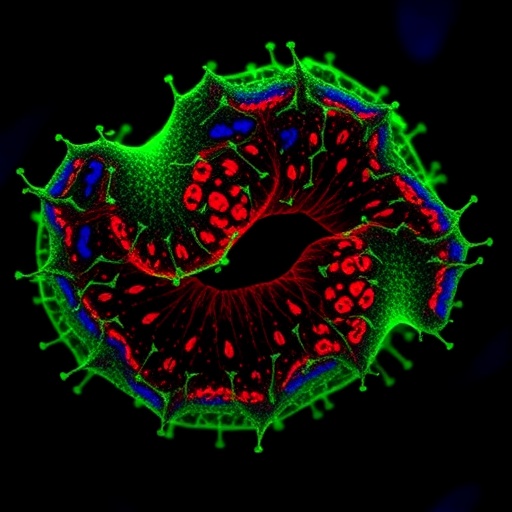
In a groundbreaking study recently published in npj Parkinson’s Disease, researchers have uncovered a critical molecular mechanism linking inflammation in brain immune cells to enzyme activity changes that may influence Parkinson’s disease pathology. The investigation, led by MacDougall et al., sheds new light on how LRRK2 kinase modulates glucocerebrosidase (GCase) activity in microglia during proinflammatory responses mediated by interferon-gamma (IFNγ). This discovery opens promising avenues for therapeutic strategies targeting neuroinflammation-related processes that drive Parkinsonian neurodegeneration.
Parkinson’s disease is characterized by progressive dopaminergic neuron loss in the substantia nigra and the accumulation of misfolded alpha-synuclein protein, but the precise cellular events initiating and perpetuating these processes remain elusive. Microglia, the brain’s resident immune cells, are pivotal players that detect and respond to neural injury and pathogenic stimuli. Their activation state greatly influences neuronal survival and disease progression. Understanding how microglial signaling pathways interact with enzymatic regulators implicated in Parkinson’s could revolutionize how we approach disease-modifying therapies.
The study focuses specifically on leucine-rich repeat kinase 2 (LRRK2), one of the most prominent genetic risk factors for Parkinson’s disease. Mutations in LRRK2 elevate its kinase activity, which has been implicated in altered autophagic degradation pathways and inflammatory signaling in microglia. However, the precise downstream effects of LRRK2 activity on lysosomal enzymes like GCase have remained poorly understood. GCase, encoded by the GBA gene, is a lysosomal hydrolase involved in sphingolipid metabolism, and its deficiency is known to increase Parkinson’s risk. Remarkably, this research reveals that upon proinflammatory stimulation by IFNγ, LRRK2 kinase directly enhances GCase enzymatic activity within microglia.
Employing a combination of advanced molecular biology techniques—including CRISPR gene editing, kinase assays, and high-resolution live-cell imaging—the researchers delineated the biochemical cascade triggered in microglia exposed to IFNγ. They observed that LRRK2 phosphorylation increased significantly following IFNγ stimulation, which in turn modulated GCase activity levels. This effect was shown to be LRRK2 kinase-dependent, as pharmacological inhibitors of LRRK2 neutralized the upregulation of GCase. These findings implicate a tightly regulated signaling axis whereby neuroinflammatory cues rapidly adjust lysosomal enzyme functions to potentially protect or, conversely, exacerbate neuronal damage.
The implications of this interplay are profound. Microglia’s ability to metabolize pathogenic protein aggregates and damaged cellular components relies heavily on lysosomal health. Enhanced GCase activity could represent an adaptive response aimed at clearing toxic substrates in an inflammatory environment. Conversely, aberrant LRRK2 kinase hyperactivation could dysregulate this response, leading to lysosomal dysfunction—a hallmark of Parkinson’s pathology. This dualistic nature raises the possibility that tempering LRRK2 activity might normalize GCase function and microglial behavior, thereby slowing disease progression.
Beyond the cellular and molecular insights, this research adds to a growing narrative emphasizing the critical role of the immune system in neurodegeneration. It underscores that neurological disorders like Parkinson’s are not simply neuronal ailments but rather intricate network diseases involving crosstalk between neurons and glial cells under inflammatory stress. Targeting microglial pathways could yield novel interventions that complement traditional dopaminergic therapies, which primarily address symptoms instead of root causes.
Importantly, the authors note that the IFNγ-mediated proinflammatory environment studied here mimics pathological conditions associated with neurodegeneration, including viral infections and chronic inflammation. This context enhances the study’s translational relevance as it models microglial responses in disease states more accurately than basal conditions. Future work will be required to explore how these signaling mechanisms vary across different brain regions and disease stages, potentially unveiling biomarkers for early diagnosis or treatment monitoring.
Technological innovation played a key role in enabling these discoveries. The team’s use of live-cell imaging techniques allowed for real-time observation of GCase activity fluctuations in response to cytokine stimulation. This dynamic perspective challenges the traditional static snapshots frequently employed in enzymology and cell biology studies, providing richer kinetic data and revealing nuanced regulatory checkpoints. The integration of CRISPR gene editing further permitted precise manipulation of LRRK2 expression and function, strengthening causal inferences and mechanistic clarity.
Another compelling aspect of this study involves the potential implications for patients carrying GBA mutations, who represent a substantial subset of Parkinson’s populations worldwide. Since GCase deficiency is a major risk factor for Parkinson’s, understanding how inflammation-induced LRRK2 activity influences GCase may clarify why some individuals develop disease faster or exhibit more severe symptoms. It prompts the hypothesis that personalized therapeutic strategies targeting LRRK2 kinase in these patients might restore GCase homeostasis and ameliorate clinical outcomes.
Furthermore, the interplay between inflammation and lysosomal function extends beyond Parkinson’s disease. Neurodegenerative disorders such as Alzheimer’s disease, multiple sclerosis, and amyotrophic lateral sclerosis also exhibit prominent inflammatory components and lysosomal impairments. The identified LRRK2-GCase axis might therefore represent a central hub of neuroimmune regulation with broader implications for neurological health. These findings encourage a paradigm shift toward integrated therapeutic approaches that harness immune modulation alongside classical neuroprotective tactics.
Critically, the study acknowledges several limitations and future challenges. While the experiments were rigorously conducted using human-derived microglial models and in vitro conditions mimicking neuroinflammation, in vivo studies in animal models and ultimately clinical trials will be necessary to fully comprehend the physiological and pathological relevance. Variability in microglial states, patient genetics, and environmental factors could modulate the described mechanisms, underscoring the need for comprehensive translational research.
In conclusion, the work of MacDougall and colleagues significantly advances our understanding of the molecular mechanisms bridging inflammation, microglial lysosomal function, and Parkinson’s disease pathogenesis. By elucidating how LRRK2 kinase modulates GCase activity in response to IFNγ-induced proinflammatory stimulation, this study charts new territory for targeted therapeutic intervention. The insights gained hold promise not only for Parkinson’s disease but also for a spectrum of neurodegenerative disorders marked by immune dysregulation and lysosomal dysfunction.
As Parkinson’s disease continues to affect millions worldwide, breakthroughs such as this offer hope for developing more effective treatments that address disease progression at its roots. Future research inspired by these findings may yield novel drugs to precisely regulate kinase activity and lysosomal enzyme function, ultimately improving quality of life for patients. The convergence of immunology, enzymology, and neurobiology in this study exemplifies the interdisciplinary approach necessary to conquer complex brain diseases.
The publication of these results in a prestigious journal like npj Parkinson’s Disease attests to the scientific significance and potential impact of this discovery. It will undoubtedly catalyze further investigations into LRRK2’s multifaceted roles and microglial contributions to neurodegeneration. Given the rising global burden of Parkinson’s and related disorders, such research efforts are more critical than ever. The era of neuroimmune-focused therapeutics may be on the horizon, driven by pioneering studies like this one.
Cite Scienmag News
Cassandra Pierce. (March 6, 2026). LRRK2 Boosts Microglial GCase Activity via IFNγ. Scienmag. https://scienmag.com/lrrk2-boosts-microglial-gcase-activity-via-ifn%ce%b3/
Cassandra Pierce. "LRRK2 Boosts Microglial GCase Activity via IFNγ." Scienmag, 6 March 2026, https://scienmag.com/lrrk2-boosts-microglial-gcase-activity-via-ifn%ce%b3/. Accessed 4 September 2026.
Cassandra Pierce. "LRRK2 Boosts Microglial GCase Activity via IFNγ." Scienmag. March 6, 2026. https://scienmag.com/lrrk2-boosts-microglial-gcase-activity-via-ifn%ce%b3/


