


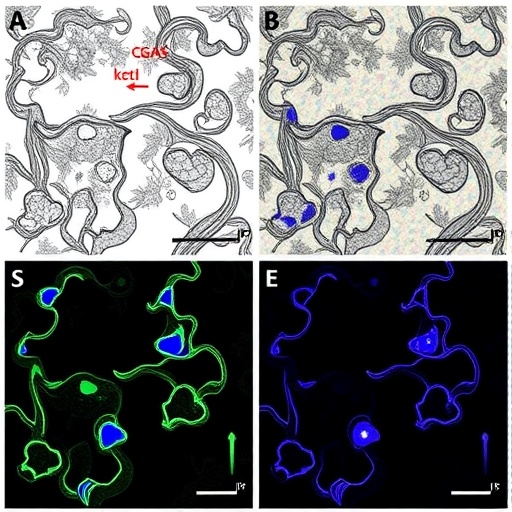
In a groundbreaking study poised to redefine the future of transplant immunology, researchers have uncovered the pivotal role of cyclic GMP-AMP synthase (cGAS) in regulating dendritic cell (DC) maturation and its consequential impact on graft survival. This discovery signals a transformative approach toward enhancing immune tolerance in organ transplantation, potentially diminishing the reliance on lifelong immunosuppressive therapies that are currently fraught with adverse effects. The team, led by Zhang et al., delved deep into the molecular mechanisms governing immune activation and tolerance, centering their investigation on cGAS, a cytosolic DNA sensor traditionally celebrated for its role in innate immunity.
At the epicenter of transplantation immunology lies the dichotomy between immune activation and immune tolerance. Dendritic cells, being the sentinels of the immune system, orchestrate this balance through their maturation status and antigen-presenting capabilities. The maturation of DCs involves the upregulation of major histocompatibility complex (MHC) and co-stimulatory molecules, essential for potent T cell activation. However, unchecked dendritic cell maturation often predisposes graft recipients to acute rejection episodes. The new study harnessed advanced bioinformatics analyses to identify a conspicuously elevated expression of cGAS in allograft tissues, suggesting a direct involvement in the post-transplant immune milieu.
To experimentally probe the functional ramifications of cGAS expression in dendritic cells, researchers engineered immature DCs derived from murine models with an adenoviral vector designed to knock down cGAS expression. This resulted in three distinct groups: cGAS-shRNA-DCs, EGFP-DCs (control vector), and a phosphate-buffered saline (PBS) treated cohort. These cells were administered intravenously to recipient mice pre-transplantation, setting the stage to evaluate how modulation of cGAS in donor-derived dendritic cells influences graft acceptance.
One of the most striking outcomes was that mice receiving cGAS-suppressed DCs exhibited markedly prolonged allograft survival compared to controls. Histopathological examination corroborated these findings, revealing significantly diminished tissue damage and inflammatory infiltrates in graft samples from the cGAS-shRNA-DC group. This observation underscores the critical influence of dendritic cell-mediated immune responses on graft fate and opens the door to targeted cellular therapies that recalibrate immune activation rather than blanket suppression.
At the cellular level, cGAS-deficient dendritic cells displayed a pronounced reduction in MHC class II molecules and critical co-stimulatory markers such as CD80 and CD86 after lipopolysaccharide (LPS) stimulation. This phenotypic shift signifies a block in dendritic cell maturation that favors immunological quiescence. Intriguingly, these cGAS-suppressed DCs showed enhanced phagocytic activity, implying a preserved capacity for antigen capture paired with impaired T cell stimulatory function. This duality is critical for promoting tolerogenic environments conducive to graft acceptance.
The downstream impact on T cell populations resounded with the phenotypic alterations observed in dendritic cells. Flow cytometric analyses of splenic lymphocytes revealed a notable increase in regulatory T cells (Tregs), known arbiters of immune tolerance, alongside a concomitant reduction in pro-inflammatory T helper 1 (Th1) and T helper 17 (Th17) subsets. This immune modulation suggests that cGAS suppression in DCs skews the recipient’s immune landscape towards tolerance, mitigating the aggressive cytotoxic and inflammatory responses responsible for graft rejection.
Cytokine profiling further illuminated the immunological shifts induced by cGAS inhibition. Cultured supernatants from cGAS-silenced DCs exhibited significantly decreased levels of the pro-inflammatory cytokines interferon-gamma (IFN-γ), interleukin-1 beta (IL-1β), tumor necrosis factor-alpha (TNF-α), and interleukin-6 (IL-6). Conversely, anti-inflammatory interleukin-10 (IL-10) was elevated, reinforcing the paradigm that cGAS suppression dampens pro-inflammatory signaling cascades while promoting regulatory mediators. These cytokine dynamics are integral to the establishment of a tolerant microenvironment post-transplant.
To unravel the molecular machinery underpinning cGAS’s role in DC maturation, Western blot analyses were employed. The findings implicated the nuclear factor kappa-light-chain-enhancer of activated B cells (NF-κB) signaling pathway as a critical nexus influenced by cGAS activity. Specifically, cGAS appeared to facilitate NF-κB activation, thereby promoting DC maturation and pro-inflammatory cytokine production. Suppression of cGAS disrupted this signaling cascade, reflected in diminished NF-κB phosphorylation levels, which correlated with functional impairments in DC maturation.
This mechanistic insight situates cGAS not merely as a DNA sensor but as a molecular architect modulating adaptive immunity through DCs. The elucidation of the cGAS-NF-κB axis advances our comprehension of how innate sensing machinery interfaces with cellular immunogenicity and tolerance. Such knowledge lays the foundation for novel immunomodulatory interventions that selectively attenuate deleterious immune responses without compromising global host defenses.
Beyond the fundamental science, the translational significance of these findings cannot be overstated. Current clinical transplantation is hampered by the toxicities of standard immunosuppressive regimens and the risk of rejection despite therapy. Targeting cGAS within dendritic cells emerges as a promising strategy to induce antigen-specific tolerance, thereby sparing recipients from the broad suppression of immune function. The potential to engineer tolerogenic DCs or small-molecule cGAS inhibitors to mitigate graft rejection warrants urgent exploration in preclinical and clinical settings.
Moreover, the study’s robust bioinformatics component accentuates the power of integrating computational tools to identify key molecular players within complex immunological landscapes. By correlating gene expression patterns with graft outcomes, the researchers honed in on cGAS as a therapeutic target with high translational potential. This methodological synergy exemplifies how multi-disciplinary approaches accelerate biomedical breakthroughs.
This research also beckons further inquiry into how cGAS activity intersects with other immune pathways during transplantation and whether its modulation affects susceptibility to infections or malignancy. Since cGAS is a vital component of the innate immune system’s viral defense, cautious evaluation of systemic effects is paramount. However, the targeted approach of modifying dendritic cells ex vivo or locally offers a feasible means to circumvent systemic immune compromise.
In summation, Zhang and colleagues’ landmark study delineates a novel immunoregulatory role for cGAS in dendritic cells, demonstrating that its suppression curtails DC maturation, reshapes T cell immunity, and enhances allograft survival in mice. This work charts a transformative path toward harnessing innate immune components to foster transplant tolerance, a beacon of hope for millions awaiting lifesaving organ transplants. As research advances, therapeutic strategies rooted in cGAS modulation could revolutionize how we manage transplantation and, potentially, other immune-mediated disorders.
The nuanced understanding of cGAS as a regulator within dendritic cells underscores the broader theme of immune system plasticity, where innate sensing pathways integrate tightly with adaptive responses. By strategically tuning these interactions, we unlock new avenues for precision immunotherapy. The promise illuminated by this study heralds a future where transplantation is not merely a feat of surgical skill but a triumph of immunological mastery.
As the field progresses, subsequent investigations will likely explore combinatorial approaches augmenting cGAS inhibition with other immunomodulatory agents, aiming to optimize graft longevity while minimizing adverse effects. Additionally, the versatility of dendritic cells as cellular therapeutics presents opportunities to engineer bespoke tolerogenic vaccines, offering personalized solutions in transplantation and beyond.
In conclusion, this seminal work by Zhang et al. marks a significant leap in transplant immunology, demonstrating that inhibiting cGAS in dendritic cells represents a compelling strategy to suppress immune activation and foster graft tolerance. This approach could redefine the therapeutic landscape, offering renewed hope for improved patient outcomes and a paradigm shift toward immune acceptance over suppression.
Cite Scienmag News
Kristina Jarvis. (March 6, 2026). Blocking cGAS Boosts Allograft Survival in Mice. Scienmag. https://scienmag.com/blocking-cgas-boosts-allograft-survival-in-mice/
Kristina Jarvis. "Blocking cGAS Boosts Allograft Survival in Mice." Scienmag, 6 March 2026, https://scienmag.com/blocking-cgas-boosts-allograft-survival-in-mice/. Accessed 4 September 2026.
Kristina Jarvis. "Blocking cGAS Boosts Allograft Survival in Mice." Scienmag. March 6, 2026. https://scienmag.com/blocking-cgas-boosts-allograft-survival-in-mice/


