


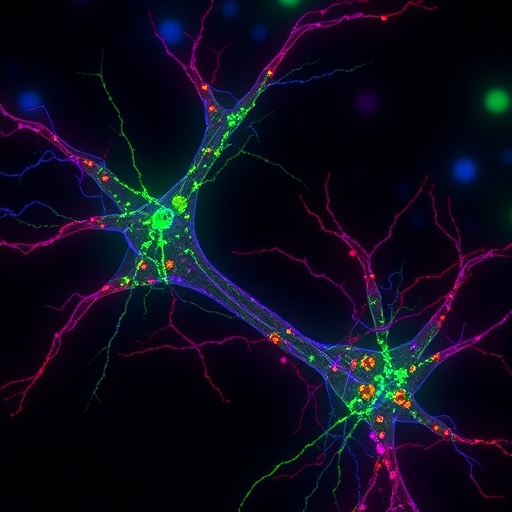
In a groundbreaking advancement that could redefine Parkinson’s disease treatment, scientists have reported successful rescue of dopaminergic neurons using Parkin gene therapy, both in vitro and in vivo. This pioneering study, conducted by Hioki, Nishimura, Sun, and colleagues, marks a significant leap forward in tackling the neurodegenerative processes underlying Parkinson’s disease—one of the most challenging and debilitating disorders affecting millions worldwide. Published in Gene Therapy this March, the research outlines an innovative therapeutic strategy that could ultimately halt or even reverse neuronal loss.
Parkinson’s disease (PD) is characterized by the progressive degeneration of dopaminergic neurons within the substantia nigra, a brain region crucial for motor control. The loss of these neurons leads to the hallmark motor symptoms such as tremors, rigidity, and bradykinesia, severely impairing quality of life. Traditional treatments like levodopa only manage symptoms and do not address underlying neurodegeneration. The advent of gene therapy offers a revolutionary approach, aiming not just to alleviate symptoms but to rescue and restore the damaged neuronal population itself.
The study focuses on the Parkin gene, mutations of which are implicated in familial forms of Parkinson’s disease. Parkin is an E3 ubiquitin ligase that regulates mitochondrial quality control and proteostasis—processes vital for neuronal survival. Dysfunction of Parkin leads to mitochondrial damage accumulation, oxidative stress, and eventual neuronal death. By reintroducing a functional Parkin gene into affected cells, the therapy targets the root cause of cell degeneration, with the goal of sustaining mitochondrial integrity and preventing cellular demise.
In vitro experiments demonstrated that delivery of the Parkin gene to neuronal cultures significantly enhanced cell viability under stress conditions designed to mimic the cellular environment in Parkinson’s disease. These cultured neurons showed improved mitochondrial function, reduced oxidative damage, and notable resistance to toxins such as rotenone which is known to induce Parkinsonian phenotypes. This in vitro evidence laid a solid foundation for subsequent in vivo testing, affirming the protective potential of Parkin gene therapy at a cellular level.
Transitioning to in vivo models, the researchers employed Parkinson’s disease animal models that recapitulate key pathological features, including dopaminergic neuronal loss and motor dysfunction. Using viral vectors to deliver the Parkin gene directly into the substantia nigra, treated animals exhibited striking preservation of dopaminergic neurons compared to control groups. Behavioral analyses corroborated these findings, with Parkin-treated animals demonstrating improved motor functions, highlighting the therapy’s functional significance beyond cellular rescue.
This dual validation—both in vitro and in vivo—reinforces the therapeutic promise of Parkin gene therapy. A major hurdle in Parkinson’s disease research has been the difficulty in translating cellular findings to whole-animal and eventually human treatments. The study’s evidence that Parkin gene therapy can execute neuroprotection in a complex living brain environment underscores its translational potential and bolsters optimism for clinical application.
Meanwhile, the mechanisms by which Parkin gene therapy exerts its protective effects were elucidated in further detail. The reinstated expression of Parkin improved mitophagy, the selective autophagic clearance of damaged mitochondria, thereby preventing the accumulation of dysfunctional organelles that would otherwise precipitate apoptosis. This enhancement of mitochondrial quality control ultimately diminishes oxidative stress and reduces activation of apoptotic signaling pathways, fostering an environment more conducive to neuronal survival.
Interestingly, the therapy’s effects extended to ameliorating neuroinflammation, a recognized contributor to Parkinsonian pathogenesis. The treated brains displayed reduced microglial activation and pro-inflammatory cytokine expression, signifying that Parkin’s influence permeates beyond neurons to the broader neuroimmune milieu. This anti-inflammatory effect may further potentiate the long-term neuroprotective capacity of the treatment, tackling multiple facets of disease progression.
From a technical standpoint, the study employed state-of-the-art adeno-associated viral (AAV) vectors optimized for neuronal tropism and safety, ensuring efficient transduction with minimal off-target effects. The delivery method was carefully designed to achieve sustained gene expression while minimizing invasiveness and immune responses — two crucial factors that have historically limited the success of gene therapies in neurological diseases.
Equally notable was the temporal window for intervention identified by the researchers. The Parkin gene therapy remained effective even when administered after the onset of neurodegeneration, an encouraging insight for clinical scenarios where early diagnosis is often challenging. This finding highlights the therapeutic potential not merely for prevention but also for disease modification at symptomatic stages.
The implications of this research extend beyond Parkinson’s disease alone. Given the central role of mitochondrial dysfunction in a host of neurodegenerative conditions—including Alzheimer’s, Huntington’s, and amyotrophic lateral sclerosis—strategies akin to Parkin gene therapy could be adapted and refined for broader application. This study lays the groundwork for a new class of interventions targeting cellular quality control systems with gene-centric precision.
While still in preclinical stages, the results reported by Hioki and colleagues lend strong impetus to advancing Parkin gene therapy toward clinical trials. Safety profiles, dosing parameters, and delivery methods will require rigorous evaluation in humans, but the foundational data presented here instills hope that gene therapy can transition from experimental concepts to tangible cures.
In conclusion, the successful rescue of dopaminergic neurons using Parkin gene therapy offers a beacon of hope for Parkinson’s disease patients worldwide. This research not only reveals the intricacies of neuronal rescue at a molecular level but also provides robust evidence that gene therapy can translate into meaningful functional recovery. The study heralds a new era where reversing neurodegeneration may become an attainable goal, transforming the landscape of neurodegenerative disease treatment.
As scientific communities and biotech industries rally around these breakthroughs, the future looks promising for the millions battling Parkinson’s disease. Continued innovation in gene-editing tools, delivery systems, and neuroprotective strategies will undoubtedly enhance and accelerate the development of such therapies. The convergence of molecular biology, gene therapy, and neuroscience exemplified in this study exemplifies how cutting-edge research can pave the way toward life-changing medical solutions.
The paper by Hioki et al., published in Gene Therapy on March 5, 2026, stands as a testament to the power of integrative science in addressing complex human diseases. Its compelling evidence and technological sophistication promise to reshape how we perceive and treat neurodegeneration, potentially signaling the dawn of gene therapy as a standard of care for Parkinson’s disease in the near future.
Cite Scienmag News
Juliet Wilcox. (March 5, 2026). Parkin Gene Therapy Rescues Dopaminergic Neurons In Vivo. Scienmag. https://scienmag.com/parkin-gene-therapy-rescues-dopaminergic-neurons-in-vivo/
Juliet Wilcox. "Parkin Gene Therapy Rescues Dopaminergic Neurons In Vivo." Scienmag, 5 March 2026, https://scienmag.com/parkin-gene-therapy-rescues-dopaminergic-neurons-in-vivo/. Accessed 4 September 2026.
Juliet Wilcox. "Parkin Gene Therapy Rescues Dopaminergic Neurons In Vivo." Scienmag. March 5, 2026. https://scienmag.com/parkin-gene-therapy-rescues-dopaminergic-neurons-in-vivo/


