


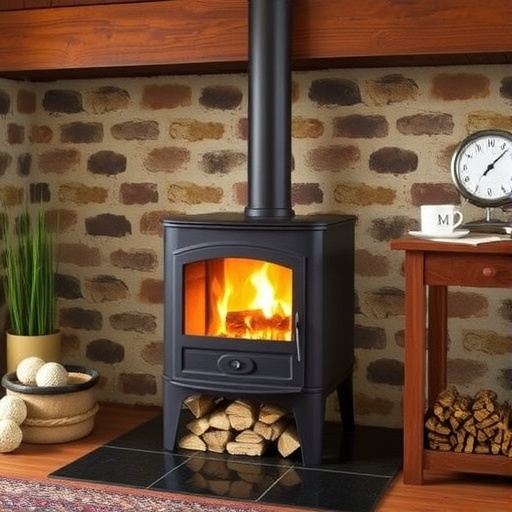
As governments worldwide grapple with the health implications of domestic heating practices, the United Kingdom finds itself at the center of a contentious debate over the role of wood burning stoves. Recently, the UK government has proposed introducing health warnings on new wood burning stoves as part of a broader public consultation on solid fuel burning. This move underscores growing concerns about air quality and public health consequences arising from a surge in the use of these heating appliances. However, an investigation published by The BMJ reveals a complex and, at times, confrontational landscape: local councils urging caution about wood stove emissions have been met with threats of legal action from the Stove Industry Association (SIA), the principal trade body representing stove manufacturers and retailers in England.
This clash highlights a significant and underreported issue—the rising prevalence of wood burning stoves, which now reportedly inhabit one in ten homes in England. Exhaustive Freedom of Information requests disclosed that nearly one-third of the 50 councils with the highest stove concentrations have faced intimidation tactics from the SIA, including direct lobbying efforts and legal threats. These councils have launched public health campaigns warning residents about the air pollution linked to wood burning; however, their messages have been countered by the industry’s efforts to contest claims of harm. Some local authorities have even been recipients of promotional material from the SIA falsely asserting that wood burning furnishes health benefits such as lowered blood pressure and reduced stress.
The crux of the debate lies in the scientific and environmental realities of particulate matter emissions. Wood burning stoves contribute substantially to the release of fine particulate matter, specifically PM2.5, which consists of airborne particles with diameters less than 2.5 micrometers. These particles penetrate deep into the human respiratory system and are associated with numerous adverse health outcomes, including cardiovascular diseases, various cancers, and exacerbation of respiratory illnesses like asthma. Government emission data have consistently underscored that domestic solid fuel burning remains a major source of PM2.5 pollution, a pernicious form of air contamination that disproportionately affects urban areas with dense populations and high stove usage.
Recent evaluations by public health officials, including England’s Chief Medical Officer, Chris Whitty, emphasize that even the latest models of wood burning stoves emit significantly higher levels of airborne pollutants compared to alternatives such as gas boilers or electrically powered heating systems. This disparity presents a formidable challenge to efforts aimed at reducing air pollution and protecting vulnerable populations, especially children and individuals with pre-existing health conditions. Despite these warnings, industry representatives argue that some public health messaging exaggerates risks, labeling such communications as scaremongering and imbalanced. The SIA claims its interventions are designed to provide a balanced, educational perspective and to support the development of cleaner technologies.
Nevertheless, the tactics employed by the stove industry have raised concerns among public health experts and environmental advocates alike. Eight London boroughs—including Croydon, Haringey, and Islington—were threatened with legal action in 2023 for orchestrating a joint campaign to raise awareness about the dangers of wood burning. Meanwhile, Brighton and Hove City Council faced industry pushback after drawing attention to air quality sensor data indicating a pronounced spike in particulate pollution coinciding with the typical evening lighting of wood burners. Oxford City Council encountered similar scrutiny, with the SIA demanding scientific evidence linking wood burning to health harms, a claim that runs contrary to a voluminous body of international research.
In addition to legal intimidation, the stove industry has disseminated promotional materials promoting wood burning as healthful and environmentally sustainable. Three councils—Dudley, Elmbridge, and Rushmoor—were sent leaflets and videos from the SIA that exalted the purported wellness benefits of domestic wood burning and touted “eco” stoves as pioneers in sustainable, low-carbon heating technologies. This messaging not only conflicts with established public health guidance but also risks confusing the public at a critical juncture when clarity and risk communication are paramount.
Jonathan Blades, head of policy at asthma advocacy organization Asthma + Lung, described these industry strategies as undermining public awareness, thereby hindering individuals from making informed choices to safeguard their health. The tension between economic interests within the stove industry and public health imperatives poses a significant barrier to effective pollution mitigation. Larissa Lockwood, director of policy at the climate action charity Global Action Plan, expressed astonishment at the aggressive lobbying tactics, highlighting the unprecedented nature of such direct opposition to medical and scientific advice.
Scientific voices reinforce the urgency of addressing this issue head-on. Laura Horsfall from the Institute of Health Informatics stresses the imperative for transparent and accurate public health messaging. She warns against the marketing of wood burning stoves as “natural,” “cosy,” or “environmentally friendly,” noting that even stoves designed to be ‘eco-friendly’ are not free from pollution and still contribute harmful particulate emissions to the atmosphere. These realities warrant clear communication strategies and policy interventions aimed at reducing reliance on solid fuel burning in residential settings.
The UK government has signaled its commitment to confronting this challenge. A spokesperson from Defra (Department for Environment, Food & Rural Affairs) emphasized efforts to reduce public exposure to fine particulate matter by one-third by 2030. Among the measures under consideration are stricter emissions standards for newly purchased stoves and the introduction of health labeling for solid fuels. These initiatives could play a pivotal role in informing consumer choices and guiding the market towards cleaner alternatives.
Despite the ongoing controversy, health authorities underline that air pollution is a preventable driver of morbidity and mortality. Chris Whitty underscores the problem’s scale, noting that urban areas with dense populations and high solid fuel usage face compounded risks. The expansion of wood burning stoves in cities threatens to reverse decades of progress in air quality improvements, undermining public health gains and exacerbating chronic disease burdens. It is imperative that policies foster an environment in which health considerations trump industry interests and where scientific evidence guides regulatory frameworks.
This unfolding situation in the UK underscores broader global challenges in balancing energy needs, environmental sustainability, and public health. The growing popularity of wood burning stoves, often romanticized for their aesthetic and cultural appeal, necessitates a critical examination of their environmental footprint and social costs. As policymakers deliberate on regulatory reforms and public education campaigns, the experience of English councils facing industry pushback offers a cautionary tale about the complex dynamics that can emerge when commercial interests clash with public welfare objectives.
Ultimately, safeguarding clean air requires confronting misinformation, demanding accountability from industry actors, and empowering communities with accurate information. The increasing prevalence of solid fuel cooking and heating practices worldwide demands urgent scrutiny to preclude a future where air pollution curtails the health and well-being of millions. The tangled interactions between industry lobbying efforts and public health messaging in the UK serve as a stark reminder of the challenges inherent to environmental health advocacy in the 21st century.
News Publication Date: 4-Mar-2026
Web References: http://dx.doi.org/10.1136/bmj.s360
Cite Scienmag News
Russell Cooper. (March 5, 2026). Councils Encounter Legal Challenges Over Campaigns Highlighting Risks of Wood-Burning Stoves. Scienmag. https://scienmag.com/councils-encounter-legal-challenges-over-campaigns-highlighting-risks-of-wood-burning-stoves/
Russell Cooper. "Councils Encounter Legal Challenges Over Campaigns Highlighting Risks of Wood-Burning Stoves." Scienmag, 5 March 2026, https://scienmag.com/councils-encounter-legal-challenges-over-campaigns-highlighting-risks-of-wood-burning-stoves/. Accessed 4 September 2026.
Russell Cooper. "Councils Encounter Legal Challenges Over Campaigns Highlighting Risks of Wood-Burning Stoves." Scienmag. March 5, 2026. https://scienmag.com/councils-encounter-legal-challenges-over-campaigns-highlighting-risks-of-wood-burning-stoves/


