

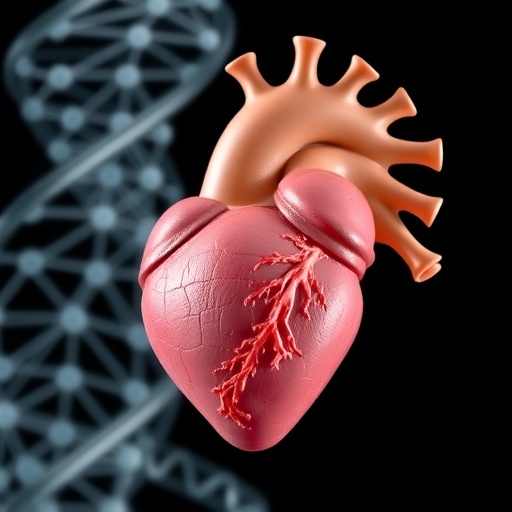
In an unprecedented leap forward for cardiovascular research, a team of scientists has unveiled cutting-edge animal models that are reshaping our understanding of hypoplastic left heart syndrome (HLHS), a severe congenital heart defect that claims the lives of many newborns worldwide. This rare but devastating condition, characterized by the underdevelopment of the left side of the heart, has long challenged clinicians and researchers alike due to the complexity of the disease’s genetic and anatomical underpinnings. The recent study, led by Miyagi, Nakamae, Davis, and colleagues, offers a revolutionary approach, blending genetic engineering with detailed anatomical modeling to mimic the human pathology with remarkable fidelity.
For decades, HLHS has been a black box, frustrating efforts to devise effective treatments beyond palliative surgeries. Traditional models, including simple animal analogs, have failed to capture the multifactorial nature of the syndrome, limiting insights into its molecular genesis and anatomical manifestations. The breakthrough reported in this work stems from the creation of genetically engineered animal models that recapitulate not only the anatomical aberrations seen in HLHS but also mirror the genetic susceptibilities influencing disease onset and progression. This dual-faceted approach promises to propel HLHS research into a new era of precision medicine.
Central to the study’s innovation is the utilization of advanced gene-editing technologies, including CRISPR/Cas9, to introduce mutations in key genes implicated in cardiac development pathways. By targeting loci associated with the proliferation, differentiation, and morphogenesis of cardiac tissues, the researchers engineered phenotypes exhibiting hallmark HLHS features, such as hypoplasia of the left ventricle and aortic valve anomalies. These genetically tailored animal models offer unprecedented opportunities to dissect the temporal cascade of developmental disruptions, from the earliest embryonic stages through postnatal maturation.
Moreover, the study transcends genetic modeling by incorporating detailed anatomical analyses, achieved through high-resolution imaging modalities such as micro-CT and 3D echocardiography. These tools allowed for precise visualization and quantification of the structural deformities, enabling a deeper understanding of how genetic mutations translate into gross morphological defects. The integration of anatomical data with genomic profiles facilitated the correlation of specific gene variants with distinct anatomical phenotypes, illuminating the heterogeneity within HLHS presentations.
The selection of species for modeling was strategic, balancing physiological similarity to humans with practical considerations such as gestational timeline and genetic tractability. The research predominantly focused on murine and porcine models. Mice have long been a staple in genetic research due to their well-characterized genome and ease of manipulation, while pigs offer a closer approximation to human cardiac anatomy and physiology. Together, these models offered complementary platforms to explore the complex interplay between genetic aberrations and cardiac development.
A particularly striking aspect of this study lies in the epigenetic dimensions explored. Beyond the static DNA sequence, the team examined how modifications to chromatin accessibility and DNA methylation patterns influence gene expression during critical windows of heart formation. By using techniques like ATAC-seq and bisulfite sequencing in their models, they demonstrated that epigenetic dysregulation magnifies the phenotypic severity of HLHS, suggesting new avenues for therapeutic intervention targeting the epigenome.
Furthermore, the models uncovered novel gene candidates not previously linked to HLHS, expanding the repertoire of molecular players involved in cardiac hypoplasia. Through transcriptomic analyses using RNA sequencing, the study highlighted pathways related to extracellular matrix remodeling, angiogenesis, and cell cycle regulation. These findings reveal a complex network of interactions that orchestrate normal left heart development and how their disruption culminates in HLHS.
The translational implications of this work are profound. With these models, researchers can now test targeted therapies in a preclinical setting with enhanced predictive power. For example, pharmacological agents aimed at rescuing myocardial proliferation or modulating specific signaling cascades can be evaluated for efficacy and safety. Additionally, gene therapy approaches hold greater promise, as these animal models provide a critical proving ground for delivery methods and long-term outcomes.
This modeling strategy also opens avenues for personalized medicine in pediatric cardiology. Understanding the genetic and anatomical diversity within HLHS patients allows for tailoring surgical interventions and post-operative care based on individual risk profiles. The researchers envision a future where newborns diagnosed prenatally with HLHS could benefit from bespoke treatment plans grounded in the insights derived from these animal models.
Importantly, the study acknowledges ethical and technical challenges. Creating animal models that faithfully replicate human congenital defects requires rigorous validation and adherence to the highest standards of animal welfare. The investigators emphasize the importance of transparency and reproducibility in their methods, ensuring that their models serve as reliable tools for the broader scientific community.
Equally transformative is the potential impact on in utero therapies. The detailed understanding of the developmental trajectory of HLHS gleaned from these models paves the way for fetal interventions designed to correct or mitigate the anatomical defects before birth. Although still in early experimental stages, such approaches could dramatically improve survival rates and quality of life for affected infants.
Moreover, the study inspires a multidisciplinary approach, combining genetics, developmental biology, cardiology, imaging science, and bioinformatics. This synthesis exemplifies how contemporary biomedical research thrives at the intersection of diverse expertise, driving innovations that single-discipline efforts could not achieve.
From a broader perspective, the methodologies refined in developing these HLHS models have implications for other congenital heart defects and developmental diseases. The paradigm of integrating targeted genetic modifications with precise anatomical characterization sets a new standard for modeling complex human conditions.
As with any scientific advance, questions remain. The exact mechanisms by which specific gene-environment interactions shape the HLHS phenotype need further elucidation. Additionally, long-term studies tracking functional outcomes and compensatory mechanisms in the animal models will deepen insights into disease progression and resilience.
Nevertheless, this landmark research signifies a pivotal step toward unraveling the enigmatic origins of hypoplastic left heart syndrome. By bridging the genetic and anatomical facets of the disorder, it offers renewed hope for patients, families, and clinicians grappling with this formidable condition. The promise of translating these findings into tangible clinical benefits fuels ongoing efforts and collaboration worldwide.
In conclusion, the innovative animal models engineered by Miyagi, Nakamae, Davis, et al., represent a tour de force in congenital heart disease research. Their work epitomizes the power of integrating genetic precision with anatomical realism, charting a path toward breakthroughs in understanding, diagnosing, and ultimately treating hypoplastic left heart syndrome. The scientific community watches with anticipation as these models catalyze further discoveries and bring us closer to conquering one of pediatric cardiology’s most intractable challenges.


