


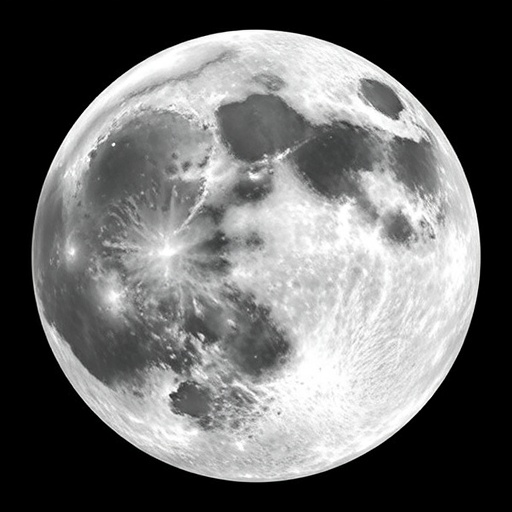
When China’s Chang’e-6 probe triumphantly returned to Earth in June 2024, it brought back more than just lunar samples; it delivered a scientific goldmine—the very first material extracted from the enigmatic far side of the Moon. This pristine cargo has since become the centerpiece of groundbreaking research led by a team at Beihang University, which has pushed the boundaries of non-destructive lunar material characterization. The group employed cutting-edge techniques to reveal intricacies of the far-side lunar soil that could fundamentally transform our approach to constructing extraterrestrial infrastructure.
Central to the study’s methodology was the innovative use of high-resolution X-ray micro-computed tomography (Micro-CT) combined with state-of-the-art deep learning algorithms. This fusion enabled the researchers to digitally reconstruct an unprecedented tally of over 349,000 individual lunar regolith particles in three-dimensional detail. The sheer scale and resolution of this dataset dwarf past efforts, offering unparalleled insight into the microstructural morphology of lunar soil sourced from the once unreachable hemisphere of the Moon.
The team’s approach was meticulous and revolutionary. Traditional destructive testing methods are incompatible with the value of such rare samples, so researchers developed a “Digital Twin” framework—a virtual, predictive model that simulates particle behaviors and physical responses without physically altering or destroying a single grain of these invaluable specimens. This approach has opened new avenues for lunar geotechnical analysis, circumventing the physical limitations imposed by scarce extraterrestrial materials.
Their analyses uncovered a remarkable physical differentiation: the far-side regolith grains from Chang’e-6 exhibit pronounced irregularities in shape—markedly more so than samples retrieved from the lunar near side during Apollo and Chang’e-5 missions. These particles are distinctly more angular, jagged, and less spherical, painting a narrative of a unique formative and weathering process governed by the far side’s distinctive environmental history, particularly the impact dynamics within the South Pole-Aitken basin.
This decreased sphericity, averaging around 0.74, contrasts strongly with smoother grains typically found on Earth or collected on the Moon’s near side. The angular morphology is believed to arise from a complex interplay of micro-meteoroid bombardment, space weathering, and a historically intense impact environment, which collectively sculpt lunar grains with a ruggedness that has profound mechanical implications. Such findings underscore an underappreciated heterogeneity in lunar regolith that demands renewed consideration for mission planning.
The structural implications of these irregular particles are profound. Using Discrete Element Method (DEM) simulations, the research team demonstrated that these spiky grains engage in a significant geometric interlocking effect. This phenomenon—akin to how jagged gravel offers superior consolidation compared to smooth pebbles—grants the far-side soil distinct mechanical strength properties. This interlocking contributes to substantial shear resistance, which, if harnessed properly, could provide enhanced bearing capacity for future lunar installations.
Quantitatively, the simulations yielded an internal friction angle of 47.96° and a cohesion value of 1.08 kPa for the Chang’e-6 regolith. These parameters notably exceed those historically assumed for near-side lunar soils based on Apollo and Surveyor mission data, suggesting that the far-side regolith is inherently stiffer and better able to support structural loads. This mechanical robustness could become a cornerstone metric for engineers tasked with designing foundations for lunar habitats and infrastructure as humanity advances its extraterrestrial foothold.
However, these mechanical advantages come with their own suite of challenges. The angular and interlocked nature of the particles, while strengthening bearing capacity, may complicate excavation, drilling, and mobility for robotic explorers. Rovers designed for smoother lunar terrains might face heightened resistance, requiring innovations in wheel design, navigation algorithms, and drilling apparatuses to maintain operational efficiency on the far side.
This comprehensive characterization fills a critical gap in our understanding of the Moon’s geotechnical landscape. The study offers not only high-fidelity morphological data but also practical mechanical property benchmarks that are imperative for upcoming projects, such as the International Lunar Research Station (ILRS). By integrating detailed particle-scale insights into macro-scale engineering models, the findings bridge planetary science and aerospace engineering in a uniquely impactful way.
Furthermore, the deployment of a semi-supervised deep learning framework to mine terabytes of CT scan data marks a significant advancement in planetary material analysis. This AI-driven methodology deftly navigates the complexities of segmenting densely packed, minuscule grains—an issue that historically hindered high-throughput lunar soil characterization. The success of this computational approach sets a precedent for future extraterrestrial sample analyses, emphasizing the growing importance of machine learning in space science.
Ultimately, this research does more than just reveal the physical nature of far-side lunar soil; it redefines how we conceptualize and prepare for sustained human and robotic presence beyond Earth. As lunar exploration accelerates, the nuanced understanding of regolith behavior will underpin every foundational element—from habitat stability to rover mobility—ensuring that our extraterrestrial endeavors are built on rock-solid science.
In conclusion, the confluence of high-resolution imaging, sophisticated AI, and rigorous mechanical simulation presents a pioneering blueprint for lunar soil research. The Chang’e-6 far-side samples serve as a wakeup call and a beacon for the scientific community, highlighting the vital interplay between particle morphology and bulk mechanical properties. This newfound knowledge advances not just lunar geology but the practical engineering required to transform the Moon from a distant celestial body into a thriving outpost of humanity.
News Publication Date: 8-Jan-2026
Web References: http://dx.doi.org/10.34133/research.1064
Keywords
Chang’e-6, lunar regolith, far side Moon, particle morphology, micro-CT imaging, deep learning, digital twin, discrete element method, lunar soil biomechanics, space weathering, South Pole-Aitken basin, lunar infrastructure
Cite Scienmag News
Grant Pearson. (March 3, 2026). AI Analysis Reveals Stronger Foundations for Future Lunar Bases on the Moon’s Far Side. Scienmag. https://scienmag.com/ai-analysis-reveals-stronger-foundations-for-future-lunar-bases-on-the-moons-far-side/
Grant Pearson. "AI Analysis Reveals Stronger Foundations for Future Lunar Bases on the Moon’s Far Side." Scienmag, 3 March 2026, https://scienmag.com/ai-analysis-reveals-stronger-foundations-for-future-lunar-bases-on-the-moons-far-side/. Accessed 3 September 2026.
Grant Pearson. "AI Analysis Reveals Stronger Foundations for Future Lunar Bases on the Moon’s Far Side." Scienmag. March 3, 2026. https://scienmag.com/ai-analysis-reveals-stronger-foundations-for-future-lunar-bases-on-the-moons-far-side/


