


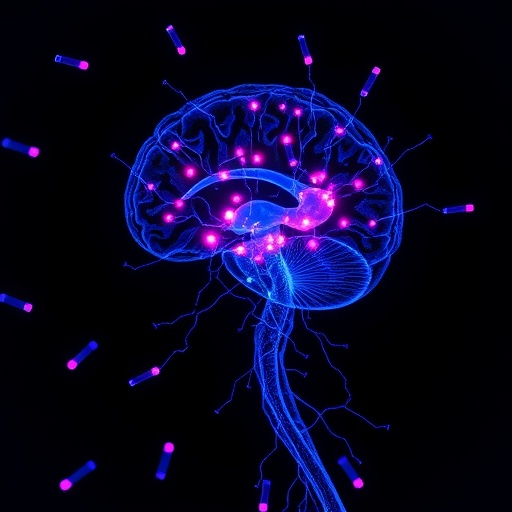
In a groundbreaking study published in Experimental & Molecular Medicine, researchers have unveiled a novel neuroimmune mechanism underlying chronic muscle pain, a debilitating condition affecting millions worldwide. The team led by Luo, Wang, and Liang sheds light on the pivotal role of microglial CR3-mediated synaptic pruning within the dorsomedial prefrontal cortex (dmPFC) and how this process precipitates glutamatergic dysfunction, perpetuating long-lasting muscle pain states. This cutting-edge investigation recalibrates our understanding of chronic pain from a purely peripheral sensory disorder to a central nervous system-driven maladaptive phenomenon.
Chronic muscle pain remains notoriously challenging to treat, largely due to its complex etiology involving both peripheral tissue abnormalities and central nervous system (CNS) alterations. Historically, research has concentrated on nociceptive pathways and peripheral inflammation. However, emerging evidence points towards subtle yet profound changes in neuronal circuits within brain regions responsible for pain perception, emotional regulation, and cognitive processing. The dorsomedial prefrontal cortex, a critical hub implicated in executive function and pain modulation, has now been identified as a key substrate where dysfunctional synaptic remodeling exacerbates chronic pain.
Microglia, the resident immune cells of the CNS, have traditionally been recognized for their neuroprotective and inflammatory roles. More recently, their capacity to modulate synaptic architecture via pruning—a process essential during neurodevelopment—has garnered intense interest. Synaptic pruning involves selective elimination of redundant or dysfunctional synapses, thereby refining neuronal networks. This study pioneers in linking aberrant microglial pruning with persistent pain states, thereby implicating immune-neuronal crosstalk as a driver of chronic pain pathology.
This research employed advanced molecular and imaging techniques to elucidate the role of complement receptor 3 (CR3), a microglia-specific receptor that orchestrates synaptic pruning by recognizing complement proteins marking synapses for removal. The authors demonstrate that in the context of chronic muscle pain, CR3 activation within the dmPFC microglia is upregulated, leading to excessive synaptic elimination. Such maladaptive pruning diminishes glutamatergic synaptic transmission, which is crucial for normal neuronal communication and plasticity.
By meticulously mapping synaptic changes, the investigators revealed that glutamatergic synapses were predominantly affected. Glutamate, the primary excitatory neurotransmitter in the brain, facilitates the transmission of sensory and pain signals. Disruptions to glutamatergic signaling, therefore, have cascading effects on neural circuits governing pain perception and emotional response. The study elegantly connects microglial activity to impaired glutamatergic function, offering a mechanistic explanation for the persistence and amplification of muscle pain.
Importantly, the team employed both genetic and pharmacological interventions to manipulate microglial CR3 expression and observed significant reversals in synaptic deficits and pain behaviors. This offers strong evidence supporting a causal link and positions microglial CR3 as a promising therapeutic target. By normalizing microglial function and preventing excessive pruning, it may be possible to restore glutamatergic balance and mitigate chronic muscle pain.
The implications of these findings extend beyond muscle pain, suggesting that microglial-mediated synaptic plasticity could underlie various chronic pain syndromes and even neuropsychiatric conditions where glutamatergic neurotransmission is disrupted. The study invites a paradigm shift in pain management strategies, advocating for approaches that holistically address CNS immune dynamics rather than focusing solely on peripheral symptoms.
From a translational perspective, the research underscores the need to develop brain-penetrant CR3 inhibitors or modulators that can fine-tune microglial activity. Given the complexity of microglial functions, future therapeutics will need to precisely modulate rather than completely suppress immune activity to avoid unwanted side effects. Additionally, biomarkers reflecting microglial activation states in chronic pain patients could facilitate personalized treatment regimens.
The study also highlights the critical role of the dmPFC in integrating sensory and emotional components of pain. This region modulates cognitive appraisal of pain stimuli and is involved in pain chronification. By targeting microglial synaptic pruning within this area, interventions may not only alleviate sensory symptoms but also improve affective and cognitive impairments often comorbid with chronic pain.
While this investigation provides compelling evidence for the involvement of microglial CR3 in chronic muscle pain, the authors acknowledge that pain is a heterogenous syndrome influenced by genetic, environmental, and psychosocial factors. Thus, integrative research combining neuroimmune mechanisms with behavioral and systemic approaches is essential to fully unravel chronic pain pathophysiology.
In summary, Luo and colleagues have opened a new window into how glial cells reshape neural circuits to influence chronic muscle pain via glutamatergic disruptions in the dmPFC. Their findings advocate for a reexamination of neuroimmune interactions in pain and pave the way for innovative therapies targeting microglial pruning processes. Given the global burden of chronic musculoskeletal pain, these insights carry substantial promise for improving patient outcomes and quality of life.
Future research will need to explore how these mechanisms operate across different pain modalities and patient populations, including sex differences and aging effects. Additionally, the interplay between peripheral inflammation and central microglial dynamics remains an intriguing area for investigation. As neuroscientists and clinicians converge on these interdisciplinary challenges, the prospect of more effective, durable pain therapies draws nearer than ever before.
This study marks a significant leap forward in our comprehension of chronic pain’s elusive nature, combining neuroimmunology, synaptic biology, and clinical neuroscience to reveal hidden drivers of suffering. By illuminating the dark nexus between immune signaling and neuronal communication in the dmPFC, Luo et al. offer hope for millions enduring persistent muscle pain and set the stage for a new era of pain research and treatment innovation.
Cite Scienmag News
Nathaniel Bowman. (March 2, 2026). Microglial CR3 Pruning Drives Chronic Muscle Pain. Scienmag. https://scienmag.com/microglial-cr3-pruning-drives-chronic-muscle-pain/
Nathaniel Bowman. "Microglial CR3 Pruning Drives Chronic Muscle Pain." Scienmag, 2 March 2026, https://scienmag.com/microglial-cr3-pruning-drives-chronic-muscle-pain/. Accessed 4 September 2026.
Nathaniel Bowman. "Microglial CR3 Pruning Drives Chronic Muscle Pain." Scienmag. March 2, 2026. https://scienmag.com/microglial-cr3-pruning-drives-chronic-muscle-pain/


