


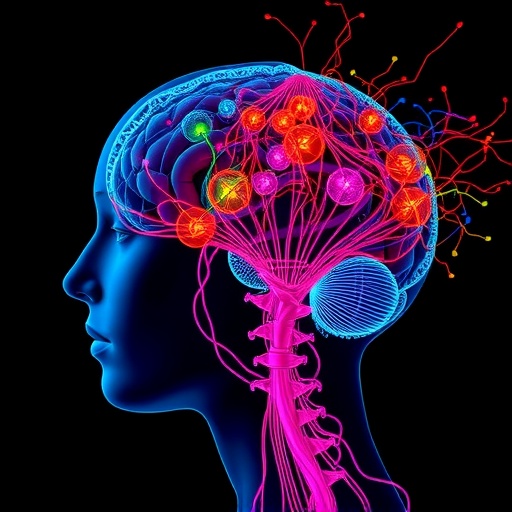
In a groundbreaking study poised to transform our understanding of auditory verbal hallucinations (AVHs), researchers have identified a crucial neural pathway disruption that may underpin one of the most perplexing symptoms in psychiatric disorders. The pioneering investigation, recently published in Translational Psychiatry by Huang, Ma, Wang, and colleagues, reveals a marked decrease in the functional connectivity between Broca’s area and the left supplementary motor area (SMA) during resting states in individuals experiencing AVHs. This discovery, facilitated by cutting-edge near-infrared spectroscopy (NIRS) technology, offers an unprecedented window into the brain’s resting-state dynamics and their relationship to hallucinatory phenomena.
Auditory verbal hallucinations, characterized by the perception of voices without external stimuli, represent a defining feature of schizophrenia and other severe mental illnesses. Despite decades of research, the precise neurobiological substrates driving AVHs have remained elusive. Traditional neuroimaging modalities, though informative, often fall short in capturing the rapid, subtle neural oscillations and connectivity patterns underpinning these experiences. NIRS, a non-invasive optical imaging technique, has emerged as a promising alternative, capable of measuring hemodynamic responses with high temporal resolution at rest, thereby shedding light on spontaneous brain activity not influenced by task demand.
Broca’s area, long recognized as a hub for language production, is intimately involved in the generation and articulation of speech. Meanwhile, the supplementary motor area, situated medially in the frontal lobe, orchestrates the initiation and control of motor functions, including those linked to speech mechanisms. The functional interplay between these regions is essential for coherent verbal output and internal speech monitoring. The present study hypothesizes that aberrations in this connectivity might disrupt internal speech processing, precipitating the external misattribution of self-generated thoughts characteristic of AVHs.
The methodology employed by Huang et al. represents a landmark in psychiatric neuroimaging. Utilizing resting-state NIRS, the team examined cortical activity fluctuations and connectivity patterns among patients with documented AVHs, juxtaposed against healthy control subjects. This approach allowed the researchers to bypass confounds introduced by cognitive tasks, focusing purely on intrinsic brain network dynamics. Data analysis centered on coherence measures between Broca’s area and the left SMA, quantifying the strength and synchrony of neural communications.
Results were striking. Patients experiencing AVHs exhibited consistent, significant reductions in the functional connectivity between Broca’s area and the left SMA, a finding absent in healthy controls. This decreased synchrony implies a disconnect in the neural circuitry critical for internally monitoring speech production. Such disruption could feasibly result in the brain erroneously labeling internally generated speech as alien, thus manifesting as the hallucinated voices reported clinically.
Further interpretation of these findings suggests a neurophysiological basis for AVHs that transcends mere regional hypo- or hyperactivity, instead emphasizing network dysfunction. This network-centric view aligns with contemporary theories in neuropsychiatry that prioritize inter-regional communication over localized brain activity anomalies. By illuminating a key pathway implicated in auditory hallucinations, the study paves the way for novel therapeutic interventions targeting connectivity restoration.
The implications of reduced Broca-SMA connectivity extend beyond theoretical neuroscience, holding promise for tangible clinical applications. For instance, neurostimulation techniques such as transcranial magnetic stimulation (TMS) or transcranial direct current stimulation (tDCS) could be refined to specifically target these dysfunctional networks, aiming to normalize activity and connectivity patterns. Moreover, NIRS itself may evolve into a valuable biomarker tool for diagnosing AVHs and monitoring treatment responses non-invasively in real-time.
This study’s use of resting-state NIRS heralds a paradigm shift in psychiatric research methodologies. Unlike functional magnetic resonance imaging (fMRI), NIRS offers portability, cost-effectiveness, and the ability to track rapid hemodynamic fluctuations without the claustrophobic, magnetic constraints of traditional scanners. Such features are particularly advantageous for psychiatric populations, many of whom find standard imaging environments distressing or inaccessible.
Beyond the specific focus on auditory hallucinations, the findings echo broader principles of brain network integration and the pathophysiology of complex psychiatric symptoms. The disruption observed between language and motor planning areas suggests that AVHs may stem from fundamental impairments in self-monitoring mechanisms, a concept that could unify various symptomatic domains within schizophrenia and related disorders. Indeed, the delineated neural pathway may serve as a model system for investigating other psychopathological phenomena involving abnormal internal-external attribution.
Crucially, the research underscores the importance of longitudinal investigations to chart the evolution of Broca-SMA connectivity in relation to symptom fluctuation and treatment. Future studies might explore whether connectivity deficits precede AVH onset or emerge as a consequence, potentially differentiating trait versus state markers in psychosis. Additionally, exploring connectivity across broader language and executive networks may provide a more comprehensive neural signature of hallucinations.
At its core, this work exemplifies the power of interdisciplinary collaboration, merging advances in optical neuroimaging, computational neuroscience, and clinical psychiatry. By integrating technical innovation with clinical insight, Huang and colleagues have opened avenues for reconceiving the neurobiology of hallucinations—moving from isolated brain region dysfunction to circuit-level disruptions shaping subjective experience.
The study also invites philosophical reflections on the nature of perception and selfhood. If the brain’s failure to accurately integrate internal speech signals leads to vividly real yet illusory voices, what does this reveal about the construction of reality? Understanding these neural miscommunications might not only inform psychiatric treatment but also deepen our grasp of cognitive processing and consciousness itself.
One fascinating aspect of the research is the potential for early intervention. Identification of connectivity abnormalities through NIRS screening could allow clinicians to predict the risk of AVHs before clinical manifestation, instituting preventative or mitigating strategies for vulnerable individuals. This proactive approach could revolutionize psychiatric care, shifting from reactive symptom management to anticipatory neural health monitoring.
Moreover, the study challenges entrenched dogmas that segregate motor and language functions distinctly within the brain. By proving the crucial interdependence of motor-associated SMA with linguistic Broca’s region, the research promotes a more integrated understanding of cognitive-motor loops. Such an integrated framework better reflects real-world brain functioning, where language production is inherently a motor act entwined with higher-order processes.
In conclusion, the work by Huang et al. establishes a novel, empirically supported neural model wherein diminished synchronization between Broca’s area and the left supplementary motor area underlies auditory verbal hallucinations. Leveraging resting-state near-infrared spectroscopy, this study transcends previous limitations, offering robust evidence of connectivity disruptions that may account for core schizophrenic symptoms. The findings have transformative potential for diagnostics, therapeutics, and our fundamental comprehension of how the brain constructs and modulates inner speech versus external auditory experience. As psychiatric neuroscience continues to evolve, such insights hold promise to unravel the complexities of human cognition and mental illness with unprecedented precision.
Cite Scienmag News
Glenn Wilkins. (March 2, 2026). Reduced Broca-Supplementary Motor Connectivity Links to Hallucinations. Scienmag. https://scienmag.com/reduced-broca-supplementary-motor-connectivity-links-to-hallucinations/
Glenn Wilkins. "Reduced Broca-Supplementary Motor Connectivity Links to Hallucinations." Scienmag, 2 March 2026, https://scienmag.com/reduced-broca-supplementary-motor-connectivity-links-to-hallucinations/. Accessed 4 September 2026.
Glenn Wilkins. "Reduced Broca-Supplementary Motor Connectivity Links to Hallucinations." Scienmag. March 2, 2026. https://scienmag.com/reduced-broca-supplementary-motor-connectivity-links-to-hallucinations/


