


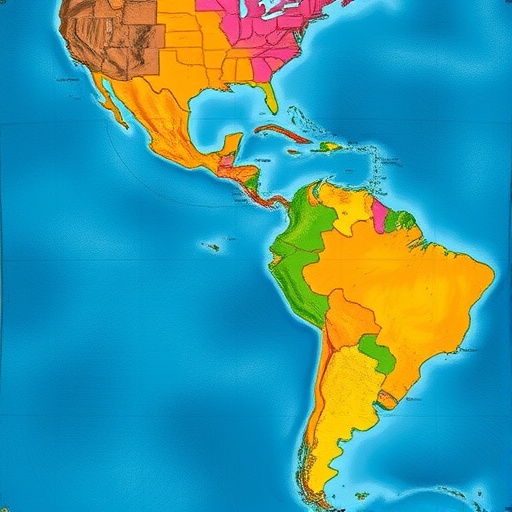
In a groundbreaking study that unravels the complex web of health disparities in Latin America, researchers have meticulously decoded how gender, ethnicity, and chronic diseases interplay to shape health outcomes across three pivotal countries in the region. This comprehensive investigation, recently published in Nature Communications by Chivardi, Zamudio Sosa, Cavalcanti, and colleagues, pushes far beyond conventional epidemiological studies by incorporating advanced data analytics and multidisciplinary approaches to dissect the layers of inequality embedded in health systems.
Health disparities are multifaceted phenomena influenced by social determinants, biological factors, and cultural contexts. The Latin American context offers a particularly intricate narrative due to its rich ethnic diversity, varied socioeconomic strata, and the profound impact of chronic diseases, which have emerged as leading causes of mortality and morbidity. By focusing on gender, ethnicity, and chronic illnesses, the study enriches the understanding of how these axes of identity and health burden converge, often exacerbating inequities even within marginalized communities.
Employing state-of-the-art statistical models and machine learning algorithms, the investigators analyzed extensive health databases from three countries that are emblematic of Latin America’s heterogeneity. The dataset incorporated demographic information, disease prevalence, healthcare access levels, and socioeconomic indicators. Through this integrative approach, the team sought to reveal patterns and predictive markers that traditional univariate analyses might obscure, thereby contributing to more nuanced public health strategies.
One of the study’s pivotal revelations concerns gender-based health disparities. While gender differences in health outcomes are well-documented globally, this work elucidates how the intersection of gender with ethnicity magnifies vulnerability. For instance, indigenous women in rural areas exhibited higher prevalence and poorer management of diabetes and cardiovascular diseases compared to urban males in mestizo populations. Such findings underscore that female biological susceptibility to certain conditions is compounded by systemic barriers rooted in social discrimination and limited healthcare resources.
Ethnic identity also emerged as a critical determinant. The researchers unveiled stark contrasts in chronic disease burden and healthcare utilization between Afrodescendant, indigenous, and mestizo populations. These disparities are not merely clinical but are entrenched in historical inequities including limited education access, economic marginalization, and cultural exclusion from healthcare systems. The study highlights the inadequacy of one-size-fits-all health policies, advocating for tailored interventions that respect ethnic and cultural nuances.
Further complicating the landscape is the existing burden of chronic diseases such as hypertension, diabetes, and chronic respiratory conditions, which disproportionately affect marginalized groups. By employing longitudinal data analyses, the authors demonstrated delayed diagnoses and suboptimal treatment regimens among ethnic minorities, results that correlate closely with poor health literacy and systemic biases in healthcare delivery. The chronicity of these diseases also poses a compounded risk, as comorbidities multiply health complications and healthcare costs.
Innovatively, the study integrates spatial epidemiology techniques, mapping disease prevalence against social indicators like income inequality, education level, and urban versus rural residency. Geographic information system (GIS) mapping revealed hotspots where chronic disease outcomes were significantly worse, pinpointing areas deserving of immediate policy attention. Intriguingly, these clusters aligned closely with locations of ethnic minority concentrations, affirming the spatial dimension of health inequities.
A further layer of analysis explored the role of healthcare infrastructure and access. The team correlated health outcomes with proximity to healthcare facilities, availability of specialized care, and insurance coverage. Findings demonstrate that even within urban settings, ethnic minorities and women face systemic hurdles including longer wait times, reduced specialist availability, and financial constraints. The data suggest that improving healthcare accessibility alone, without addressing cultural competency and discrimination, may fall short in closing disparity gaps.
Psychosocial determinants were also examined, recognizing that chronic stress linked to discrimination and social exclusion intensifies disease progression and morbidity. By assessing self-reported measures of mental health and social support, researchers linked higher stress levels in marginalized groups with worse chronic disease outcomes. This evidence emphasizes the necessity for integrated care models that concurrently address mental and physical health to achieve holistic well-being.
Importantly, the research team steps beyond diagnosis to propose data-driven policy recommendations. They advocate for intersectional public health frameworks that simultaneously address gender, ethnic identity, and chronic disease management, fostering equity through culturally-tailored health education, community engagement, and resource allocation. By combining quantitative data with qualitative insights from community stakeholders, the study sets a new standard for inclusive health research.
From a technical standpoint, the use of robust machine learning methods such as random forests and gradient boosting machines allowed for the identification of complex interactions between variables. These predictive models obtained high accuracy in forecasting health outcomes based on demographic and clinical inputs, suggesting their utility in designing personalized intervention strategies. Additionally, the incorporation of explainable AI techniques enhanced transparency, enabling policymakers to understand the weight and direction of contributing factors.
Furthermore, the research implicitly challenges dominant medical paradigms by highlighting the social determinants of health as equally critical to biological factors in disease etiology and progression. This positions health inequity as a societal challenge necessitating cross-sectoral collaboration involving education, housing, and economic policies. The comprehensive nature of the data analysis bridges public health, epidemiology, and social sciences, reflecting the complexity of real-world health disparities.
The study’s methodological rigor is complemented by its commitment to ethical research standards, emphasizing community participation and data sovereignty, especially with indigenous populations historically subjected to exploitative research practices. By upholding these principles, the researchers model responsible conduct in health equity investigations, ensuring that findings translate into respectful and effective interventions.
In conclusion, this influential research piece redefines our understanding of health disparities within Latin America by intricately decoding how gender, ethnicity, and chronic diseases collectively influence health trajectories. Its multidimensional analytic framework reveals hidden patterns and provides actionable insights that can inform equitable healthcare policies. As chronic diseases continue to pose formidable challenges globally, especially in diverse and unequal societies, such pioneering efforts are critical to fostering inclusive health systems that serve all populations fairly.
The implications of these findings resonate beyond Latin America, offering a blueprint for other regions grappling with similar complex disparities. By illuminating the interplay of biological, social, and structural factors, the work paves the way for future research and policy innovations aimed at dismantling health inequities on a global scale. This study, therefore, stands as both a scientific milestone and a catalyst for transformative public health action.
Cite Scienmag News
Phoebe Ingram. (March 1, 2026). Unraveling Health Disparities in Latin America. Scienmag. https://scienmag.com/unraveling-health-disparities-in-latin-america/
Phoebe Ingram. "Unraveling Health Disparities in Latin America." Scienmag, 1 March 2026, https://scienmag.com/unraveling-health-disparities-in-latin-america/. Accessed 5 September 2026.
Phoebe Ingram. "Unraveling Health Disparities in Latin America." Scienmag. March 1, 2026. https://scienmag.com/unraveling-health-disparities-in-latin-america/


