


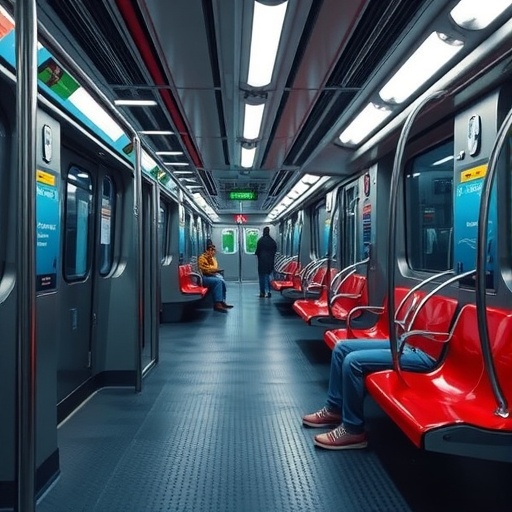
In bustling urban centers worldwide, subway systems represent the lifeblood of daily commuting, ferrying millions efficiently beneath layers of concrete and steel. However, beneath their efficiency lies an underexplored threat residing in the very air that commuters breathe during their transit. Recent cutting-edge research conducted in Hangzhou, China, has revealed that magnetic nanoparticles, specifically iron-oxide variants, pervade subway aerosols and may pose significant health risks to urban populations. This revelation introduces a new dimension to public health concerns related to air quality in subterranean transit environments.
Iron-oxide particles in airborne dust have long been suspected components of pollution in metropolitan areas, but their microscopic origins and specific impacts have remained elusive. The study in question undertakes a comprehensive microscopic and chemical analysis of dust samples collected directly from the air in various subway stations along three major metro lines in Hangzhou. Scientists ventured beyond traditional surface dust analysis into the complex interplay between surface contaminants and airborne particulates suspended within subway environments. Their findings underline the marked presence of two distinct forms of iron oxide nanoparticles that differ both structurally and in genesis.
The first type, identified as α-Fe₂O₃ (hematite), is predominantly found in surface dust settled across subway platforms and station interiors. These particles show characteristics typical of environmental deposition, yet they are just part of the broader particulate spectrum affecting commuters. More striking, however, is the identification of a second variety: nanoscale Fe₃O₄ (magnetite) particles suspended in the air, which carry a unique magnetic signature. These nanoparticles do not simply float freely but appear encapsulated within thin shells of amorphous silicon dioxide (SiO₂), forming complex composites with remarkable stability and dispersibility.
The source of these magnetite nanoparticles appears mechanistic, borne of the relentless frictional forces encountered along the rail network. As subway trains race through tunnels, friction between wheels and rails, as well as brake components, generates intense heat and mechanical wear. This process liberates microscopic Fe₃O₄ particles, which become airborne and entrained within the subway environment. Their magnetic nature and distinctive encapsulation differ sharply from the more inert surface dust hematite, indicating a specialized mode of formation tied directly to transit operations rather than merely environmental contamination.
Perhaps the most alarming part of the study is the biological evidence uncovered linking these minute airborne iron oxides to actual lung deposition in humans. Lung tissues sampled from subway commuters who regularly use the Hangzhou and Zhengzhou transit systems showed clear presence of nanoscale Fe₃O₄ particles, demonstrating direct inhalation and retention within pulmonary tissue. This marks a crucial bridging of environmental sampling with human biological exposure, moving the research beyond theoretical hazard towards substantive health impact.
To further elucidate the biological consequences of inhalation exposure, researchers performed controlled animal experiments using mouse models subjected to Fe₃O₄ nanoparticle aerosols mimicking real-world subway particulate conditions. The results were sobering: inhalation of magnetite nanoparticles induced pronounced lung injury characterized by inflammation, oxidative stress, and histological damage. These findings implicate airborne friction-derived magnetic nanoparticles as active agents capable of triggering acute pulmonary responses, potentiating risks to commuters’ respiratory systems.
This newly identified pathway of nanoparticle exposure within subway systems raises profound questions regarding current urban transit air quality standards and health risk assessments. Unlike conventional pollutants, these iron-oxide nanoparticles possess unique magnetic properties and a protective silica shell that may enable them to evade natural clearance mechanisms within the respiratory tract. Their persistence and bioactivity could thus represent a hitherto underestimated threat contributing not only to respiratory illnesses but potentially extending to cardiovascular complications observed in other particulate pollution studies.
The study’s implications extend beyond Hangzhou to urban centers worldwide where subway systems are integral to daily transportation. Friction-induced nanoparticles are likely to be ubiquitous in any transit environment relying on steel-on-steel contact and mechanical braking, suggesting that millions of commuters globally could be exposed to these potentially harmful aerosols routinely. This research urges policymakers to consider novel mitigation strategies, such as improving ventilation, modifying friction materials, or introducing filtration technologies specifically targeting magnetic nanoparticles.
Moreover, the discovery demands further work to delineate long-term health outcomes from chronic exposure to such nanomaterials and to develop standardized monitoring protocols. Understanding the physicochemical properties driving nanoparticle formation and persistence will be critical to devising effective preventative measures. The intersection of material science, nanotechnology, and pulmonary medicine embodied in this research represents an emerging frontier in tackling urban air pollution health risks.
While broader environmental nanoparticulate pollution has attracted increasing scrutiny, this study highlights the unique characteristics and risks posed by transit-specific particles. The encapsulated magnetite nanoparticles challenge traditional paradigms of air quality assessment, signaling the need for specialized instrumentation and cross-disciplinary approaches to accurately characterize and quantify exposure risks within the complex microenvironments of subway systems.
As cities continue to invest in expanding and modernizing underground transit, integrating health-oriented design principles into infrastructure planning is paramount. Real-time air quality monitoring embedded in stations, combined with targeted epidemiological studies linking commuter exposure to health endpoints, could form the backbone of safer transit environments. The protective coating of silica on inhaled magnetite nanoparticles, while microscopic, might be the key to unlocking novel filtration or neutralization mechanisms in engineering controls.
This research also opens avenues for public health advocacy aimed at raising commuter awareness about invisible particulate hazards during daily transit. Encouraging the use of protective measures such as masks or the development of commuter-oriented protective technologies could represent immediate interventions while engineering solutions are developed. The recognition that subway air harbors biologically active magnetic nanoparticles is a wake-up call to urban planners and health officials alike.
Ultimately, the findings from Hangzhou’s subway system underscore the complex interplay between urban infrastructure, mechanical engineering, and human health. They beg a comprehensive reevaluation of what constitutes safe air in high-density public transit environments and spotlight the promise of nanoscience to both reveal hidden risks and inspire innovative remedies. By illuminating an unexpected source of nanoparticle pollution with far-reaching health implications, this research charts a crucial path toward cleaner, healthier urban commuting for millions worldwide.
Cite Scienmag News
Russell Cooper. (February 27, 2026). Magnetic Nanoparticles Threaten Subway Commuters’ Lungs. Scienmag. https://scienmag.com/magnetic-nanoparticles-threaten-subway-commuters-lungs/
Russell Cooper. "Magnetic Nanoparticles Threaten Subway Commuters’ Lungs." Scienmag, 27 February 2026, https://scienmag.com/magnetic-nanoparticles-threaten-subway-commuters-lungs/. Accessed 3 September 2026.
Russell Cooper. "Magnetic Nanoparticles Threaten Subway Commuters’ Lungs." Scienmag. February 27, 2026. https://scienmag.com/magnetic-nanoparticles-threaten-subway-commuters-lungs/


