


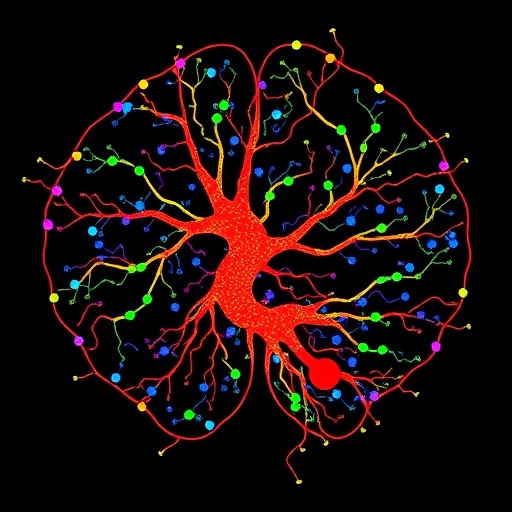
In a groundbreaking study that promises to reshape our understanding of neural development, researchers have identified the Junction-mediating and regulatory protein (JMY) as a pivotal factor facilitating the radial migration of cortical neurons. Published in Cell Death Discovery, this research elucidates the intricate molecular mechanisms by which JMY influences the dynamic processes essential for proper brain formation, opening new avenues for exploring developmental brain disorders and neurodegenerative diseases.
Neuronal migration is a critical event during cortical development, underpinning the precise layering of the brain’s cerebral cortex. This ordered radial migration ensures the organized arrangement and connectivity vital for cognitive functions. Until now, the molecular drivers orchestrating this migration have been incompletely understood. The latest findings by Chen, Chen, Qi, and colleagues add JMY to the select cadre of proteins that not only facilitate cytoskeletal remodeling but also regulate gene expression in migrating neurons, positioning it as a key regulatory hub.
JMY, historically studied for its dual roles in actin nucleation and transcription coactivation, emerges in this context as more than a structural scaffold. The study reveals that JMY’s involvement transcends cytoskeletal rearrangements, directly impacting the transcriptional programs that govern neuronal motility. Through a series of elegant in vitro and in vivo experiments, the researchers meticulously traced how JMY modulates actin polymerization at the leading edge of migrating neurons, simultaneously activating pathways that sustain migratory competence over extended periods.
One of the most striking insights is the demonstration that JMY localizes dynamically within migrating neurons, concentrating at sites of active cytoskeletal remodeling. This localization underpins its function as a molecular switch that integrates extracellular cues with intracellular responses, effectively translating environmental signals into coordinated movements. Such spatial regulation offers a nuanced understanding of how migrating neurons negotiate the extracellular matrix and cellular obstacles during their journey to the cortical plate.
Intriguingly, the research team employed advanced imaging techniques including live-cell fluorescence microscopy, enabling real-time visualization of JMY distribution and its coordination with actin filaments. This technological approach provided unprecedented resolution in observing the transient and rapid changes in cytoskeletal architecture fundamental to cell migration. Their findings underscore the synergy between JMY’s actin nucleation capacity and its transcriptional coactivator function, establishing a unified mechanism facilitating neuronal locomotion.
Beyond the cellular and molecular scale, the study delves into the physiological implications of disrupted JMY activity. Utilizing genetic knockdown models in rodents, the researchers demonstrated that diminished JMY expression correlates with significant defects in cortical layering and aberrant neuronal positioning. These phenotypic abnormalities mimic some features observed in neurodevelopmental disorders, suggesting that JMY dysfunction could contribute to pathological states such as epilepsy or intellectual disabilities.
The dual functionality of JMY poses fascinating evolutionary questions about protein versatility in neuronal development. By juggling cytoplasmic and nuclear roles, JMY exemplifies the molecular multitasking that may be critical in the highly orchestrated environment of brain maturation. This multifunctionality could provide a rapid-response system adapting the migratory machinery to varying developmental signals, ensuring fidelity in cortical assembly.
Furthermore, the research highlights the potential for therapeutic targeting of JMY or its downstream pathways. If aberrant neuronal migration underlies certain neurological disorders, correcting or modulating JMY activity might restore normal neuronal positioning and circuit formation. This possibility invites a new line of inquiry into pharmacological or genetic interventions aimed at harnessing JMY’s regulatory capacity.
Importantly, the molecular interactions of JMY extend beyond actin and transcription factors, encompassing signaling cascades pivotal to cellular motility. The study identifies links between JMY and Rho GTPases, master regulators of cytoskeleton dynamics, which reinforce the centrality of JMY in integrating signaling to mechanical execution. This integrative model positions JMY as a node within a complex network coordinating the physical and regulatory requirements of migration.
The discovery also shines a light on the temporal regulation of neuron migration, as JMY expression levels and activity fluctuate during critical windows of cortical development. This temporal patterning provides clues into how neurons synchronize their progress to avoid migratory delays or premature arrest, factors that can severely disrupt cortical organization and function.
Chen et al.’s work sets a new benchmark for the depth of understanding needed to unravel brain development’s complexity. By combining molecular biology, imaging, genetic manipulation, and developmental neurobiology, the study provides a comprehensive picture that bridges gaps between molecular mechanisms and their phenotypic outcomes. This multidisciplinary approach is likely to inspire further research into multifunctional proteins in neural systems.
In summary, the identification of JMY as a promoter of radial migration revitalizes the field with fresh insights into the cellular choreography of cortical development. Its dual role in cytoskeletal modulation and transcriptional regulation makes it a unique and compelling subject for future investigations into brain formation and disorders. As research continues, the implications of manipulating such a protein will reverberate across developmental neuroscience and clinical neurology.
Looking ahead, future studies must dissect the detailed molecular interactions that regulate JMY’s switch between cytoplasmic and nuclear compartments, as well as its crosstalk with other proteins in the migratory machinery. Additionally, exploring variations of JMY function across different neuronal types and brain regions could uncover diverse roles in neurodevelopment and plasticity, further enriching our understanding of the brain’s architectural blueprint.
This seminal discovery not only deepens our grasp of neuronal migration but also catalyzes a broader reevaluation of multifunctional proteins in neurobiology. By revealing how a single protein can seamlessly integrate mechanical and genetic control, the work of Chen and colleagues paves the way for innovative strategies to combat neurodevelopmental disorders and optimize brain repair mechanisms in the future.
Cite Scienmag News
Cassandra Pierce. (February 27, 2026). JMY Drives Radial Migration of Cortical Neurons. Scienmag. https://scienmag.com/jmy-drives-radial-migration-of-cortical-neurons/
Cassandra Pierce. "JMY Drives Radial Migration of Cortical Neurons." Scienmag, 27 February 2026, https://scienmag.com/jmy-drives-radial-migration-of-cortical-neurons/. Accessed 3 September 2026.
Cassandra Pierce. "JMY Drives Radial Migration of Cortical Neurons." Scienmag. February 27, 2026. https://scienmag.com/jmy-drives-radial-migration-of-cortical-neurons/


