


In a groundbreaking advancement for neuroscience and cellular biology, researchers have unveiled an innovative organelle-targeted neurotransmitter probe capable of mapping the elusive dynamics of norepinephrine (NE) within subcellular compartments. This pioneering development addresses a critical lacuna in current neurochemical imaging technologies, as existing methods largely lack the specificity to investigate neurotransmitter activity at the organelle level. By leveraging an ingeniously engineered DNA nanostructure combined with sophisticated chemigenetic components, this new probe propels the field toward an unprecedented understanding of intracellular signaling pathways and their implications in neurological disorders.
Norepinephrine stands as a pivotal neurotransmitter involved in diverse physiological processes ranging from stress responses and attention modulation to neuronal plasticity. However, the intracellular localization and temporal fluctuations of NE, particularly within organelles like the endoplasmic reticulum, remained poorly understood due to the absence of specialized molecular tools. Traditional probes typically lack organelle specificity, fail to capture rapid neurotransmitter kinetics, or suffer from limited chemical selectivity. This challenge inspired the research team to conceptualize a molecular “nanotrap” that couples exquisite selectivity with organelle precision and rapid responsiveness.
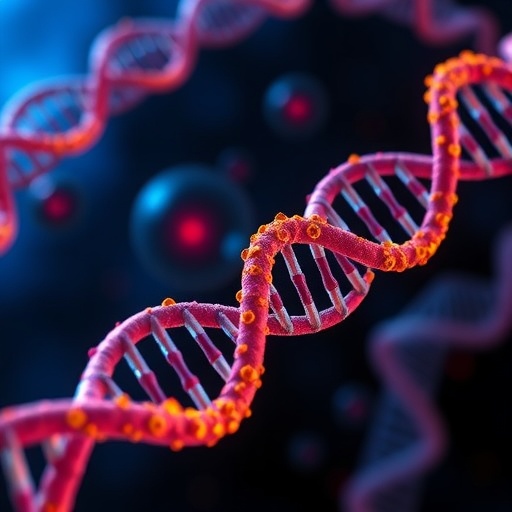
At the core of the new probe lies a tetrahedral DNA nanostructure meticulously designed to spatially organize functional elements for multifaceted recognition of NE molecules. Integrating phenylboronic acid (PBA) derivatives within the DNA scaffold allows the probe to engage NE in a specific chemical reaction owing to the boronic acid’s capacity to form reversible covalent bonds with diols, a feature exploited here to selectively capture NE’s catechol moiety. Complementing this, hydroxymethyl groups are strategically incorporated to establish a network of hydrogen bonds with NE, reinforcing binding specificity and stability. This dual interaction mechanism elevates the probe’s ability to discriminate NE from structurally similar catecholamines and environmental interferents.
Further augmenting the system’s quantitative fidelity, a built-in fluorescent reporter based on the cyanine 3 dye is conjugated to the DNA nanostructure’s apex, enabling ratiometric measurement of NE binding. This design ensures self-correction against environmental fluctuations, such as pH changes or variable probe concentrations, thereby enabling accurate real-time NE concentration assessments within organelles. Additional fine-tuning of the nanostructure guarantees rapid kinetics, with response times approximating 50 milliseconds, a temporal resolution that surpasses many existing neurotransmitter sensors and matches the speed required to capture transient cellular signaling events.
Crucially, targeting the probe to distinct organelle membranes is achieved via conjugation to a HaloTag ligand. This ligand facilitates covalent binding to HaloTag fusion proteins expressed on organelle surfaces, creating a versatile platform for organelle-specific localization. Using this chemigenetic approach, the researchers effectively anchored the nanotrap onto the endoplasmic reticulum membrane, allowing dynamic imaging of NE fluctuations in that compartment under physiological and pathological conditions.
The probe demonstrated exceptional specificity for NE in cellular environments. Tests revealed minimal cross-reactivity with other neurotransmitters, ions, or biomolecules commonly present within the cytosol and organelle lumen. Its stability and biocompatibility were also rigorously verified, ensuring minimal toxicity and consistent performance over extended imaging sessions. Such features poised this novel nanodevice as a highly promising tool for live-cell neurochemical investigations and high-resolution mapping of intracellular signaling.
Applying this cutting-edge sensor, the research team embarked on a meticulous investigation into the consequences of traumatic brain injury (TBI), a condition marked by acute neuronal damage and neurotransmitter dysregulation. Remarkably, imaging results uncovered for the first time a pronounced burst of NE localized specifically within the endoplasmic reticulum of neurons following TBI events. This surge in ER NE was not observable through conventional extracellular or cytosolic assessments, underscoring the importance of organelle-targeted probes in revealing hidden neurochemical dynamics.
Further mechanistic studies linked the NE burst to the induction of ER stress, a cellular distress condition known to impact proteostasis and calcium homeostasis. Elevated levels of NE within the ER perturbed the balance of ER-mitochondrial protein interactions, disrupting communication between these organelles that is vital for cellular metabolism and survival. This dysregulation triggered mitophagy—the selective autophagic degradation of mitochondria—leading to mitochondrial dysfunction characterized by impaired bioenergetics and increased oxidative stress.
Ultimately, this cascade of molecular events driven by aberrant NE signaling culminated in neuronal apoptosis and compromised neural network integrity. The ability to spatially resolve NE dynamics within the ER thereby shed critical light on the previously unappreciated role of subcellular neurotransmitter pools in neurodegenerative pathways following brain injury. These insights open new avenues for targeted therapeutic interventions aimed at modulating organelle-specific neurotransmitter signaling to ameliorate neuronal damage.
Beyond the immediate implications for TBI research, the demonstrated versatility, sensitivity, and practical utility of this chemigenetic DNA nanotrap framework suggest broader applications across neuroscience and cell biology. It provides an adaptable platform for engineering similar probes targeting other neurotransmitters, metabolites, and signaling molecules within various organelles. Such tailored molecular sensors stand to revolutionize our comprehension of intracellular biochemical communication and its disruptions in diverse disease contexts.
In sum, this landmark study not only delivers a powerful new tool for dissecting organelle-level neurotransmitter dynamics but also initiates a paradigm shift in neurochemical imaging methodologies. By marrying the exquisite programmability of DNA nanotechnology with advanced chemical recognition strategies and precision organelle targeting, the researchers have overcome long-standing challenges that limited conventional probes. The rapid and selective detection of ER-localized NE burst phenomena illuminates hitherto hidden layers of intracellular signaling complexity, fundamentally enriching our understanding of neuronal pathophysiology.
Future explorations leveraging this chemigenetic nanotrap hold promise for delineating spatiotemporal neurotransmitter gradients with unparalleled clarity. Such capability may inform the development of novel diagnostic and therapeutic strategies aimed at modulating neurotransmitter signaling at the organelle level. As advanced imaging technologies continue to integrate with molecular nanotechnology, the horizon for mapping the molecular choreography underlying brain functions and dysfunctions looks exceedingly bright and ripe for transformative discoveries.
This breakthrough represents not merely an incremental improvement but a substantive leap in our toolkit for interrogating the intricate chemical landscape of living cells. As more labs adopt these advanced probes and refine their designs, the coming years will likely see an explosion of insights into the molecular interplay governing neuronal health, injury responses, and memory processing, fostering new frontiers in neurobiology and personalized medicine.
Chen and colleagues’ work stands as a testament to the power of interdisciplinary innovation, combining principles of chemistry, molecular biology, nanotechnology, and neuroscience to unravel cellular mysteries at nanometer and millisecond scales. Their chemical and structural design ingenuity sets a new benchmark for future molecular probe development and inspires confident optimism in conquering other elusive targets in cellular signaling.
The significance of this research extends beyond academic inquiry, holding vital repercussions for clinical and therapeutic advances. By revealing how traumatic insults modulate neurotransmitter distribution in organelles and trigger maladaptive cellular responses, these findings pave the way toward targeted interventions that preserve neuronal viability and function after injury. The chemigenetic DNA nanotrap thus emerges as a transformative platform with powerful potential to reshape neurobiological investigation and neurological care paradigms alike.
As this novel technology permeates neuroscience research, it promises to deepen mechanistic understanding, accelerate drug discovery pipelines, and inspire next-generation biomolecular sensor designs, compelling a reevaluation of current perspectives on intracellular neurotransmission. The marriage of synthetic DNA nanotechnology and chemical targeting embodied in this probe stands poised to catalyze a new era of precision neurochemical imaging and molecular medicine.
Cite Scienmag News
Ophelia Keating. (February 26, 2026). Chemigenetic DNA Nanotrap Tracks Norepinephrine Dynamics. Scienmag. https://scienmag.com/chemigenetic-dna-nanotrap-tracks-norepinephrine-dynamics/
Ophelia Keating. "Chemigenetic DNA Nanotrap Tracks Norepinephrine Dynamics." Scienmag, 26 February 2026, https://scienmag.com/chemigenetic-dna-nanotrap-tracks-norepinephrine-dynamics/. Accessed 1 September 2026.
Ophelia Keating. "Chemigenetic DNA Nanotrap Tracks Norepinephrine Dynamics." Scienmag. February 26, 2026. https://scienmag.com/chemigenetic-dna-nanotrap-tracks-norepinephrine-dynamics/


