


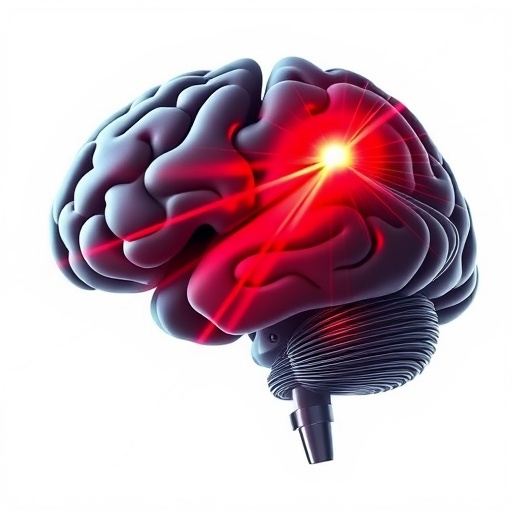
In a groundbreaking advancement for the treatment of recurrent high-grade astrocytomas, a team of researchers led by Campian, J.L., Le, S.B., and Ghiaseddin, A. has unveiled promising results from a Phase 1/randomized Phase 2b clinical trial combining laser interstitial thermal therapy (LITT) with adjuvant pembrolizumab. This study, recently published in Nature Communications, represents a significant stride forward in neuro-oncology, potentially redefining therapeutic strategies against some of the most aggressive brain tumors known.
High-grade astrocytomas, particularly glioblastomas, have long posed a formidable challenge in oncology due to their intrinsic resistance to standard treatments and their notorious proclivity for recurrence. Despite aggressive strategies involving surgical resection, radiation, and chemotherapy, patient survival rates remain distressingly low. In this context, the integration of innovative approaches such as LITT and immunotherapy offers a glimmer of hope, targeting tumors through a multi-modal lens aimed at improving both efficacy and patient outcomes.
Laser interstitial thermal therapy is a minimally invasive technique that employs laser energy to induce hyperthermia, leading to the focal ablation of tumor tissue. Unlike traditional open surgical methods, LITT is performed through a small burr hole under MRI guidance, allowing for precise thermal destruction while sparing healthy surrounding brain tissues. This technology’s use in neuro-oncology has expanded rapidly, offering options to patients who are poor candidates for conventional surgery. By ablating tumor cells directly, LITT may also facilitate enhanced immune visibility of tumor antigens, thus potentiating downstream immunotherapeutic effects.
Pembrolizumab, a humanized monoclonal antibody targeting the programmed death-1 (PD-1) receptor, has revolutionized cancer immunotherapy by disinhibiting T-cell mediated immune responses against tumors. Although pembrolizumab has demonstrated profound effects in several malignancies, its efficacy in high-grade astrocytomas has historically been limited, partly due to the immunosuppressive microenvironment and the blood-brain barrier’s complex role in restricting drug delivery and immune cell infiltration.
The trial conducted by Campian and colleagues sought to harness synergistic effects by pairing LITT’s localized tumor debulking with systemic immune checkpoint inhibition through pembrolizumab. Their hypothesis posited that LITT would not only reduce tumor burden physically but also modulate the tumor microenvironment, rendering it more immunologically permissive. This approach aimed to create a therapeutic window wherein the immune system could be effectively unleashed against residual malignant cells after thermal ablation.
In the Phase 1 segment of the trial, safety and tolerability were primary endpoints. Patients with recurrent high-grade astrocytomas underwent LITT followed by adjuvant pembrolizumab administration. Encouragingly, the combination therapy was well-tolerated, with manageable side effects and no unexpected neurotoxicity, supporting further evaluation in a randomized Phase 2b setting. This safety profile is particularly notable given the delicate and critical location of these tumors.
Transitioning to the randomized Phase 2b segment, the trial expanded in scale and rigor to assess efficacy outcomes, including progression-free survival and overall survival, compared to standard salvage therapies. Initial data suggested that patients receiving the combination of LITT and pembrolizumab exhibited prolonged control of tumor progression, with some cases showing durable responses. These findings underscore the potential for immunological priming via thermal ablation to augment checkpoint blockade efficacy in high-grade astrocytoma settings.
Crucial mechanistic insights were gleaned from biomarker analyses performed within the study. Post-LITT tumor biopsies and peripheral blood samples revealed increased infiltration of cytotoxic T lymphocytes, alongside decreases in immunosuppressive regulatory T cells and myeloid-derived suppressor cells. These immune signature shifts provide compelling evidence that LITT reconditions the tumor microenvironment, effectively turning the tumor “cold” environment into a “hot” one amenable to immune attack.
Moreover, advancements in imaging techniques used throughout the trial enabled real-time monitoring of treatment response and early detection of pseudoprogression—a clinical phenomenon where immune-related inflammation mimics tumor growth, historically complicating treatment interpretation. The integration of MRI thermometry during LITT also allowed precise titration of ablation zones to maximize tumor cell kill while preserving neurological function.
The multidisciplinary nature of the trial team, which included neurosurgeons, neuro-oncologists, immunologists, and radiologists, highlights the necessity of collaborative efforts in tackling the complexities of brain tumors. Their ability to harmonize cutting-edge technological interventions with immune-based therapeutic paradigms sets a new standard for future oncological research.
While these results are undeniably encouraging, the authors caution that further large-scale, randomized studies with long-term follow-up are essential to confirm durability of response, optimal sequencing of therapies, and identification of subgroups most likely to benefit. Personalized medicine approaches, including genomic and immunophenotypic tumor profiling, may further refine patient selection, thereby enhancing therapeutic success.
This study also paves the way for exploring combinational immunotherapeutic regimens in central nervous system malignancies beyond astrocytomas. For instance, pairing LITT and checkpoint inhibitors with vaccines, cytokine therapies, or other novel agents may unleash a multi-pronged immune assault on resistant tumors, shifting paradigms in neuro-oncology comprehensively.
The implications of successful LITT and pembrolizumab combination extend beyond median survival improvements, potentially encompassing quality of life benefits. Minimally invasive procedures coupled with immune activation might translate into fewer hospitalizations, reduced treatment-related toxicities, and better neurocognitive preservation—critical factors for patients coping with aggressive brain tumors.
In addition, this research addresses a long-standing challenge in oncology: effectively engaging the immune system within the unique environment of the brain, where immune privilege and distinct microglial populations complicate anti-tumor responses. By modifying this microenvironment via thermal ablation, the study demonstrates a novel strategy to circumvent inherent immunological barriers.
Advancing these findings from clinical trial settings into routine clinical practice will undoubtedly require robust interdisciplinary training, infrastructure development for LITT capabilities, and integration of immunotherapy delivery protocols. Importantly, ensuring equitable access to these cutting-edge therapies remains a priority given disparities in healthcare resources globally.
In summary, the innovative approach combining laser interstitial thermal therapy and adjuvant pembrolizumab represents a seismic shift in the management of recurrent high-grade astrocytomas, illustrating the profound potential of synergistic multimodal therapy. As ongoing trials advance, the neuro-oncology community stands on the cusp of revolutionizing care paradigms for patients burdened by these devastating malignancies, illuminating new horizons of hope and survival.
Cite Scienmag News
Nathaniel Bowman. (February 26, 2026). Laser Therapy Plus Pembrolizumab in Recurrent Astrocytoma Trial. Scienmag. https://scienmag.com/laser-therapy-plus-pembrolizumab-in-recurrent-astrocytoma-trial/
Nathaniel Bowman. "Laser Therapy Plus Pembrolizumab in Recurrent Astrocytoma Trial." Scienmag, 26 February 2026, https://scienmag.com/laser-therapy-plus-pembrolizumab-in-recurrent-astrocytoma-trial/. Accessed 1 September 2026.
Nathaniel Bowman. "Laser Therapy Plus Pembrolizumab in Recurrent Astrocytoma Trial." Scienmag. February 26, 2026. https://scienmag.com/laser-therapy-plus-pembrolizumab-in-recurrent-astrocytoma-trial/


