


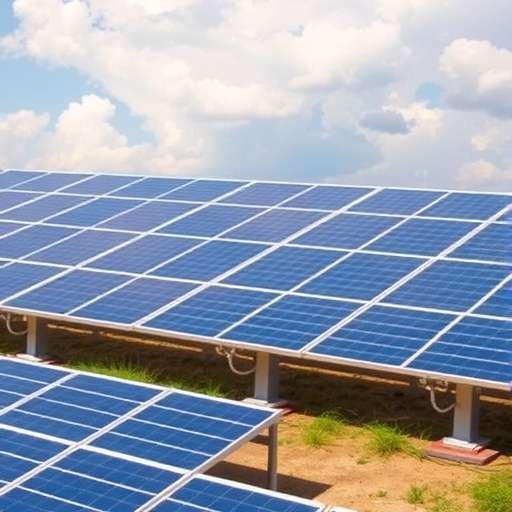
In the quest to bridge the immense energy divide plaguing much of sub-Saharan Africa, small-scale household solar power emerges as a beacon of hope. Recent research spearheaded by the University of Michigan unveils significant insights into the realities of solar energy deployment in Malawi—a nation where modern electricity access remains strikingly low. Despite a rapid influx of solar technology, the study presents a sobering reflection: access alone does not translate to meaningful energy empowerment for households.
At the heart of this investigation lies an extensive two-year survey involving over one thousand Malawian homes. The study reveals that most of the solar systems installed are modest in their capacity, with a median power output of approximately 6 watts. To contextualize, the typical home solar array installed in the United States last year produced around 400 to 460 watts. This stark disparity underscores the limitations faced by Malawian residents who rely on these smaller devices for daily energy needs.
Professor Pamela Jagger, lead researcher and an expert in Sustainability at the University of Michigan’s School for Environment and Sustainability, emphasizes that the “solar revolution” sweeping across Africa is often overestimated in terms of its actual impact. While adoption rates soar exponentially, the energy delivered by most household systems remains minimal. The majority of these small-scale setups provide only rudimentary energy services that fall short of enabling transformative changes in household productivity or quality of life.
An important threshold emerges from this research: households equipped with solar systems generating at least 50 watts experience substantially greater benefits. These larger setups not only provide more robust energy services, allowing for cooking, appliance use, and extended hours of study or work, but also tend to be installed by comparatively wealthier families. The implications here are twofold: first, that energy capacity is critical in unlocking meaningful benefits; second, that economic disparities shape access to higher-grade solar technologies.
Delving deeper, the study articulates the nuanced ways smaller solar systems, often dismissed in broader analyses, nonetheless affect daily life. For many Malawian families, the primary use of limited solar power is to charge mobile phones—a lifeline to communication, financial transactions, and access to vital information such as agricultural market prices. With over 90% of Malawian households owning mobile phones but only 6% of rural homes having electricity, solar charging at home represents a significant cost and time saving, redirecting minutes or even hours that would otherwise be spent traveling to centralized charging stations.
Beyond direct energy use, the research uncovers social and economic ripple effects linked to solar power adoption. Households with greater solar capacity were found to engage more with mobile money platforms, facilitating greater financial inclusion in an environment where traditional banking infrastructure is sparse. Such digital financial activity potentially empowers users with new saving opportunities and economic flexibility, helping to reduce vulnerabilities inherent in cash-based economies.
Despite the promising social advantages, the research team cautions that solar energy deployment in Malawi remains at a nascent stage. Most household systems are small and incapable of delivering the full range of energy services needed for holistic community development. The leap from providing minimal illumination or phone charging to powering productive agricultural or entrepreneurial activities remains an ongoing challenge.
Moreover, this work sheds light on the barriers to scaling up solar adoption. Chief among these are the high relative costs of larger capacity systems and the socioeconomic stratifications that limit who can afford them. Addressing these issues demands creative financing methods and innovative business models tailored to rural African contexts, alongside continued technological advancements that reduce system costs and improve durability.
Research funding uncertainties add another layer of complexity. The study was supported primarily by the U.S. National Science Foundation, but with the recent cessation of this program under the Trump administration, future efforts may face constraints. While private sector initiatives may continue to drive technology deployment and innovation, the loss of foundational research support jeopardizes critical international collaborations and capacity-building initiatives that pave the way for sustainable energy transitions.
Professor Jagger highlights a crucial, often overlooked demographic trend: by the end of this century, roughly 25% of the global population will reside in sub-Saharan Africa. This staggering statistic accentuates the strategic importance of engaging with African energy challenges—not only for humanitarian and development reasons but also for long-term economic, security, and business considerations.
Collaborations across prestigious institutions—including Duke University, Harvard University, the University of North Carolina, and Lilongwe University of Agriculture and Natural Resources—along with local partners like VITALITE Malawi and the Energizing Development Partnership, have enriched this body of work. Together, these efforts contribute valuable knowledge on how best to harness solar power’s potential to alleviate energy poverty in one of the world’s most electrification-challenged regions.
Ultimately, this comprehensive research reminds us that while the solar energy revolution is underway, its promise will only be fully realized by focusing on not just the proliferation but the quality and capacity of solar technologies deployed. Building scalable models that bring affordable, higher-capacity solar solutions to those in greatest need could dramatically alter the socioeconomic landscape of rural African communities, illuminating paths towards greater prosperity and sustainability.
News Publication Date: 26-Feb-2026
Web References:
- https://www.sciencedirect.com/science/article/pii/S2214629625003305
- https://www.sciencedirect.com/science/article/pii/S0140988326000162
- http://dx.doi.org/10.1016/j.erss.2026.104616
Cite Scienmag News
Faith Mcneil. (February 26, 2026). To Unlock Affordable Energy, Solar Power Must Be Smarter Deployed. Scienmag. https://scienmag.com/to-unlock-affordable-energy-solar-power-must-be-smarter-deployed/
Faith Mcneil. "To Unlock Affordable Energy, Solar Power Must Be Smarter Deployed." Scienmag, 26 February 2026, https://scienmag.com/to-unlock-affordable-energy-solar-power-must-be-smarter-deployed/. Accessed 31 August 2026.
Faith Mcneil. "To Unlock Affordable Energy, Solar Power Must Be Smarter Deployed." Scienmag. February 26, 2026. https://scienmag.com/to-unlock-affordable-energy-solar-power-must-be-smarter-deployed/


