


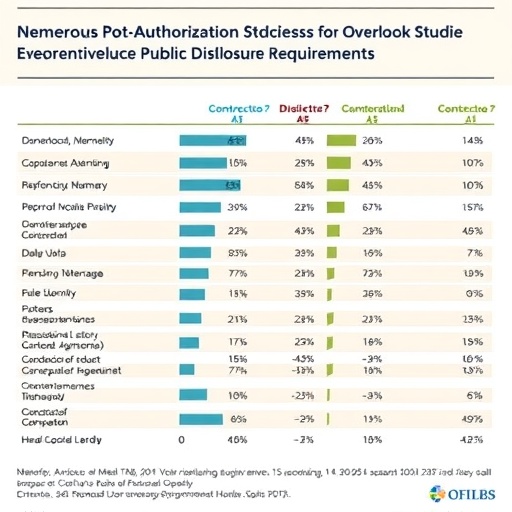
A recent observational study published in The BMJ has revealed significant gaps in the compliance of post-authorisation studies (PAS) registered with the European Medicines Agency (EMA) concerning legal requirements and recommended practices for the public dissemination of their protocols and findings. These post-authorisation studies, which are pivotal in gathering real-world evidence about the safety and effectiveness of medicines after their approval, demonstrate disappointingly low rates of transparency, raising concerns about the accessibility and scrutiny of critical drug safety data.
PAS are designed to supplement pre-approval clinical trials by collecting additional data in broader patient populations over extended periods, thus providing vital insights into medication performance in daily clinical use. Despite the EMA’s stringent legislative framework mandating the upload of study protocols and results for certain categories of PAS into their publicly accessible database, compliance is far from universal. The legislation specifically requires that categories 1 and 2 studies from European Union Risk Management Plans (EU RMP) submit protocols and results, while the EMA recommends but does not legally require disclosure for other categories.
Analyses of the EMA Catalogue of real-world data studies, as of February 2024, expose a striking shortfall in protocol and result publication. Out of 2300 ongoing and finalised PAS registered since November 2010, only 59.6% of studies had their protocols available publicly. Even more telling, among 1482 finalised studies, less than 70% had uploaded their results, signaling a lack of adherence to transparency mandates. Such deficits undermine the scientific community’s ability to rigorously assess the methodologies and outcomes of these studies.
Breaking down the data further, compliance varies notably by study category, highlighting systemic inconsistencies. In PAS categorized as EU RMP category 1, protocol availability was at 68%, with 90% having uploaded results. Category 2 studies showed similar trends with 64% protocol availability and 90% results availability. However, categories subjected only to EMA recommendations rather than strict legislation, including category 3 studies and non-EU RMP-only studies, showed poorer adherence with around two-thirds posting protocols and a significant proportion failing to make results public.
Studies not incorporated within any RMP bore the brunt of non-compliance, with only 55.3% having protocols and 64% providing results. This group’s notably poor adherence draws attention to the challenges in motivating study sponsors to voluntarily comply with non-mandatory transparency recommendations. The substantial divergence across sponsors and study types suggests uneven commitment to the principles of open scientific inquiry and post-marketing surveillance.
The implications of this study are profound, given that transparency in PAS is indispensable for ensuring the integrity of pharmacovigilance frameworks. Accessible study protocols enable independent researchers to evaluate study design bias, while timely release of results into public databases prevents selective reporting and facilitates meta-analyses and policymaking. The current patchy publication practices risk obscuring potential safety signals and data essential for safeguarding public health.
While the researchers acknowledge limitations in their cross-sectional analysis—such as reliance on the accuracy and timeliness of metadata entries in the EMA catalogue—the findings nonetheless signify a measurable breach in regulatory compliance. This snapshot underscores a broader issue in real-world data studies, wherein procedural rigor and public accountability must be strengthened to uphold trust and scientific robustness.
The study advocates for more stringent enforcement mechanisms and greater incentives for compliance, suggesting that the EMA consider enhancing oversight tools to monitor study registration and data upload adherence more effectively. More consistent and universal dissemination of protocols and results is crucial to fostering transparency and enabling constructive scientific dialogue.
The variability in upload compliance across different sponsors further hints at an uneven landscape where motivations, resources, and institutional priorities influence disclosure behaviors. Encouraging uniform best practices in study transparency could thus benefit from collaborative policy frameworks engaging regulatory bodies, pharmaceutical companies, and academic researchers.
Post-authorisation research is an essential pillar of pharmaceutical regulation, ensuring that safety data continues to be collected as medicines reach broader patient populations under real-world conditions. However, the utility of such research is contingent upon its findings being disseminated openly and promptly. The study’s findings serve as a wake-up call highlighting the persistent disconnect between regulatory expectations and actual practice.
In summary, the EMA faces critical challenges in ensuring that post-authorisation studies meet transparency demands designed to protect public health and support evidence-based regulation. Enhanced transparency not only bolsters scientific credibility but also serves the public interest by strengthening post-market drug safety monitoring. The study calls for urgent action to close the gap between legal mandates, recommendations, and actual practice in the disclosure of post-authorisation study protocols and results.
This research adds a pivotal dimension to ongoing debates about the use of real-world data in pharmacovigilance and post-marketing authorization processes, emphasizing the need for systemic reforms to enhance the reliability and accessibility of evidence generated in post-authorisation contexts. Improving compliance in this domain is essential for advancing health outcomes and regulatory science into the future.
News Publication Date:
25-Feb-2026
Web References:
10.1136/bmj-2025-086693
Cite Scienmag News
Courtney Benton. (February 26, 2026). Numerous Post-Authorization Studies Overlook Public Disclosure Requirements. Scienmag. https://scienmag.com/numerous-post-authorization-studies-overlook-public-disclosure-requirements/
Courtney Benton. "Numerous Post-Authorization Studies Overlook Public Disclosure Requirements." Scienmag, 26 February 2026, https://scienmag.com/numerous-post-authorization-studies-overlook-public-disclosure-requirements/. Accessed 2 September 2026.
Courtney Benton. "Numerous Post-Authorization Studies Overlook Public Disclosure Requirements." Scienmag. February 26, 2026. https://scienmag.com/numerous-post-authorization-studies-overlook-public-disclosure-requirements/


