


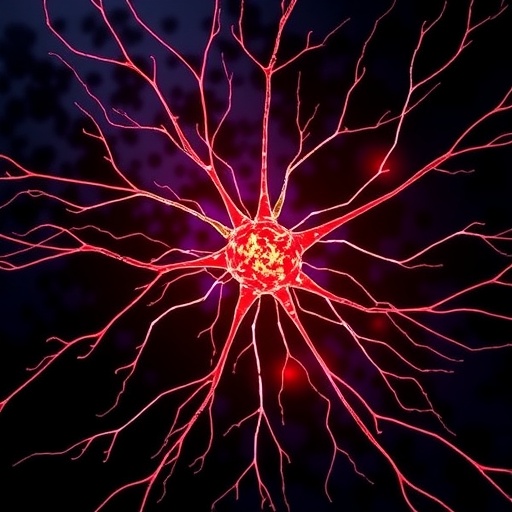
The cerebral cortex is the brain’s outermost layer, orchestrating the sophisticated cognitive processes that define human intelligence—ranging from reasoning and thought to sensory perception. This complex structure relies on precise architecture, characterized by organized layers of neurons. Proper development of these neuronal layers necessitates that newly born neurons embark on a detailed journey, migrating to specific cortical layers at exact developmental windows. Any deviation from this intricate process can precipitate significant cognitive dysfunctions and is implicated in numerous neurodevelopmental disorders such as epilepsy, various intellectual disabilities, autism spectrum disorders, and schizophrenia.
A groundbreaking study from the University of California, Riverside’s School of Medicine has unveiled a pivotal molecular mechanism underlying this critical developmental migration: nonsense-mediated mRNA decay (NMD). Published recently in the leading journal Cell Reports, the research identifies UPF2—a core component of the NMD pathway—as an essential regulator of neuronal migration and cortical layer formation during brain development. This discovery sheds new light on how RNA surveillance mechanisms impact the fundamental architecture of the brain.
NMD is traditionally recognized as a quality control system that safeguards cells by detecting and degrading aberrant messenger RNA (mRNA) transcripts bearing premature stop codons. This prevents the production of truncated, potentially toxic proteins. Yet, its role transcends mere housekeeping; NMD dynamically shapes the transcriptome by modulating the stability of specific mRNA populations. Professor Sika Zheng, who spearheaded this research, explains that despite prior connections of NMD-related gene mutations to neurodevelopmental disorders, the explicit role in sculpting cortical structure was not previously understood.
Zheng’s team employed sophisticated genetic techniques to selectively remove UPF2 from radial glial cells as well as their neuronal progeny. Radial glial cells serve as neural progenitors and guide newborn neurons during their migratory path. The absence of UPF2 triggered a striking phenotype: neurons exhibited delayed migration and many failed to reach their destined cortical layers, leading to profound disorganization in the laminar pattern of the cortex. This aberration compromised the highly ordered layers critical for effective synaptic connectivity and cognitive function.
Intriguingly, the brains of UPF2-deficient animals were also markedly smaller, suggesting that NMD does not solely influence migration but also contributes broadly to brain growth. To parse out the underlying cause of this microcephaly-like condition, the researchers inactivated the p53 pathway, known for mediating cell cycle arrest and apoptosis in response to cellular stress. Remarkably, suppressing p53 restored brain size to normal despite the continued absence of UPF2, indicating that the reduced brain size was largely a consequence of increased p53-driven cell death rather than direct impairments in cellular proliferation.
However, even with brain size rescued, the cortical layers remained disorganized, demonstrating that UPF2’s role in cortical structuring is independent of its influence on brain growth. These concordant yet distinct phenotypes illuminated the multifaceted impacts of NMD on neurodevelopment, orchestrating both the proliferative and migratory facets of cortical formation.
At the molecular level, the loss of UPF2 dysregulated a spectrum of genes integral to proper neuron positioning and motility. These include components of the Reelin signaling pathway—a critical extracellular cascade that guides migrating neurons to their appropriate cortical layers—and genes involved in microtubule assembly, essential for cytoskeletal dynamics and intracellular transport during migration. The delicate balance of these transcripts is vital; their disruption precipitates defective cellular movement and aberrant lamination.
Further mechanistic analyses revealed a concurrent upregulation of Ino80, a chromatin remodeling protein that represses genes critical for neuron migration. Since Ino80 is normally targeted for degradation via NMD, its accumulation in UPF2-deficient cells results in the silencing of essential motility genes, compounding neuronal migration deficits. This insight underscores the intricate feedback loops governed by NMD in regulating gene expression during brain development.
A striking and unexpected finding was the inappropriate activation of a ciliogenesis gene program in UPF2-lacking neurons. Specifically, Foxj1 — a master regulator of motile cilium biogenesis — was highly upregulated. Ectopic activation of Foxj1 in young neurons phenocopied migration defects observed upon UPF2 loss, indicating that aberrant expression of cilia-associated genes disrupts neuronal positioning. This divergence from the neurons’ normal transcriptional landscape reveals how NMD prevents the deleterious misexpression of developmental programs irrelevant to neuronal migration.
Together, these results illuminate a dual regulatory axis whereby NMD, via UPF2, ensures the fidelity of neuronal migration by modulating both positive drivers of migration and repressors of inappropriate gene programs. This balanced regulation is crucial for the establishment of cortical layers that underpin proper brain function.
The implications of this study extend beyond fundamental neurobiology. By elucidating the molecular underpinnings of cortical migration and architecture disruptions linked to NMD defects, it opens avenues for understanding pathological mechanisms in various neurodevelopmental diseases characterized by cortical dysplasia and faulty synaptic networks. Therapeutic strategies aimed at modulating NMD activity might one day ameliorate these disorders.
In summary, this landmark research elucidates how the regulated RNA decay machinery intricately governs the complex choreography of neuronal migration and cortical layering. Through the lens of molecular neuroscience, NMD emerges not only as a guardian against erroneous transcripts but as an active architect of brain structure, harmonizing gene regulatory networks to sculpt the cerebral cortex during development.
News Publication Date: 24-Feb-2026
Web References: https://medschool.ucr.edu/, https://news.ucr.edu/articles/2026/02/25/linkinghub.elsevier.com/retrieve/pii/S2211124726001051, http://dx.doi.org/10.1016/j.celrep.2026.117027
References: Zheng S, Lin L, Kubota N, Lam YL, Zhang M, Song MM. Nonsense-mediated mRNA decay orchestrates neuronal migration and cortical lamination while modulating reelin and ciliary gene regulatory networks. Cell Reports. 2026 Feb 24.
Cite Scienmag News
Cassandra Pierce. (February 25, 2026). Guiding Neurons Along the Right Path. Scienmag. https://scienmag.com/guiding-neurons-along-the-right-path/
Cassandra Pierce. "Guiding Neurons Along the Right Path." Scienmag, 25 February 2026, https://scienmag.com/guiding-neurons-along-the-right-path/. Accessed 1 September 2026.
Cassandra Pierce. "Guiding Neurons Along the Right Path." Scienmag. February 25, 2026. https://scienmag.com/guiding-neurons-along-the-right-path/


