


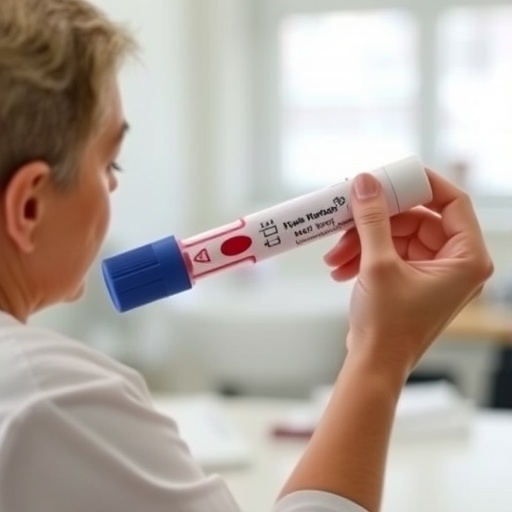
As the global population ages, one of the most pressing challenges in medicine and public health is accurately forecasting survival and health trajectories among older adults. In an unprecedented breakthrough, a team of researchers from Duke Health and the University of Minnesota has uncovered a new biological marker circulating in the bloodstream that promises to revolutionize the prediction of short-term survival in the elderly. Their study reveals that a specific set of small non-coding RNA molecules, known as piRNAs, offers an extraordinarily accurate gauge of whether older individuals are likely to survive the next two years. This finding, reported in the February 25 edition of Aging Cell, heralds a dramatic advancement in our ability to identify at-risk populations using a simple, minimally invasive blood test.
Directed by Dr. Virginia Byers Kraus, a distinguished professor at Duke University School of Medicine with appointments in Medicine, Pathology, and Orthopaedic Surgery, the research harnesses cutting-edge artificial intelligence methodologies to analyze a vast array of clinical and molecular data. The central discovery is that a select handful of piRNAs—just six in particular—serve as a stronger predictor of two-year survival than traditional metrics such as chronological age, cholesterol levels, physical activity, or a spectrum of over 180 other clinical indicators. This revelation challenges the long-held notion that age and lifestyle are the predominant determinants of near-term mortality risk.
Piwi-interacting RNAs, or piRNAs, are a class of small non-coding RNAs that, until recently, remained largely enigmatic in human biology. Known primarily for their roles in genome stability and regulation in germ cells, their presence and function in circulating blood have not been fully elucidated. This study not only identifies piRNAs as vital biomarkers for aging and survival but also suggests they may have a functional role in modulating longevity. Intriguingly, lower concentrations of specific piRNAs were consistently associated with longer survival, echoing findings in simpler organisms where reduced levels of these molecules correlate with lifespan extension.
The investigative team analyzed blood samples collected from over 1,200 individuals aged 71 and older, drawn from a long-standing cohort initiated by previous Duke-led studies. They incorporated an exhaustive set of variables—187 clinical factors and 828 types of small RNAs—applying sophisticated causal AI and machine learning models to untangle the complex biological relationships influencing survival. These computational approaches identified six piRNAs whose levels conveyed an impressive predictive accuracy of up to 86% for determining two-year survival outcomes. Subsequent validation in an independent cohort underscored the robustness and reproducibility of these findings.
What makes these findings particularly compelling is the implication that piRNAs are more than passive indicators; they might act as pivotal regulators of biological aging processes. Dr. Byers Kraus emphasizes that elevated piRNA levels could signify underlying physiological dysregulation, potentially marking cells or systems that are engaged in maladaptive responses. Conversely, lower piRNA levels may reflect a more stable, resilient state conducive to longevity. This insight opens exciting avenues for future research aimed at deciphering the molecular pathways through which piRNAs exert influence on human aging and mortality.
In comparative analyses, piRNA markers outperformed standard clinical measures for forecasting short-term survival, highlighting their transformative potential for clinical practice. Notably, while lifestyle factors such as exercise and diet gain prominence in predicting longer-term health outcomes, piRNAs provide a unique window into the molecular underpinnings of immediate health risks. Thus, monitoring these small RNAs could enable clinicians to stratify risk more precisely, implement timely interventions, and personalize medical care in ways previously unattainable.
The research also sets the stage for exploring therapeutic interventions that might modulate piRNA levels. Dr. Kraus notes that the team intends to investigate the impact of lifestyle modifications, pharmacological agents—such as the emerging GLP-1 receptor agonists used in diabetes and obesity treatment—and other therapeutics on circulating piRNA profiles. Understanding whether piRNAs can be altered to improve survival outcomes could herald a new class of anti-aging therapies grounded in RNA biology.
Moreover, parallel studies are planned to compare piRNA concentrations in the bloodstream with those within tissues, aiming to unveil the systemic versus localized roles of these molecules. This will enhance understanding of their biological functions and may clarify whether circulating piRNAs originate from specific organs or cell types, or if they represent a more systemic signal of health status.
PiRNAs essentially act as molecular micromanagers, intricately controlling gene expression, cellular repair, immune responses, and regenerative processes. This research underscores their power and complexity, highlighting a frontier in biomedicine that combines molecular genetics, computational biology, and gerontology. The ability to predict survival through a simple blood test marks a significant milestone in personalized medicine, promising not only improved prognostic accuracy but also the potential to guide interventions aimed at enhancing healthspan.
The implications extend beyond survival prediction alone, as understanding piRNA dynamics may illuminate fundamental mechanisms of aging, disease onset, and biological resilience. This positions piRNAs as a nexus between molecular aging research and practical healthcare applications. As populations worldwide continue to age, such innovations are critical in addressing the burgeoning demands on healthcare systems and improving quality of life for older adults.
In summary, the identification of piRNAs as powerful predictors of survival in older adults signifies a paradigm shift in aging research and clinical prognostication. The use of advanced AI to decode the complex molecular patterns underlying human longevity exemplifies the convergence of data science and medicine. Future studies building on these findings may pave the way for RNA-targeted therapies and personalized interventions that fundamentally transform how we approach aging and health in later life.
News Publication Date:
February 25, 2026
References:
Kraus, V.B., Ma, S., Naz, S.I., Zhang, X., Vann, C.G., Orenduff, M.C., Kraus, W.E., Shen, S., Huebner, J.L., Chou, C.-H., Kummerfeld, E., Cohen, H.J., Aliferis, C.F. (2026). Select Small Non-coding RNAs are Determinants of Survival in Older Adults. Aging Cell.
Cite Scienmag News
Beatrice Stafford. (February 25, 2026). New Blood Test Predicts Lifespan, Study Reveals. Scienmag. https://scienmag.com/new-blood-test-predicts-lifespan-study-reveals/
Beatrice Stafford. "New Blood Test Predicts Lifespan, Study Reveals." Scienmag, 25 February 2026, https://scienmag.com/new-blood-test-predicts-lifespan-study-reveals/. Accessed 31 August 2026.
Beatrice Stafford. "New Blood Test Predicts Lifespan, Study Reveals." Scienmag. February 25, 2026. https://scienmag.com/new-blood-test-predicts-lifespan-study-reveals/


