


In a groundbreaking study published in Royal Society Open Science, an international team of archaeologists and scientists has unveiled unprecedented insights into the socio-economic transformations of prehistoric communities in north-central Poland. Employing a multifaceted scientific approach integrating radiocarbon dating, ancient DNA analysis, and stable isotope examination, this research reconstructs the dietary habits and cultural dynamics spanning from the Neolithic period through the Bronze Age, roughly between 4100 and 1230 BC.
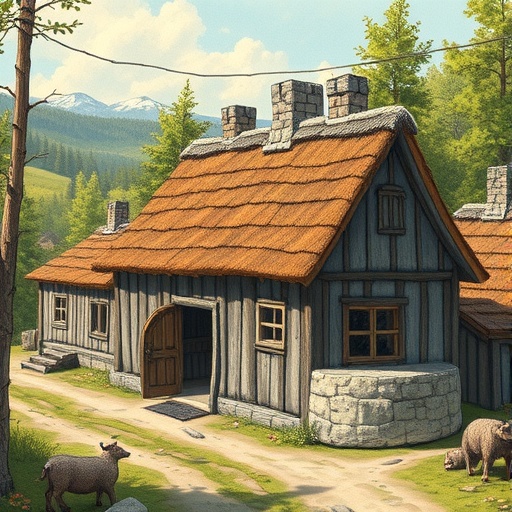
The scarcity of archaeological material in the Kuyavia region, characterized by rapidly decaying lightweight housing and limited grave goods, has historically obscured the lifestyle and social organization of its ancient inhabitants. To transcend these limitations, the research team meticulously analyzed 60 human skeletal remains, applying cutting-edge isotope analysis to bone collagen samples to decode the long-term dietary trends and adaptations of these prehistoric populations.
One of the pivotal revelations centers on the Corded Ware culture, a group that migrated into north-central Poland around 2800 BC during the late Neolithic. Contrary to prior assumptions positing that these people would exploit open grasslands for pastoralism, isotopic data indicates they initially herded livestock in forested and riverine wetland environments. These marginal landscapes differ fundamentally from the fertile agricultural lands cultivated by existing farming communities, suggesting a strategic ecological niche exploited by the Corded Ware groups.
Intriguingly, the isotopic signatures reveal a gradual dietary transition among Corded Ware individuals over several centuries, evolving from a predominantly forest-reliant pastoral diet toward consumption patterns more closely resembling those of neighboring agrarian peoples. This dietary convergence may reflect complex social interactions, knowledge exchange, or adaptive strategies as Corded Ware groups integrated and coexisted with established farming populations, highlighting fluid cultural boundaries in prehistoric times.
Equally noteworthy is the nuanced narrative around the arrival and adoption of millet (broomcorn millet) in the region. While millet is renowned for its rapid and widespread dietary adoption across Eurasia, the isotopic evidence from Kuyavia paints a more heterogeneous picture. From approximately 1200 BC, some communities incorporated millet extensively into their diet, while others showed minimal or no consumption, underscoring diverse subsistence strategies and cultural preferences persisting side by side.
Complementing these dietary distinctions were markedly different mortuary customs. The millet-consuming groups favored communal burial practices reminiscent of older traditions, with tombs used continuously over generations. In contrast, millet-averse communities employed distinctive paired burials in elongated pits, positioning the deceased foot-to-foot—a rare and culturally significant practice. These burial variations signify that food choice transcended nutrition, serving as a potent emblem of group identity, social differentiation, and cultural affiliation.
The stable nitrogen isotope ratios further unveil emergent social inequalities within these prehistoric populations. Particularly in the Early Bronze Age, individuals exhibiting elevated nitrogen isotope values—indicative of higher animal protein intake—hint at social stratification and differential access to valuable protein resources. Such evidence suggests the inception of social hierarchies invisible through traditional archaeological markers like grave goods, redefining our understanding of prehistoric socio-economic complexity.
This research underscores that peripheral regions such as Kuyavia did not merely replicate cultural paradigms propagated from Central Europe’s core but rather developed adaptive strategies and social structures customized to their unique ecological and social milieus. These findings affirm the creativity and resilience of prehistoric communities navigating environmental fluctuations and shifting social landscapes over millennia.
The methodological sophistication of this study lies in its interdisciplinary framework, combining archaeological stratigraphy, biochemical assays, and genomic data to achieve a holistic reconstruction of past human lifeways. Radiocarbon dating constrained temporal frameworks with high precision, while ancient DNA shed light on genetic ancestries and migrations, collectively deepening the contextual understanding of dietary patterns gleaned from isotopic data.
Such an integrated scientific approach offers a powerful blueprint for future paleoanthropological investigations, especially in regions where the archaeological record is fragmentary. By elucidating the interplay between diet, environment, and culture, this research not only enriches the narrative of prehistoric European societies but also provides analogs for understanding human adaptability and social evolution amidst environmental and demographic pressures.
Beyond its academic implications, the study resonates with broader themes of identity, cultural integration, and societal transformation. It vividly illustrates how ancient peoples negotiated boundaries—ecological, social, and symbolic—shaping their communities in ways that continue to influence present-day cultural landscapes and our interpretation of human history.
The discovery of diverse dietary strategies, differentiated burial customs, and early social hierarchies in prehistoric Kuyavia fundamentally challenges simplistic models of Neolithic and Bronze Age societies. It emphasizes the dynamic and multi-layered character of human prehistory, where adaptation and innovation were as integral as continuity and tradition.
This pioneering research not only enriches our understanding of prehistoric Europe’s complexity but also heightens awareness of the intricate relationships between environment, subsistence, and social structures. As scientific techniques advance, such studies promise to unravel even deeper secrets of the ancient past, offering a more nuanced portrait of humanity’s enduring journey through time.
News Publication Date:
25-Feb-2026
Web References:
https://dx.doi.org/10.1098/rsos.250968
Cite Scienmag News
Courtney Benton. (February 25, 2026). Prehistoric Poland’s Ancient Diets Uncover Unexpected Survival Strategies. Scienmag. https://scienmag.com/prehistoric-polands-ancient-diets-uncover-unexpected-survival-strategies/
Courtney Benton. "Prehistoric Poland’s Ancient Diets Uncover Unexpected Survival Strategies." Scienmag, 25 February 2026, https://scienmag.com/prehistoric-polands-ancient-diets-uncover-unexpected-survival-strategies/. Accessed 4 September 2026.
Courtney Benton. "Prehistoric Poland’s Ancient Diets Uncover Unexpected Survival Strategies." Scienmag. February 25, 2026. https://scienmag.com/prehistoric-polands-ancient-diets-uncover-unexpected-survival-strategies/


