


A groundbreaking collaboration between the Royal Orthopaedic Hospital NHS Foundation Trust (ROH) and Aston University is pioneering a novel minimally invasive injectable paste aimed at treating bone cancer. This innovative biomedical material, enhanced with the cancer-fighting metal gallium, holds promise not only to eradicate malignant cells but also to regenerate bone tissue damaged by both primary and secondary tumors. At the core of this research lies an extraordinary synergy between bioactive glasses and gallium ions, creating a therapeutic agent with potent dual functionality—anticancer efficacy and bone repair acceleration.
Bioactive glasses have long held a pivotal role in orthopedic and dental medicine due to their unique ability to bond strongly with bone tissue, promoting natural regeneration. These glasses release calcium and phosphate ions that stimulate osteogenesis and integrate seamlessly within the bone matrix. The current breakthrough modifies these glasses by incorporating gallium, a metal known for its remarkable toxicity to certain cell types while being benign to healthy tissue. Gallium’s strategic inclusion transforms the glass into an intelligent drug delivery system, targeting only cancer cells which have an increased affinity for gallium ions—effectively turning the tumor’s own biology against itself.
The concept is revolutionary: cancer cells exhibit a heightened metabolic demand and disrupted iron metabolism which causes them to uptake gallium ions preferentially. Once inside the malignant cells, gallium exerts cytotoxic effects, inducing apoptosis and halting tumor proliferation. Aston University’s team, led by Professor Richard Martin and Dr. Eirini Theodosiou, has demonstrated through rigorous laboratory tests that this gallium-doped bioglass achieves approximately 99% cancer cell kill rates in vitro, an unparalleled success that underscores the potential of this therapeutic modality.
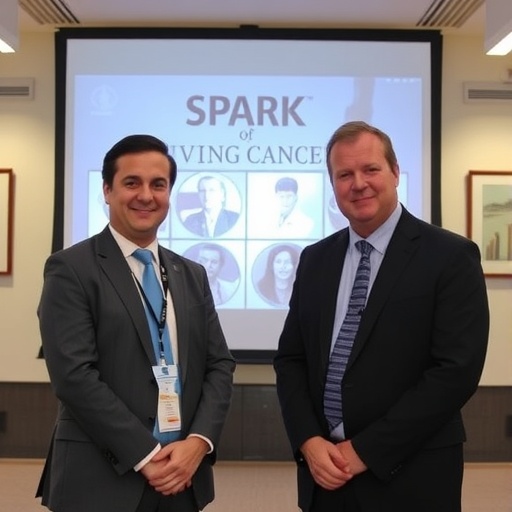
This research journey is now gaining vital momentum through the SPARK THE MIDLANDS program, a translational healthcare initiative designed to bridge the gap between academic discovery and clinical application. The program, a collaborative effort involving Aston University, the West Midlands Health Tech Innovation Accelerator (WMHTIA), and Forging Ahead, offers crucial multidisciplinary support encompassing business expertise, regulatory guidance, and access to potential funding mechanisms. This enables the team to accelerate the path from benchtop innovation toward hospital implementation.
The clinical potential of this injectable paste is profound given its minimally invasive delivery method. Current treatments for bone cancer often involve extensive surgery or systemic chemotherapy with severe side effects. This paste can be administered directly into tumor sites via injection, providing localized, high-concentration anticancer effects while simultaneously fostering the regeneration of defective bone. Such precision reduces collateral damage to healthy tissues, minimizing adverse events and improving patient recovery outcomes dramatically.
Dr. Lucas Souza, Research Laboratory Manager at ROH, notes that translational success rates for new medical technologies often languish below five percent. The robust framework of SPARK THE MIDLANDS, which reports a project success rate of 62%, gives this interdisciplinary team a rare and valuable opportunity to shepherd this technology through clinical trial phases. This support translates into access to specialized expertise in diagnostics, therapeutic development, and medical device engineering, which are often barriers in academic-led innovations.
The scientific underpinnings of the gallium-bioactive glass system rely heavily on the interplay of material science and cellular biology. The bioactive glass matrix acts as a scaffold releasing therapeutic gallium ions while its degradation products enhance bone remodeling processes. The gallium’s role is twofold: firstly, disrupting cellular mechanisms crucial for iron acquisition and metabolic activity in tumor cells, and secondly, promoting direct DNA damage leading to programmed cell death. This multifaceted mechanism leverages the unique vulnerabilities of cancer metabolism while preserving healthy osteoblast activity.
Early laboratory data have ignited optimism by demonstrating not only substantial destruction of cancerous cells but also measurable promotion of bone regeneration, which is critical in the context of metastatic bone lesions commonly seen in cancers such as breast and prostate. Regenerating bone within previously tumor-burdened areas could revolutionize rehabilitation and functional outcomes for patients suffering from both primary and metastatic bone malignancies.
The collaboration exemplifies the symbiosis of cross-disciplinary expertise, blending clinical insights from ROH’s orthopedic oncology specialists including Dr. Souza, Professor Adrian Gardner, and Mr. Jonathan Stevenson with Aston University’s advanced materials research. Such integration is vital to designing an effective treatment that meets stringent safety and efficacy standards required for human use. The teams’ ambition is to optimize the paste formula for maximum therapeutic index and biocompatibility to enable eventual regulatory approval.
Looking ahead, this gallium-doped bioglass paste could usher in a paradigm shift in bone cancer treatment, moving away from systemic toxicity towards precision biotherapy. Coupled with the minimally invasive application route, it offers enhanced patient quality of life and reduced healthcare burdens. By harnessing innovative materials science alongside cutting-edge oncology research, the future of orthopaedic cancer care may be transformed drastically in the coming years.
The SPARK THE MIDLANDS program itself originates from the successful Stanford University model. It champions rapid translation of healthcare innovations by fusing academic discovery with industrial expertise and market readiness. Its replication in the Midlands region thus not only supports local research excellence but also fosters a vibrant ecosystem where breakthroughs like the gallium-bioactive glass paste can transition from laboratory curiosities into clinical realities that save lives.
In conclusion, the team’s pioneering work with gallium-doped bioactive glass injectable paste represents a beacon of hope in the fight against bone cancer. Through innovative material science, precise cytotoxic targeting, and bone regeneration, this development charts a novel therapeutic avenue with transformative potential. If clinical trials confirm laboratory findings, this injectable paste could become a new standard of care offering patients a safer, more effective treatment option that addresses both tumor eradication and bone restoration simultaneously.
News Publication Date: June 2024
Web References:
– SPARK THE MIDLANDS Programme: https://www.aston.ac.uk/latest-news/aston-university-launches-spark-midlands-support-health-tech-innovation
– Aston University Research Profiles: Professor Richard Martin – https://research.aston.ac.uk/en/persons/richard-martin
– Aston University Research Profiles: Dr. Eirini Theodosiou – https://research.aston.ac.uk/en/persons/eirini-theodosiou
Cite Scienmag News
Nathaniel Bowman. (February 24, 2026). Aston University Boosts SPARK Anti-Cancer Collaboration with New Support. Scienmag. https://scienmag.com/aston-university-boosts-spark-anti-cancer-collaboration-with-new-support/
Nathaniel Bowman. "Aston University Boosts SPARK Anti-Cancer Collaboration with New Support." Scienmag, 24 February 2026, https://scienmag.com/aston-university-boosts-spark-anti-cancer-collaboration-with-new-support/. Accessed 2 September 2026.
Nathaniel Bowman. "Aston University Boosts SPARK Anti-Cancer Collaboration with New Support." Scienmag. February 24, 2026. https://scienmag.com/aston-university-boosts-spark-anti-cancer-collaboration-with-new-support/


