


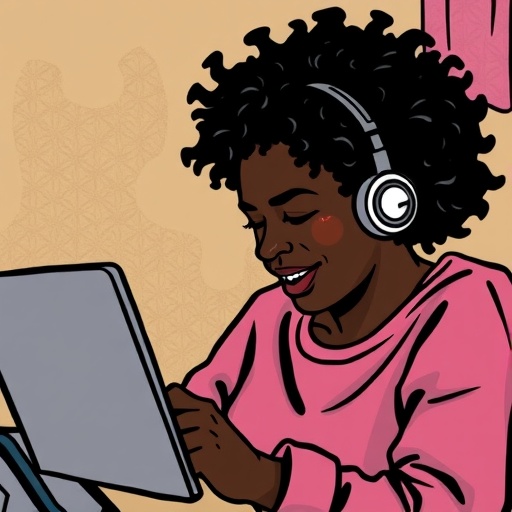
A recent groundbreaking study sheds new light on the intersection of online racism and mental health among Black young adults, revealing complex behavioral responses to pervasive digital discrimination. The research, conducted by scholars at North Carolina State University and the University of Southern California, emphasizes not only the widespread exposure to online racism but also the proactive steps taken by Black young adults to seek support through digital mental health tools. These findings carry significant implications for mental health professionals, app developers, and policymakers aiming to address racial disparities in mental health care access and quality.
The study draws attention to an alarming prevalence of online racism experienced by Black young adults. An overwhelming 88% of the 1,005 Black participants, aged between 18 and 29, reported encountering online racism within just a six-month timeframe. This staggering figure underscores the pervasiveness of digital racial hostility and the urgency to understand its psychological ramifications. Researchers identified online racism not merely as a backdrop against which mental health unfolds but as a dynamic factor influencing digital health-seeking behaviors.
Digital mental health tools—ranging from telepsychology sessions, wellness applications, to online peer support networks—are becoming critical resources for this demographic. Despite some skepticism regarding the efficacy and cultural relevance of such tools, the study highlights an increased utilization of these digital platforms among Black young adults exposed to online racism. This trend persists irrespective of whether individuals exhibit clinically significant anxiety or depression, suggesting a broader psychological need driven by the distress caused by racial hostility in virtual spaces.
Through comprehensive survey methodologies, the researchers sought to quantify correlations between racism exposure and mental health tool usage. Survey participants detailed their frequency of online racist encounters, their engagement with digital mental health resources, and their levels of mental health communication online. The design allowed the team to dissect not only the extent of digital mental health tool use but also the nuanced patterns in how Black young adults discuss and process mental health within digital communities.
An intriguing insight from the data reveals that direct exposure to online racism correlates positively with increased engagement in mental health communication on social platforms. Participants frequently shared personal experiences and mental health coping strategies, creating virtual spaces of solidarity and mutual support. This peer-to-peer mental health dialogue may function as a grassroots countermeasure to the psychological harm inflicted by online racism, fostering resilience through community validation.
Crucially, the study distinguishes between those participants exhibiting clinically diagnosable symptoms of anxiety or depression and those who do not meet clinical thresholds yet still face significant online racial harassment. Both groups demonstrate similar patterns of digital mental health tool usage linked to their racism exposure, challenging traditional clinical paradigms that often prioritize intervention primarily based on symptom severity. This points to an expanded conceptualization of mental health support that acknowledges the subclinical but impactful stressors arising from systemic and interpersonal racism.
Mental health practitioners can glean critical insights from these findings. Traditionally, clinical interviews may overlook online experiences, treating physical and in-person environments as primary contexts for mental health assessment. Incorporating discussions about a client’s online social environments, exposure to racial hostility, and the use of digital mental health resources offers a more holistic understanding of stressors influencing Black young adults’ mental well-being. Practitioners can thus adapt therapeutic strategies that validate and address the repercussions of online racism.
Furthermore, app developers and mental health technology designers are called to action based on this research. Digital tools should not adopt a one-size-fits-all approach; instead, they must account for the unique sociocultural stressors prevalent in Black communities. Tailoring interventions to incorporate coping mechanisms specifically addressing online racial traumas could enhance user engagement and therapeutic outcomes. Features fostering community support, culturally affirming content, and moderation strategies that reduce exposure to racism may amplify the effectiveness of mental health apps.
These findings also have broader implications for public health policy and digital platform governance. Social media companies bear a shared responsibility in mitigating online racism, as such environments significantly contribute to mental health burden among marginalized groups. Policies that better detect and address hate speech, combined with promoting positive mental health resources, could alleviate some of the psychological harms identified in the study. Advocacy for equitable digital environments forms a necessary complement to medical and technological interventions.
The research team employed a robust cross-sectional quantitative survey design, enabling a detailed snapshot of this multifaceted issue. The study’s strengths lie in its large and specific sample, methodological rigor in capturing both subjective mental health symptoms and objective behaviors, and its innovative focus on the interplay between digital racism and health tool engagement. These methodological choices enhance the reliability of findings and pave the way for future longitudinal research to assess causality and intervention efficacy.
While the study primarily focuses on Black young adults between 18 and 29 years old, its implications resonate beyond this demographic. The rise of digital platforms as primary social arenas means that online racism’s psychological impacts likely extend across age groups and ethnicities, albeit with differential intensity and consequences. Extending similar research models to other underserved populations is a logical next step, emphasizing an intersectional approach to digital health disparities.
Finally, the study calls attention to the resilience and agency demonstrated by Black young adults facing online racism. Far from being passive victims of digital hostility, these individuals actively seek and utilize digital mental health resources and foster supportive online communities. Recognizing and reinforcing this agency can help reshape mental health support structures to be more empowering, culturally sensitive, and digitally integrated.
This research offers a vital reframing of mental health care in the digital age—highlighting how systemic racism manifests in virtual environments and the innovative ways affected communities respond. Addressing the mental health challenges posed by online racism demands concerted actions spanning clinical practice, technological design, social policy, and community empowerment. The intersectional lens applied in this study provides a roadmap for more equitable and effective mental health support frameworks for Black young adults navigating the complex digital landscape.
Cite Scienmag News
Glenn Wilkins. (February 23, 2026). Research Reveals Link Between Online Racism and Mental Health Support-Seeking in Black Young Adults. Scienmag. https://scienmag.com/research-reveals-link-between-online-racism-and-mental-health-support-seeking-in-black-young-adults/
Glenn Wilkins. "Research Reveals Link Between Online Racism and Mental Health Support-Seeking in Black Young Adults." Scienmag, 23 February 2026, https://scienmag.com/research-reveals-link-between-online-racism-and-mental-health-support-seeking-in-black-young-adults/. Accessed 31 August 2026.
Glenn Wilkins. "Research Reveals Link Between Online Racism and Mental Health Support-Seeking in Black Young Adults." Scienmag. February 23, 2026. https://scienmag.com/research-reveals-link-between-online-racism-and-mental-health-support-seeking-in-black-young-adults/


