


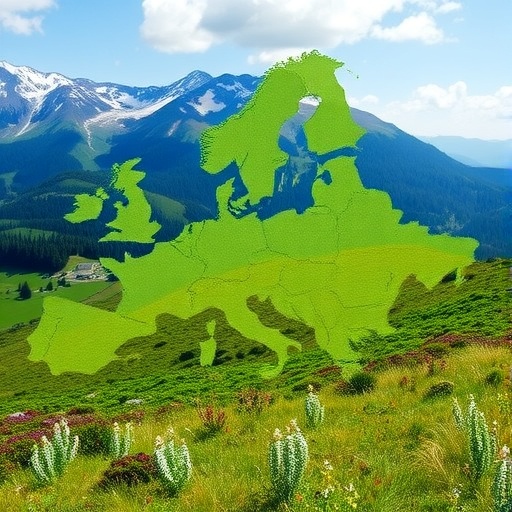
Europe is on the brink of a transformative leap in biodiversity monitoring with the launch of a visionary initiative designed to unify and modernize data collection across the continent. This pioneering effort, led by the University of Amsterdam, the German Centre for Integrative Biodiversity Research (iDiv), and Martin Luther University Halle-Wittenberg, outlines an integrated roadmap to establish a comprehensive Biodiversity Observation Network (BON) for Europe. The endeavor offers not only a blueprint for cohesive environmental stewardship within Europe but also a scalable model that could revolutionize global biodiversity monitoring in the twenty-first century.
At the heart of this initiative lies the recognition that current biodiversity data collection in Europe suffers from fragmentation and inconsistency. With hundreds of monitoring programs operating independently, the resulting data are often siloed and lack standardization, severely diminishing their utility for policymakers and conservationists. This disjointed situation impedes comprehensive analysis and timely response to ecological changes occurring across species and ecosystems. The proposed roadmap addresses this challenge by advocating for a continent-wide coordinated network that harmonizes these disparate strands into a singular, dynamic system capable of tracking biodiversity at scales ranging from molecular genetics to entire biomes.
A fundamental component of the new monitoring framework is the adoption of 84 Essential Biodiversity Variables (EBVs). These variables serve as a scientifically robust suite of indicators capturing the multifaceted nature of biodiversity—including genetic diversity within populations, phenological shifts in insect activity, fluctuations in bird abundance, and the spatial extent of critical habitats such as seagrass meadows. By implementing standardized EBVs, the network ensures consistency and comparability of biodiversity measurements across different geographic locales and temporal frames, thereby enabling reliable assessments of ecosystem health and resilience.
To manage this ambitious integration, the roadmap proposes the establishment of a European Biodiversity Observation Coordination Centre (EBOCC). This entity would function as the central nerve center for all biodiversity data operations, establishing standardized workflow protocols, ensuring transparent governance of sensitive ecological data, and synchronizing monitoring efforts to align directly with European Union policy imperatives. By bridging national and regional infrastructures, the EBOCC will streamline data pipelines, allowing for rapid synthesis and dissemination of biodiversity information essential for effective environmental governance.
Technological innovation forms a keystone of this revitalized approach to biodiversity monitoring. The network plans to harness the power of advanced digital sensors, including autonomous acoustic recorders that capture bird calls, motion-triggered cameras documenting elusive wildlife, and specialized radar systems designed to monitor insect migrations and weather influences. These tools generate vast volumes of high-resolution ecological data, enabling real-time insight into temporal patterns and species behaviors that were previously elusive at large scales.
Complementing sensor technologies, artificial intelligence (AI) algorithms will play a pivotal role in the automated recognition and classification of species from complex data streams. Machine learning approaches allow rapid processing of audio recordings, images, and genetic sequences to identify organisms with unprecedented accuracy and speed. This not only accelerates data analysis but also reduces human error, making large-scale biodiversity inventories feasible and cost-effective.
Moreover, emerging techniques in environmental DNA (eDNA) and metabarcoding stand to revolutionize species detection by analyzing genetic material shed into the environment through water, soil, or air samples. This molecular approach enables comprehensive biodiversity assessments without direct observation or capture of organisms, increasing detection sensitivity especially for rare or cryptic species. When integrated with remote sensing technologies—satellites, aircraft, and drones equipped with cutting-edge sensors—the system can monitor habitat changes in near real-time, revealing shifts in vegetation structure, ecosystem productivity, and degradation patterns.
Despite the emphasis on high-tech tools, the roadmap stresses that human expertise remains indispensable. Citizen scientists, taxonomic specialists, and seasoned professional networks contribute vital contextual knowledge and continuity to monitoring efforts. By blending the strengths of technology with grounded scientific expertise and community participation, the European BON will be more efficient, inclusive, and adaptive, fostering stronger public engagement with biodiversity conservation.
Currently, Europe possesses vast biodiversity data accumulated from various sources—scientific field studies, public observations, sensor outputs, molecular analyses, and satellite imagery. However, these data remain largely disconnected. The proposed network aims to create unified data workflows and pipelines that integrate these diverse inputs into standardized EBV datasets. Such harmonization will facilitate clearer biodiversity reports, enhance trend detection, and enable early warnings of ecological disturbances, thereby empowering decision-makers to enact timely and evidence-based conservation policies.
The roadmap aligns strategically with critical international and regional environmental frameworks. The establishment of the EBOCC dovetails with the European Union Biodiversity Strategy for 2030, the Nature Restoration Regulation, and directives protecting birds, habitats, water quality, and marine environments. These synergies ensure that the monitoring system directly supports legislative goals, boosting reporting accuracy and policy implementation effectiveness across member states.
Beyond Europe, the integrated BON also contributes to global biodiversity objectives. It strengthens Europe’s capacity to fulfill the commitments of the Kunming–Montreal Global Biodiversity Framework, flagging progress on international conservation targets. The rich datasets generated will support assessments undertaken by the Intergovernmental Science-Policy Platform on Biodiversity and Ecosystem Services (IPBES) and integrate seamlessly into global networks such as GEO BON, thus amplifying scientific collaboration and environmental stewardship worldwide.
The European Parliament’s early endorsement and funding for preparatory actions underscore the political will behind this visionary project, signaling an era in which biodiversity monitoring transcends national borders and technological hurdles. This foundational work sets the stage for a future where integrated, real-time biodiversity data empower transformative conservation strategies, safeguard ecosystem services for humanity, and preserve the continent’s rich natural heritage for generations to come.
The innovative marrying of advanced technology, cohesive governance, and human expertise in Europe’s Biodiversity Observation Network represents a groundbreaking model for environmental monitoring. As this roadmap transitions from plan to reality, it promises to furnish an unprecedentedly detailed and responsive portrait of Europe’s ecosystems, informing and inspiring urgent action in the face of accelerating biodiversity loss globally.
News Publication Date: 23-Feb-2026
Web References: 10.1038/s44358-026-00140-6
Cite Scienmag News
Margaret Porter. (February 23, 2026). Blueprint for Advancing Europe’s Biodiversity Monitoring System. Scienmag. https://scienmag.com/blueprint-for-advancing-europes-biodiversity-monitoring-system/
Margaret Porter. "Blueprint for Advancing Europe’s Biodiversity Monitoring System." Scienmag, 23 February 2026, https://scienmag.com/blueprint-for-advancing-europes-biodiversity-monitoring-system/. Accessed 1 September 2026.
Margaret Porter. "Blueprint for Advancing Europe’s Biodiversity Monitoring System." Scienmag. February 23, 2026. https://scienmag.com/blueprint-for-advancing-europes-biodiversity-monitoring-system/


