


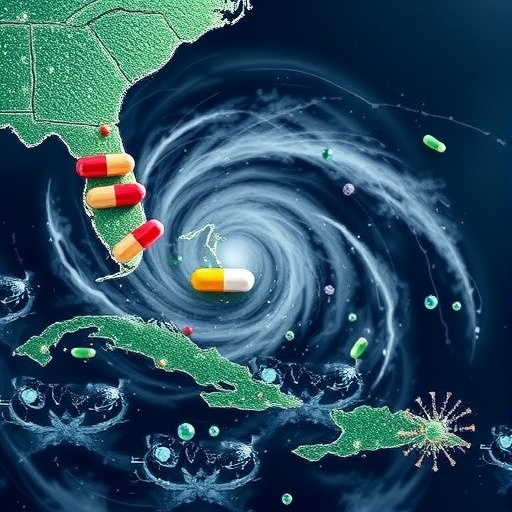
A recent study led by researchers at the Columbia University Mailman School of Public Health sheds new light on the complex and often overlooked relationship between tropical cyclones and psychoactive drug-related mortality. Spanning over three decades of data, this observational research establishes a robust link between exposure to tropical cyclones—including hurricanes and tropical storms—and increased rates of drug-related deaths lasting up to three months following the storm event. The study’s findings, published in JAMA Network Open, spotlight the hidden public health consequences intertwined with climate change, particularly as severe storms become more frequent and intense.
Tropical cyclones are known for their immediate physical destruction—destroyed homes, flooded streets, and tragic loss of life due to drowning and trauma. However, this new narrative highlights a subtler yet equally devastating aftermath: the surge in psychoactive drug-related deaths triggered by the psychological distress these storms cause. The researchers postulate that cyclones exert a profound influence by disrupting healthcare infrastructure and access to substance use treatment, leading individuals with substance dependencies to increased risk of overdose and fatal consequences.
At the core of these findings is the recognition that stress and instability induced by tropical cyclones may force individuals to seek maladaptive coping mechanisms such as heightened alcohol and drug consumption. The study, led by doctoral candidate Raenita Spriggs and senior author Dr. Robbie M. Parks, emphasizes that these storms function as acute stressors that exacerbate underlying psychological vulnerabilities. Disruption of daily life, loss of income, social displacement, and barriers to accessing mental health services converge to create a fertile ground for substance misuse and overdose.
One of the most intriguing and complex results revealed by the research is the pronounced disparity in drug-related death rates among different socioeconomic and racial groups following tropical cyclone exposure. Counterintuitively, the negative health outcomes were most significant in affluent, predominantly White communities. This finding challenges prevailing assumptions about vulnerability and suggests that these populations, with greater access to prescription pharmaceutical opioids and tranquilizers, face unique risks when healthcare continuity is interrupted. The disruption may lead to unmonitored use and inadvertent overdoses, or transitions to more dangerous alternatives contaminated with fentanyl, a synthetic opioid contributing significantly to overdose fatalities nationwide.
Conversely, the association between cyclone exposure and drug-related deaths in lower-income communities of color was largely absent or inversely correlated. Researchers hypothesize that, in these communities, financial constraints and disrupted illicit drug supply chains following cyclones may reduce immediate substance use potential. Moreover, mortality in these populations may be driven by other cyclone-exacerbated causes unrelated to psychoactive substances, complicating the epidemiological picture. These findings underscore the necessity of nuanced and demographically tailored public health responses to climate disasters.
Age emerged as a critical factor in cyclone-related drug mortality risk, with younger populations exhibiting the greatest vulnerability. Among individuals aged 15 to 29 years, the study identified that each additional day of cyclone exposure during the month was linked to a staggering 30 percent increase in psychoactive drug-related death rates. This elevated risk extended to the broader demographic of 15 to 44-year-olds, suggesting that youth and early adulthood represent critical windows of heightened susceptibility to stress and hardship triggered by climate events. The disruption of employment, caregiving duties, and treatment access in these groups may amplify this vulnerability.
Methodologically, the study utilized comprehensive death records from the National Center for Health Statistics spanning 1988 to 2019, meticulously limited to counties on the U.S. mainland that had experienced at least one tropical cyclone. Researchers employed advanced wind field modeling based on data from the National Oceanic and Atmospheric Administration to precisely quantify cyclone exposure by monthly counts of days with sustained winds exceeding 34 knots. This granular approach allowed for robust correlations between meteorological events and psychoactive substance-related mortality, integrally linking environmental data with population health outcomes.
The analytical framework incorporated extensive demographic and socioeconomic data, including annual county-level population estimates and categorizations from the US Census Bureau and NCHS bridged-race datasets. The definition of psychoactive drug-related deaths encompassed a spectrum of causes—including overdose poisonings, mental and behavioral disorders from substance use, and alcohol-induced fatalities—ensuring a comprehensive capture of the multifactorial impact of substance misuse.
Statistical modeling revealed that every additional day a county was exposed to tropical cyclones corresponded to a 3.84 percent increase in drug-related death rates within that month and a sustained 3.76 percent increase in the month following exposure. Remarkably, the elevated risk persisted, albeit at a reduced magnitude of 2.39 percent, up to three months post-exposure. Although effects specific to hurricanes did not reach statistical significance, their estimated impact suggested a sizable 7 percent increase in death rates per additional hurricane-exposed day, emphasizing that more intense storm events potentially yield even graver health repercussions.
Over the cumulative 31-year timeframe of the study, the research team conservatively estimated approximately 1,235 excess deaths attributable to psychoactive drug exposure linked to tropical cyclone events in affected U.S. counties. This average of around 40 additional fatalities annually reveals a significant, previously underappreciated public health burden associated specifically with these severe weather events. Importantly, these calculations accounted for frequency of exposure and demographic adjustments, indicating that the toll is neither incidental nor uniform but rather a quantifiable climatic health crisis.
The implications of this study extend beyond the immediate post-storm period. For every death attributed directly to drug-related causes in the aftermath of a tropical cyclone, many others likely endure long-term health ramifications that accumulate over years. The researchers stress that subsequent investigations must explore the chronic psychological and physiological effects that may surface months or years later, enriching our understanding of climate-related health vulnerabilities and informing future disaster response frameworks.
In light of these findings, the authors advocate for an integrated approach that merges mental health and substance use treatment services within climate disaster preparedness and response strategies. Given the observed demographic disparities, interventions must also be tailored to address the distinct sociocultural and economic contexts of affected communities. Enhancing healthcare system resilience, safeguarding continuity of care, and expanding access to harm reduction resources are critical priorities to mitigate the multifaceted impacts of increasingly active and severe tropical cyclones.
This pioneering research complements and builds upon a growing body of literature that examines the interrelations between environmental stressors and health disparities. Notably, previous studies by Dr. Parks have investigated the rising lethality of hurricanes in socially vulnerable counties, geographic variance in evacuation patterns, and temperature-related increases in substance use disorders and interpersonal violence. Together, these lines of inquiry reveal a complex web linking climate change to human behavior, health inequities, and societal resilience.
While the direct destruction wrought by tropical cyclones often commands immediate attention and resources, this research underscores the necessity of recognizing and addressing the “hidden harms” embedded in their wake—particularly the escalation of substance-related deaths that may persist long after floodwaters recede. As climate change continues to amplify storm intensity and frequency worldwide, understanding and mitigating these downstream health effects is paramount for protecting vulnerable populations and sustaining public health infrastructure in an era of environmental uncertainty.
Cite Scienmag News
Miles G. (February 20, 2026). Surge in Drug-Related Deaths Following Hurricanes and Tropical Storms Reveals Hidden Health Crisis. Scienmag. https://scienmag.com/surge-in-drug-related-deaths-following-hurricanes-and-tropical-storms-reveals-hidden-health-crisis/
Miles G. "Surge in Drug-Related Deaths Following Hurricanes and Tropical Storms Reveals Hidden Health Crisis." Scienmag, 20 February 2026, https://scienmag.com/surge-in-drug-related-deaths-following-hurricanes-and-tropical-storms-reveals-hidden-health-crisis/. Accessed 28 August 2026.
Miles G. "Surge in Drug-Related Deaths Following Hurricanes and Tropical Storms Reveals Hidden Health Crisis." Scienmag. February 20, 2026. https://scienmag.com/surge-in-drug-related-deaths-following-hurricanes-and-tropical-storms-reveals-hidden-health-crisis/


