


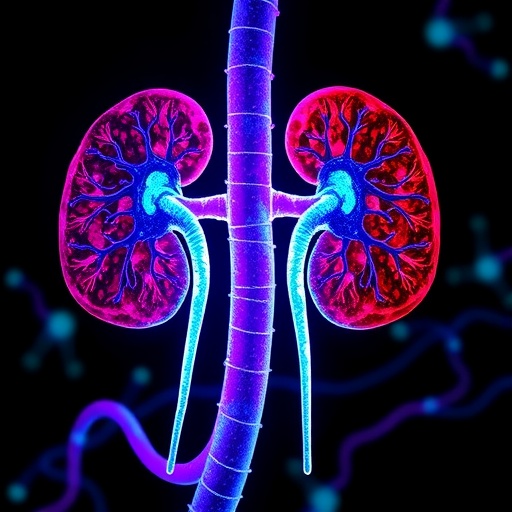
Kidney disease remains a formidable challenge in modern medicine, with fibrosis representing a critical pathological hallmark that leads to irreversible organ damage and failure. Recent advances in molecular biology and cellular signaling pathways are shedding new light on the intricate cellular mechanisms that link metabolic disturbances in the renal tubules to the progression of fibrotic remodeling. A groundbreaking study by Figurek, Jankovic, Kollar, and colleagues, recently published in Nature Communications, unveils a novel signaling axis involving pyrimidinergic calcium signaling that provides a compelling mechanistic connection between tubular metabolism and fibrosis development in kidney disease. This discovery opens innovative avenues for targeted therapeutic interventions aimed at halting or reversing fibrosis progression, with profound clinical implications.
Calcium ions have long been recognized as ubiquitous intracellular messengers regulating a plethora of cellular functions, including metabolism, proliferation, and apoptosis. However, the nuanced role of pyrimidine nucleotides, such as UDP and UTP, acting through purinergic receptors, in mediating calcium signaling specifically within renal tubular epithelial cells has remained underexplored until now. The study meticulously dissects how pyrimidinergic signaling triggers specific calcium fluxes that modulate metabolic activity in tubular cells, thus driving fibrotic processes. Through a combination of advanced imaging techniques, genetic manipulation, and metabolic assays, the researchers delineate a direct causal link that positions pyrimidinergic calcium signaling as a pivotal driver of fibrosis in the kidney.
At the core of this novel mechanism is the activation of P2Y receptors, a subclass of G protein-coupled purinergic receptors responsive to extracellular pyrimidine nucleotides. Upon binding of pyrimidines, P2Y receptors induce a robust release of calcium from intracellular stores, notably the endoplasmic reticulum, facilitated by inositol trisphosphate (IP3) signaling. This intracellular calcium surge subsequently orchestrates multiple downstream effectors that reprogram the metabolic phenotype of tubular epithelial cells. Specifically, the calcium signaling cascade triggers mitochondrial adaptations that alter energy production pathways, leading to enhanced glycolytic flux and aberrant accumulation of profibrotic metabolites.
The metabolic rewiring identified implicates a shift from oxidative phosphorylation toward aerobic glycolysis within tubular cells, a phenomenon reminiscent of the Warburg effect commonly observed in cancer biology. This bioenergetic alteration fuels the synthesis of fibrotic matrix components and stimulates the secretion of cytokines such as TGF-β, which perpetuate stromal activation and extracellular matrix deposition. By linking calcium-dependent metabolic shifts to profibrotic signaling networks, the study provides a comprehensive framework underscoring how early metabolic disturbances can translate into chronic structural remodeling and loss of renal function.
Intriguingly, the authors demonstrate that pharmacological blockade of P2Y receptor signaling effectively abrogates calcium flux and reverses metabolic derangements in vitro and in vivo models of kidney injury. This therapeutic intervention significantly attenuates fibrotic marker expression and preserves tubular architecture, highlighting the translational potential of targeting pyrimidinergic calcium pathways. Furthermore, genetic ablation experiments confirm the indispensable role of P2Y receptor-mediated calcium signaling in orchestrating the profibrotic cascade, solidifying the pathway’s candidacy as a drug target.
The meticulous experimental design encompassed single-cell RNA sequencing to unravel the transcriptional landscape shaped by calcium-mediated metabolic regulation in tubular cells. This high-resolution analysis identified specific gene signatures associated with fibrosis, metabolism, and calcium handling, revealing an intricate cross-talk network. Notably, the interplay between calcium signaling and key transcription factors such as NFAT and CREB was shown to orchestrate the expression of metabolic enzymes and fibrotic mediators, underscoring a multilayered regulatory paradigm.
Complementing transcriptional data, state-of-the-art metabolic flux analyses using stable isotope tracing elucidated the dynamic changes in substrate utilization upon pyrimidinergic stimulation. The metabolic profile shifted prominently towards increased glucose uptake and lactate production, indicative of heightened glycolytic activity. This metabolic phenotype was further corroborated by mitochondrial respiration assays revealing diminished oxidative capacity, thus confirming a rewired bioenergetic state integral to fibrosis pathogenesis.
From a pathophysiological perspective, the study highlights how renal tubular cells, traditionally viewed as mere passive victims in kidney disease, actively participate in driving fibrotic remodeling through metabolic signaling networks. This reconceptualization challenges existing paradigms and refocuses attention on tubular epithelial metabolism as a therapeutic nexus. By pinpointing pyrimidinergic calcium signaling as a molecular fulcrum in this process, the research offers a novel axis that integrates metabolic dysfunction with fibrogenesis.
Importantly, the findings have far-reaching clinical implications. Current antifibrotic therapies predominantly focus on systemic immunomodulation or inhibition of profibrotic cytokines, which often yield limited efficacy and considerable side effects. Targeting upstream metabolic regulators such as pyrimidinergic calcium signaling holds promise for more selective and effective interventions that can halt disease progression at its metabolic roots. Moreover, the study’s insights pave the way for biomarker development based on metabolic and calcium signaling signatures, facilitating early diagnosis and personalized therapy.
The translational trajectory of this discovery is further amplified by the observation that circulating levels of pyrimidine nucleotides and calcium signaling components correlate with disease severity in patient cohorts. This raises the possibility of noninvasive monitoring strategies and stratification of patients who would benefit most from targeted calcium signaling modulation. The study advocates for clinical trials to evaluate P2Y receptor antagonists or related modulators as potential therapeutics for chronic kidney disease and related fibrotic conditions.
Mechanistically, the research integrates molecular, cellular, and systemic analyses, employing a multidisciplinary approach that spans biochemistry, physiology, and pathobiology. This comprehensive framework not only elucidates the molecular underpinnings of fibrosis but also maps the broader implications of calcium signaling in renal metabolism and disease progression. It underscores the importance of cross-disciplinary collaboration in unraveling complex diseases like kidney fibrosis.
This landmark work also opens new scientific questions regarding the regulatory networks that control extracellular pyrimidine nucleotide levels, the interplay between calcium signaling and other ion channels in tubular cells, and the potential role of pyrimidinergic signaling in other organ systems afflicted by fibrotic disease. Addressing these questions may further refine therapeutic strategies and deepen understanding of fibrotic diseases beyond nephrology.
In conclusion, the study by Figurek et al. delivers a paradigm-shifting insight that bridges tubular metabolism and fibrosis via pyrimidinergic calcium signaling. This novel signaling axis not only reveals the complexity of kidney disease pathogenesis but also offers a promising target for innovation in diagnostic and therapeutic modalities. As the global burden of chronic kidney disease escalates, such groundbreaking discoveries provide hope for more effective treatments that can improve patient outcomes and quality of life.
The convergence of calcium signaling with metabolic remodeling, as elucidated in this research, exemplifies the intricate molecular choreography underpinning fibrosis. By illuminating a hitherto unrecognized pathway, the study sets the stage for a new era of kidney disease research focused on metabolic and ionic signaling integration. The implications stretch beyond nephrology, poised to impact a broad spectrum of fibrotic diseases where similar mechanisms may be at play.
Future investigations inspired by this work will undoubtedly delve deeper into the therapeutic modulation of calcium signaling and its metabolic consequences in vivo. They will explore combinatory treatment approaches pairing metabolic modulators with established antifibrotic agents, potentially revolutionizing clinical management. Furthermore, this research highlights the importance of early intervention targeting metabolic dysfunction to prevent irreversible tissue damage.
As precision medicine advances, insights from this study could facilitate the development of patient-specific therapies based on metabolic and signaling profiles, ushering in tailored approaches to kidney fibrosis treatment. This holds enormous potential to transform conventional care paradigms, reducing reliance on dialysis and transplantation, which remain the last resorts for end-stage kidney disease.
Ultimately, the revelation that pyrimidinergic calcium signaling connects tubular metabolism to fibrosis illuminates a critical checkpoint in kidney disease progression. This breakthrough not only enriches our fundamental understanding of renal biology but also energizes the ongoing quest for innovative, effective therapies against one of the most pressing global health challenges.
Cite Scienmag News
Daisy Hatcher. (February 19, 2026). Pyrimidinergic Calcium Signaling Connects Kidney Metabolism to Fibrosis. Scienmag. https://scienmag.com/pyrimidinergic-calcium-signaling-connects-kidney-metabolism-to-fibrosis/
Daisy Hatcher. "Pyrimidinergic Calcium Signaling Connects Kidney Metabolism to Fibrosis." Scienmag, 19 February 2026, https://scienmag.com/pyrimidinergic-calcium-signaling-connects-kidney-metabolism-to-fibrosis/. Accessed 4 September 2026.
Daisy Hatcher. "Pyrimidinergic Calcium Signaling Connects Kidney Metabolism to Fibrosis." Scienmag. February 19, 2026. https://scienmag.com/pyrimidinergic-calcium-signaling-connects-kidney-metabolism-to-fibrosis/


