


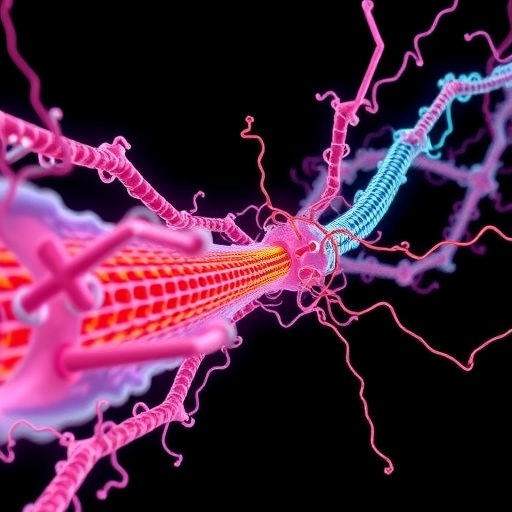
The intracellular transport system is fundamental to the proper functioning of cells, orchestrating the movement of organelles, vesicles, and other cargoes to precise locations. Central to this system is cytoplasmic dynein-1, a sophisticated motor protein that traverses microtubule networks to carry cellular cargo. While dynein’s interaction with microtubules is well documented, the exact mechanisms underlying its assembly into a processive transport complex and regulation by associated factors have remained enigmatic. A groundbreaking study published in Nature by Rao, Yang, Chai, and colleagues in 2026 sheds light on the intricate interplay between microtubules, the dynein regulator LIS1, and the dynein assembly machinery, revealing new dimensions of dynein’s dynamic regulation at the molecular level.
Dynein-1 motors do not operate in isolation but instead require a collaborative partnership with accessory proteins to achieve processivity along microtubules. The dynein–dynactin–adaptor (DDA) complex, a ternary assembly that integrates dynein with the multi-subunit dynactin complex and various coiled-coil adaptors, confers processive movement essential for efficient intracellular trafficking. Despite recognition of DDA’s importance, the molecular basis for its assembly and how microtubules and regulatory proteins modulate this process have eluded comprehensive understanding.
Employing state-of-the-art cryo-electron microscopy (cryo-EM) techniques, the study meticulously reconstructs high-resolution snapshots of dynein-dynactin assemblies on microtubules. Remarkably, the investigators reveal that an adaptor-independent dynein–dynactin complex spontaneously forms on microtubule surfaces. This complex exhibits an intrinsic stoichiometry of two dynein motors per dynactin scaffold (2:1), a configuration that emerges through the parallel alignment of dynein tails induced by microtubule binding. This intrinsic assembly highlights an unexpected efficiency and specificity in dynein’s microtubule interactions, reshaping our understanding of the initiation events in cargo transport.
The dynamic nature of adaptor proteins in modulating the DDA complex receives unprecedented clarity in this work. Adaptors, traditionally viewed as static bridging elements facilitating cargo attachment, are shown to wedge themselves into the pre-assembled microtubule-bound dynein–dynactin complex. These adaptors not only intercalate but also exchange positions within the complex. This exchange mechanism is powered by relative rotational movements between dynein and dynactin subunits, providing the complex with a remarkable conformational flexibility. Intriguingly, the dynein light-intermediate chains emerge as pivotal players assisting this adaptor ‘search’ mechanism, guiding adaptors to optimal insertion sites within the complex.
A central focus of this investigation is the role of LIS1, a dynein regulatory protein with established significance in neuronal migration and dynein function. Contrary to prior assumptions, LIS1 is found not to be essential for the efficient assembly of dynein-dynactin (or DDA) complexes on microtubules. Instead, LIS1 exerts a modulatory effect by expanding the structural conformational landscape of these assemblies on microtubule substrates. This nuanced role is clarified through cryo-EM imagery, where LIS1 is observed bridging between the p150^glued subunit of dynactin and dynein itself, stabilizing intermediate conformational states that possess low affinity for microtubules.
These bridging interactions by LIS1 stabilize distinct dynein states reminiscent of both the closed “Phi-like” conformation and the open prepowerstroke conformation, states that are crucial intermediates prior to force-generating steps of the motor. By tethering dynein molecules near microtubules in these low-affinity intermediates, LIS1 effectively primes dynein for more efficient assembly and engagement through alternative molecular pathways. This priming allows the motor complex to adopt diverse functional states, enabling rapid adaptation to cellular demands.
The implications of these findings extend far beyond basic cellular physiology. The dynamic and adaptable assembly mechanisms revealed suggest that dynein can swiftly tailor its transport properties to the intracellular milieu. Such adaptability may be critical in contexts where rapid reorganization of intracellular transport is required, including during development, mitosis, and stress responses. Furthermore, the cooperative roles of microtubules and LIS1 highlight a coordinated regulatory network fine-tuning dynein activity at multiple molecular checkpoints.
This research also provides a framework to comprehend pathologies linked to dynein dysfunction and LIS1 mutations, such as lissencephaly, a severe neurodevelopmental disorder. Understanding how LIS1 modulates dynein conformations and assembly on microtubules can inform targeted therapeutic strategies aimed at restoring effective intracellular transport in diseased cells.
Methodologically, the application of cryo-EM to capture these transient and dynamic protein assemblies sets a new standard in motor protein structural biology. The ability to visualize conformational states with such precision paves the way for elucidating similarly complex assemblages in other motor systems and their regulatory factors, providing a blueprint for future mechanistic studies in cellular biophysics.
The revelation of a 2:1 dynein to dynactin stoichiometry in the adaptor-independent complex also demands reevaluation of existing models for cargo transport. It suggests that cells may employ dynein multimers more broadly than previously appreciated to enhance transport capacity and robustness. This stoichiometric insight opens new avenues for investigating how cargo size, type, and regulatory signals influence motor complex assembly and function.
Moreover, the adaptability introduced by rotational freedom between dynein and dynactin identified here introduces a molecular basis for the regulation of motor stepping behavior and force generation. Such intrinsic flexibility may underlie the motor’s ability to navigate complex intracellular environments crowded with obstacles and variable filament landscapes.
In summary, Rao and colleagues have delivered a landmark contribution by unveiling the intricate choreography between microtubules, LIS1, dynein, and dynactin in orchestrating the assembly of the dynein transport machinery. The dynamic interplay and structural versatility they have revealed enrich our molecular understanding of intracellular transport and highlight the evolutionary sophistication of this essential cellular system.
As the cellular logistics network continues to be interrogated at higher resolution and functional depth, this study provides a pivotal cornerstone for conceptualizing motor protein regulation. Future research building on these findings will likely explore how other dynein regulators integrate into this dynamic assembly framework and how diverse cargo-specific adaptors exploit this flexibility to meet the varied transport demands across cell types.
This work not only advances the fundamental biology of molecular motors but also sets the stage for leveraging this knowledge in the development of precision therapeutics targeting motor protein dysfunction in neurodegenerative diseases, developmental disorders, and beyond.
Cite Scienmag News
Jason Bradley. (February 19, 2026). Microtubules and LIS1 Drive Dynein Assembly. Scienmag. https://scienmag.com/microtubules-and-lis1-drive-dynein-assembly/
Jason Bradley. "Microtubules and LIS1 Drive Dynein Assembly." Scienmag, 19 February 2026, https://scienmag.com/microtubules-and-lis1-drive-dynein-assembly/. Accessed 4 September 2026.
Jason Bradley. "Microtubules and LIS1 Drive Dynein Assembly." Scienmag. February 19, 2026. https://scienmag.com/microtubules-and-lis1-drive-dynein-assembly/


