


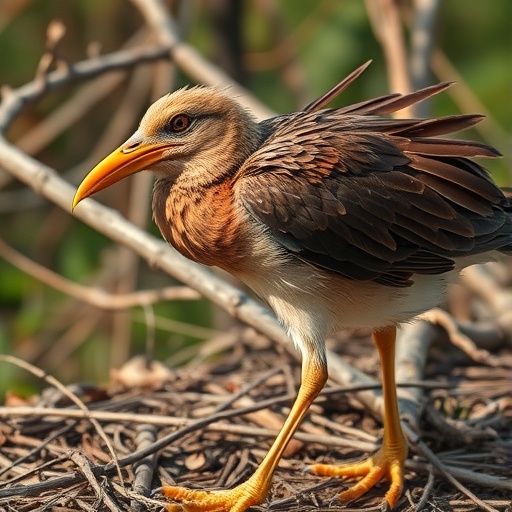
Over the past eight decades, a silent yet significant transformation has unfolded within bird populations across Africa, Latin America, and Asia. Groundbreaking research spearheaded by the Institute of Environmental Science and Technology at the Universitat Autònoma de Barcelona (ICTA-UAB) reveals a stark reduction in the average body mass of birds inhabiting these regions. This comprehensive study, published in the journal Oryx, synthesizes the collective ecological memory of Indigenous Peoples and local communities, highlighting a profound 72% decline in the mean body mass of bird species between 1940 and 2020.
The study is unprecedented in scale and methodology, engaging 1,434 adult participants across ten distinct place-based Indigenous and local communities on three continents. By collating 6,914 unique observational reports covering 283 bird species, researchers were able to juxtapose data from participants’ childhood recollections with contemporary avifauna records in their territories. This approach underscores the immense value of integrating traditional ecological knowledge with scientific inquiry to discern long-term biodiversity trends.
Outcomes from this meticulous cross-generational comparison unveil a consistent shift: Large-bodied bird species, once prominent, have diminished or vanished, replaced largely by smaller-bodied species. Quantitatively, the average body mass of reported bird species in the 1940s was above 1,500 grams. Today, this figure has plummeted to approximately 535 grams. Robust statistical modeling confirms this reduction as both significant and pervasive, capturing an alarming 72% decline across the surveyed territories.
The ecological drivers behind this phenomenon are multifaceted. Larger-bodied birds face heightened vulnerability due to intensified anthropogenic pressures—including unsustainable hunting practices, widespread habitat destruction, and rapid infrastructure expansion. Beyond environmental factors, the research also correlates these avian changes with profound socio-cultural transformations that have altered human-nature interactions, suggesting that shifting relationships between communities and their environments may exacerbate species decline.
Lead author Álvaro Fernández-Llamazares posits that the disappearance of large-bodied bird species not only signals acute ecological degradation but also reflects disruptions in cultural landscapes. These birds traditionally encompass pivotal ecological functions such as seed dispersal, predation regulation, and nutrient cycling, which underpin ecosystem resilience. Their loss threatens destabilization of local ecological networks, potentially triggering cascading impacts throughout these biomes.
Moreover, these species hold significant cultural resonance within Indigenous and local populations. Serving as identity markers, repositories of collective memory, and integral components of traditional practices, the erosion of large bird species undermines cultural heritage and intergenerational knowledge transmission. This intertwining of biodiversity and cultural integrity exemplifies the profound interplay between biological and social systems under environmental duress.
One of this research’s novel contributions is its validation of Indigenous and local knowledge systems as invaluable scientific data sources rather than supplementary anecdotes. By respecting and integrating these knowledge frameworks, the study promotes equitable dialogue between Western scientific paradigms and traditional ecological insights. Such synergy is vital to developing effective biodiversity policies and conservation strategies tailored to place-specific realities and sensitivities.
This investigation into body mass reduction among bird assemblages adds a crucial dimension to the global avian extinction crisis discourse. While scientific datasets have long documented population declines and extinctions, this work foregrounds lived human experiences as indicators of biodiversity shifts, demonstrating that environmental degradation is palpable and known to communities deeply connected to their surroundings.
The methodological rigor employed involves sophisticated statistical models that analyze large datasets derived from participant surveys alongside ecological variables. By harnessing these interdisciplinary tools, the research delineates clear temporal patterns, reinforcing the importance of harnessing both quantitative and qualitative information to capture complex ecological trends.
Further implications extend to climate change adaptation frameworks and natural resource management policies. The documented transformations in bird communities suggest broader ecosystem responses to anthropogenic climate stressors and land-use changes—highlighting a need for adaptive management practices that accommodate both ecological realities and socio-cultural contexts.
As conservation science advances, integrating Indigenous perspectives and experiential knowledge becomes increasingly paramount to addressing biodiversity loss’s root causes and crafting holistic solutions. This study exemplifies how collaborative, transdisciplinary research can illuminate hidden facets of ecological change, driving more inclusive and impactful conservation outcomes.
In conclusion, the reported diminution in average bird body mass across three continents over eighty years signals both an urgent environmental crisis and a profound cultural loss. By bridging scientific and Indigenous knowledge, this work not only documents changes in avifaunal communities but also champions a transformative approach to biodiversity stewardship rooted in respect, collaboration, and local empowerment.
News Publication Date: 10-Feb-2026
Web References: DOI: 10.1017/S0030605325102615
Cite Scienmag News
Russell Cooper. (February 18, 2026). Indigenous Peoples and Local Communities Across Three Continents Report Sharp Decline in Bird Body Mass. Scienmag. https://scienmag.com/indigenous-peoples-and-local-communities-across-three-continents-report-sharp-decline-in-bird-body-mass/
Russell Cooper. "Indigenous Peoples and Local Communities Across Three Continents Report Sharp Decline in Bird Body Mass." Scienmag, 18 February 2026, https://scienmag.com/indigenous-peoples-and-local-communities-across-three-continents-report-sharp-decline-in-bird-body-mass/. Accessed 6 September 2026.
Russell Cooper. "Indigenous Peoples and Local Communities Across Three Continents Report Sharp Decline in Bird Body Mass." Scienmag. February 18, 2026. https://scienmag.com/indigenous-peoples-and-local-communities-across-three-continents-report-sharp-decline-in-bird-body-mass/


