


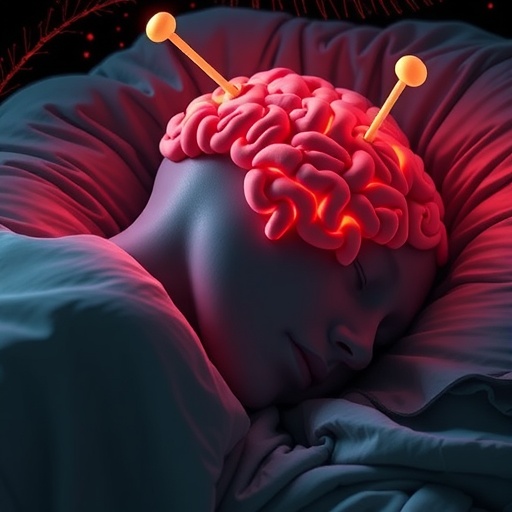
In a groundbreaking study set to revolutionize our understanding of trauma and memory consolidation, researchers have uncovered compelling evidence that sleep quality—specifically the interplay of sleep spindles and theta activity—plays a crucial protective role in mitigating intrusive memories following traumatic experiences. Published in Translational Psychiatry (2026), this research delves deep into the neurophysiological mechanisms that govern how the brain processes, stores, and ultimately shields us from the haunting persistence of trauma-related memories.
Intrusive memories are hallmark symptoms of post-traumatic stress disorder (PTSD), characterized by involuntary and distressing recollections of adverse events. They disrupt daily functioning and mental health, often resisting conventional therapeutic strategies. The novel findings from Azza, Kammerer, Ngo-Dehning, and colleagues suggest that sleep architecture holds the key to modulating these distressing symptoms, offering new hope for preventative and interventional approaches.
Central to this study is the concept of sleep spindles—brief bursts of oscillatory brain activity in the sigma frequency range (approximately 11-16 Hz) during non-rapid eye movement (NREM) sleep—and theta waves, which are slower oscillatory patterns (around 4-8 Hz) typically observed during both REM sleep and wakeful states of relaxed alertness. Both are implicated in memory consolidation processes: sleep spindles aid synaptic plasticity and the integration of new information, while theta activity is linked to emotion regulation and the processing of experiences during sleep.
By employing an analogue trauma paradigm, the researchers exposed participants to emotionally charged stimuli designed to mimic the effects of real-life trauma while recording their electrophysiological brain activity during subsequent sleep sessions. This approach enabled the team to precisely correlate fluctuations in sleep spindle density and theta power with the intensity and frequency of intrusive memories in the days following exposure.
Remarkably, participants exhibiting increased sleep spindle activity alongside elevated theta oscillations displayed significantly fewer intrusive memories. This protective neural signature suggests that enhanced sleep processing facilitates the transformation of raw, emotionally laden experiences into more stabilized, integrated memories less likely to provoke distressing intrusions.
Delving into the neurobiological substrate, sleep spindles are generated through reciprocal interactions within the thalamocortical circuitry. They are fundamental in gating sensory input and promoting offline synaptic consolidation. In trauma contexts, heightened spindle activity may thus serve as a neuroprotective mechanism, filtering excessive emotional arousal and enabling adaptive memory integration.
Theta rhythms, conversely, are thought to contribute to emotional memory modulation. During REM sleep, theta oscillations coordinate hippocampal-amygdala communication, critical for reprocessing emotional experiences and cognitive-emotional decoupling. The observed increase in theta power may therefore reflect an enhanced capacity to reframe and contextualize traumatic memories within a safer neural framework.
These findings dovetail with broader theories of sleep-dependent memory consolidation and emotional regulation, affirming the dual role of sleep in remembering and protecting the psyche from overbearing trauma-induced recall. This nuanced understanding challenges prior models that regarded sleep disturbances solely as a symptom of PTSD, reframing sleep as an active agent in resilience and mental health maintenance.
Clinically, these insights open avenues for innovative interventions targeting sleep architecture to prevent PTSD onset or reduce symptom severity. Pharmacological agents that enhance spindle activity, behavioral techniques like targeted auditory stimulation during sleep, or modulation of theta rhythms via neurofeedback could become integral components of comprehensive trauma care.
Furthermore, this research underscores the importance of early post-trauma sleep quality assessment in at-risk populations. Sleep interventions may thereby serve not only to improve restorative rest but also to fundamentally alter the trajectory of trauma-related psychopathology by harnessing intrinsic neurophysiological defense mechanisms.
While the study largely focuses on analogue trauma models, its implications resonate broadly. Trauma survivors, from accident victims to combat veterans, might benefit from tailored sleep therapies informed by electrophysiological biomarkers such as spindles and theta dynamics. Such personalized approaches could revolutionize mental health treatments, transcending traditional talk therapies by directly interfacing with the brain’s inherent recuperative processes.
Future investigations are warranted to elucidate the causal pathways linking these oscillatory phenomena with memory processing and symptom modulation. Longitudinal studies tracking sleep parameters and intrusive memory evolution in real-world trauma cohorts will be pivotal. Furthermore, expanding research into the genetic and molecular regulators of these sleep patterns could unveil new targets for therapeutic modulation.
In sum, the study by Azza and colleagues powerfully demonstrates that sleep functions not merely as a passive state but as an active, dynamic process critical to mental resilience. By illuminating the protective role of sleep spindles and theta activity against the onset of intrusive memories after trauma, this research heralds a paradigm shift in neuropsychiatry and trauma recovery—where nurturing the brain’s sleep rhythms might be as vital as confronting the memories themselves.
As awareness grows about the intricate dance between sleep oscillations and emotional memory consolidation, society may come to similarly prioritize sleep health as a cornerstone of psychological well-being, preventative care, and even therapeutic innovation. This study stands as a beacon guiding both science and clinical practice toward harnessing the profound healing power of sleep in the aftermath of trauma.
Cite Scienmag News
Glenn Wilkins. (February 18, 2026). Sleep Spindles and Theta Reduce Trauma Memories. Scienmag. https://scienmag.com/sleep-spindles-and-theta-reduce-trauma-memories/
Glenn Wilkins. "Sleep Spindles and Theta Reduce Trauma Memories." Scienmag, 18 February 2026, https://scienmag.com/sleep-spindles-and-theta-reduce-trauma-memories/. Accessed 3 September 2026.
Glenn Wilkins. "Sleep Spindles and Theta Reduce Trauma Memories." Scienmag. February 18, 2026. https://scienmag.com/sleep-spindles-and-theta-reduce-trauma-memories/


