


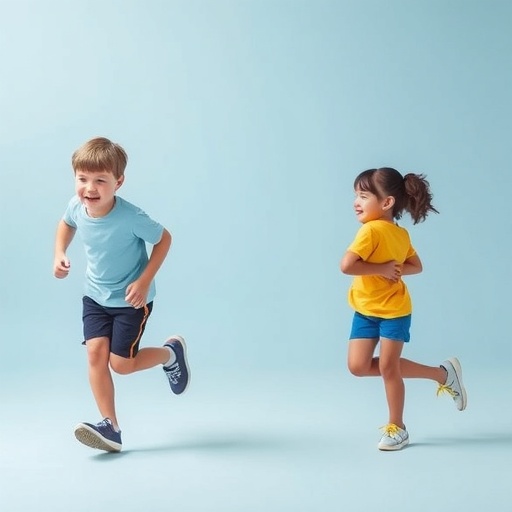
Autistic children and adolescents face substantial barriers to engaging in physical activity, a concern with far-reaching implications for their overall health and well-being. Recent research conducted by McGill University’s CHAMPS Physical Activity Lab offers new insights into strategies that could significantly boost participation rates among this population. By shifting the narrative away from challenges and deficits toward one emphasizing strengths and opportunities, this work has the potential to reshape how families, educators, and communities support autistic youth in becoming more physically active.
The study, a comprehensive scoping review, synthesized existing research on facilitators that encourage autistic children and teens to partake in physical activity. After an exhaustive screening process involving nearly 20,000 entries from major research databases, the researchers distilled their analysis down to 43 relevant studies. From these studies emerged a catalog of 95 facilitators classified into six distinct domains, encompassing individual traits, family involvement, social interactions, environmental factors, institutional support, and community or public policy initiatives.
At an individual level, the research underscores the importance of engagement through predictability and mastery. Autistic children demonstrate a higher likelihood of sustained physical activity when involved in familiar games or activities that align with their existing motor skills. This finding signals a need for programs to promote routine and skill-building rather than introducing constantly novel or complex movements that may induce anxiety or frustration.
Family dynamics emerged as a critical facilitator, reinforcing the role of caregivers in modeling and encouraging physical activity. The active involvement of family members not only provides practical support but also fosters a relational context where physical activity becomes a shared, enjoyable experience, enhancing motivation and adherence. This insight urges the design of interventions that incorporate family participation and education.
Social factors also carry substantial weight. Supportive peer relationships and positive coaching interactions can create inclusive and affirming environments that mitigate social anxiety and exclusion, common barriers for autistic youth. Coaches and peers who demonstrate patience, understanding, and adaptability contribute to a setting where autistic participants feel valued and motivated.
The physical environment plays a considerable role. Sensory-friendly spaces—characterized by controlled lighting, reduced noise levels, and predictable layouts—are essential to accommodate sensory sensitivities often experienced by autistic individuals. Safe physical environments minimize overstimulation and discomfort, allowing participants to focus on the activity and derive greater enjoyment and benefit.
Institutional support, such as the availability of after-school programs geared toward inclusive physical activity, facilitates regular access and integration into community routines. Institutions that prioritize inclusivity and adapt programming according to the diverse needs of autistic youth help bridge gaps in participation and foster a culture of acceptance and engagement.
On a broader scale, community norms and public policy provide the scaffolding within which individual and group behaviors occur. Policies that promote inclusive recreational facilities, fund specialized programming, and raise awareness about autistic needs can catalyze systemic changes necessary for sustained improvements in physical activity participation rates among autistic populations.
The authors—Mathieu Michaud, a kinesiology PhD candidate, and Professor William J. Harvey—advocate for a strengths-based framework in approaching physical activity for autistic youth. Instead of framing physical activity as an obstacle to overcome, this perspective repositions it as a vehicle for building confidence, fostering enjoyment, and cultivating social connections. This mindset shift has profound implications for designing interventions that resonate authentically with autistic children and their families.
In operationalizing their findings, the research team is currently developing intervention models where autistic teenagers autonomously select which facilitators are most meaningful to them. This personalized approach ensures that the activities offered genuinely align with participants’ preferences and strengths, thereby maximizing engagement and effectiveness.
Importantly, this body of work highlights the intersectionality of factors influencing physical activity participation. No single facilitator operates in isolation; rather, a confluence of individual skills, social support, environmental modifications, and institutional and policy backing collectively shape outcomes. Recognizing this complexity is critical for stakeholders seeking to create holistic and sustainable solutions.
The implications for practice extend to educators, coaches, program coordinators, and policymakers. Understanding what motivates and supports autistic youth enables the development of tailored, inclusive programs that not only address physical health but also contribute to social and emotional development. Embedding these insights into community practices promises to promote equity and improve quality of life for autistic children and adolescents.
As concerns about physical inactivity rise globally, especially in vulnerable populations, this research contributes a vital piece to the puzzle. It illuminates pathways toward more inclusive, enjoyable, and accessible physical activity experiences for autistic youth—potentially mitigating health disparities and promoting lifelong habits of wellness and joy.
The research was made possible with the support of the Social Sciences and Humanities Research Council of Canada and the Sport Participation Research Initiative. Its findings are published in the Journal of Autism and Developmental Disorders, signifying a critical step forward in inclusive health promotion and intervention design.
Cite Scienmag News
Courtney Benton. (February 17, 2026). New Study Reveals Strategies to Increase Physical Activity Participation Among Autistic Youth. Scienmag. https://scienmag.com/new-study-reveals-strategies-to-increase-physical-activity-participation-among-autistic-youth/
Courtney Benton. "New Study Reveals Strategies to Increase Physical Activity Participation Among Autistic Youth." Scienmag, 17 February 2026, https://scienmag.com/new-study-reveals-strategies-to-increase-physical-activity-participation-among-autistic-youth/. Accessed 4 September 2026.
Courtney Benton. "New Study Reveals Strategies to Increase Physical Activity Participation Among Autistic Youth." Scienmag. February 17, 2026. https://scienmag.com/new-study-reveals-strategies-to-increase-physical-activity-participation-among-autistic-youth/


