

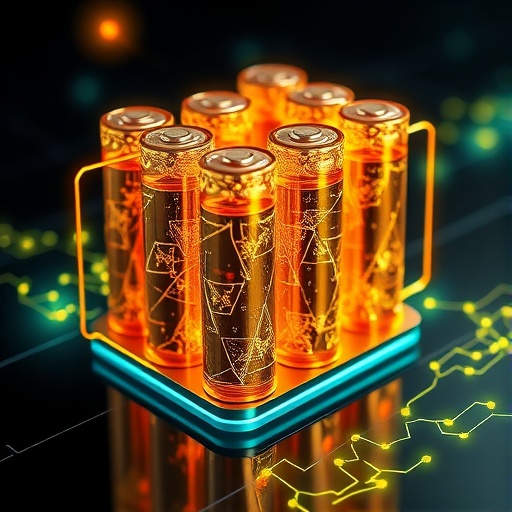
As global energy demands intensify with the rapid electrification of industries and daily life, researchers at the University of Sharjah have unveiled a comprehensive survey that underscores the imminent need for revolutionary advancements in battery technology. The current lithium-ion battery systems, despite their dominance and marked improvements over the past decades, are nearing the theoretical limits of their performance capabilities, necessitating urgent innovation in materials, safety features, and sustainability.
Lithium-ion batteries (LIBs) have become the backbone of modern energy storage solutions due to their high energy density, rechargeability, and durability. These qualities have rendered them indispensable in applications ranging from portable electronics to electric vehicles and grid-level energy storage. However, as society demands larger capacity and faster charging times, inherent challenges such as thermal runaway and safety risks escalate. These limitations, coupled with the finite availability of crucial raw materials like lithium, highlight the urgency to explore and develop next-generation battery chemistries.
The University of Sharjah’s study projects a remarkable surge in battery production — from present levels to an astonishing 6700 GWh annually by 2031. This growth trajectory underscores the global shift toward electric transportation, which may represent nearly 89% of total battery applications by the decade’s end. However, this optimistic forecast is tempered by concerns about resource scarcity: lithium demand alone could surge to nearly 100 times current production levels by 2050, while essential base metals like copper, aluminum, and nickel might experience five- to sixfold increases, pressing the boundaries of raw material availability and environmental sustainability.
Acknowledging these challenges, the research advocates for diversifying beyond lithium-ion systems to embrace alternative metal-based batteries. Technologies such as lithium-sulfur (Li–S), sodium-ion, zinc, and aluminum-based batteries are highlighted for their potential to alleviate resource constraints and open novel functionality avenues. Notably, lithium-sulfur batteries boast significantly higher theoretical energy densities and lower material costs than conventional lithium-ion chemistries, positioning them as leading candidates for future mobility and stationary energy storage solutions.
Despite their promise, these emerging chemistries face formidable commercialization barriers. Issues including dendrite formation, shuttle effects, and limited cycle life impede widespread deployment, necessitating breakthroughs in molecular engineering and cell design. Lithium-metal batteries, which replace traditional graphite anodes with lithium metal, offer a near-doubling of energy density (up to 440 Wh/kg), yet their practical application is hindered by dendritic growth causing short circuits and heightened flammability due to their reactive nature with electrolytes.
In addressing safety concerns, the study highlights innovations in electrolyte formulations as crucial. Localized high-concentration electrolytes and solid-state electrolytes, for instance, show promise in suppressing dendrite growth and enhancing thermal stability. Solid-state designs, by replacing flammable liquid electrolytes with solid materials, could dramatically reduce the risk of thermal runaway and extend battery lifespans, paving the way for safer, higher-energy batteries.
Beyond lithium-based options, lithium-air batteries emerge as an exciting frontier, offering theoretical energy densities exceeding 3500 Wh/kg by leveraging oxygen from ambient air. However, engineering such systems to function reliably outside controlled oxygen environments remains a substantial technical hurdle. Concurrently, flow batteries, especially redox flow variants, provide scalable solutions for large-scale renewable energy storage due to their decoupled energy and power capacities, although their lower energy densities limit their use in mobile applications.
The path to truly transformative batteries also involves integrating advanced functionalities at the materials level. The emergence of self-healing polymer electrolytes exemplifies this trend. These materials possess intrinsic capabilities to autonomously repair internal micro-damage incurred during charge-discharge cycles, thereby significantly mitigating capacity fade and extending operational lifespan. Incorporating such smart polymers into battery architectures promises substantial improvements in reliability and safety, addressing longstanding concerns about degradation and failure modes.
Moreover, micro-batteries tailored for Internet of Things (IoT) devices and healthcare monitoring represent a growing niche requiring ultra-compact, flexible, and reliable power sources. The development of biodegradable batteries further targets specialized medical applications where biocompatibility and environmental considerations are paramount. These developments point to a future where battery technology is not only more powerful but also more intimately integrated with diverse technologies and lifestyles.
Strategically, the European BATTERY 2030+ initiative serves as a critical roadmap guiding the evolution of these concepts into commercially viable products. Its chemistry-neutral approach transcends singular material dependencies, promoting interdisciplinary research that harnesses artificial intelligence and machine learning to accelerate the discovery of new materials, interfaces, and manufacturing processes. The adoption of predictive modeling tools promises to overcome the traditional slow-paced trial-and-error methodologies, speeding up innovations in design and deployment.
The intersection of advanced materials science, computational modeling, and sustainable design encapsulates the next frontier for battery technology. While lithium-ion batteries continue to serve as the workhorses of today’s clean energy transition, the convergence of metal-sulfur, metal-air, sodium-ion, and advanced flow battery technologies marks a pivotal shift. Complementary advances in electrolyte chemistry, self-healing properties, and biodegradable components further enrich this landscape, aligning with global aspirations for safety, affordability, and environmental stewardship.
In conclusion, the University of Sharjah’s study paints a compelling vision of an energy storage future that balances the pressing needs of safety, performance, and sustainability. The diversification away from conventional lithium-ion frameworks toward a more versatile, AI-driven, and materials-savvy approach promises to meet the exploding demands of electrification across multiple sectors. The integration of intelligent, adaptive materials alongside scalable manufacturing and recycling technologies heralds a transformative era for batteries—one that will underpin the global shift to carbon-neutral energy systems and smarter, safer electric devices.
News Publication Date:
1-Jan-2026
Web References:
http://dx.doi.org/10.1016/B978-0-443-29875-2.00015-2
Keywords
Energy resources
Cite this news
SCIENMAG. (February 13, 2026). Revolutionary Next-Generation Batteries Set to Transform the Future of Energy Storage. https://scienmag.com/revolutionary-next-generation-batteries-set-to-transform-the-future-of-energy-storage/
SCIENMAG. "Revolutionary Next-Generation Batteries Set to Transform the Future of Energy Storage." Scienmag, 13 February 2026, https://scienmag.com/revolutionary-next-generation-batteries-set-to-transform-the-future-of-energy-storage/. Accessed 28 August 2026.
SCIENMAG. "Revolutionary Next-Generation Batteries Set to Transform the Future of Energy Storage." Scienmag. February 13, 2026. https://scienmag.com/revolutionary-next-generation-batteries-set-to-transform-the-future-of-energy-storage/


