


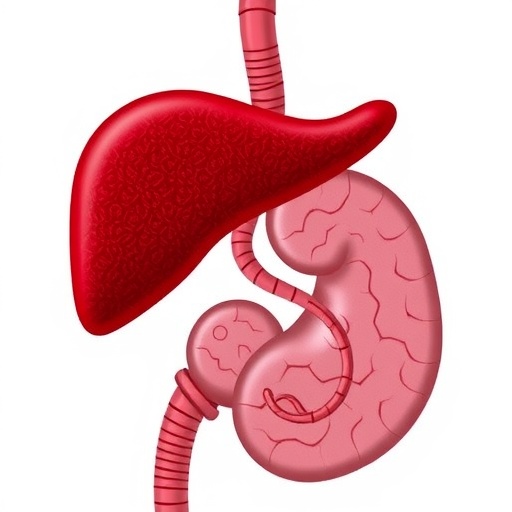
The liver stands as a central metabolic organ, intricately balancing energy homeostasis during periods of nutrient scarcity such as fasting. One hallmark adaptation during fasting is the mobilization and processing of lipid reserves, which often manifests as transient hepatic steatosis, a temporary accumulation of fat within hepatic cells. Understanding the molecular regulators that orchestrate this dynamic lipid flux is crucial to comprehending metabolic health and disease. Recent groundbreaking research spearheaded by Prof. Zhongbing Lu and colleagues at the Chinese Academy of Sciences has elucidated a previously unrecognized role of the enzyme dimethylarginine dimethylaminohydrolase 1 (DDAH1) in modulating hepatic lipid metabolism specifically under fasting conditions, revealing a complex nutrient-dependent regulatory axis.
DDAH1 has been traditionally understood for its critical function in metabolizing asymmetric dimethylarginine (ADMA), an endogenous inhibitor of nitric oxide synthase, and has been implicated in protective roles against non-alcoholic fatty liver disease (NAFLD) under states of nutrient excess, such as obesity. However, the physiological relevance of DDAH1 during physiologic stress states like fasting remained unexplored until now. The recent study published in Life Metabolism fundamentally challenges the existing paradigm by demonstrating that the hepatocyte-specific ablation of DDAH1 in mice yields paradoxical effects during fasting—attenuating rather than exacerbating hepatic steatosis.
In this rigorous experimental study, mice genetically engineered with hepatocyte-specific deletion of Ddah1 (termed Ddah1HKO) were subjected to fasting. Contrary to expectations based on prior obesity models, these Ddah1-deficient animals exhibited a striking reduction in fasting-induced lipid accumulation in the liver. Conversely, overexpressing DDAH1 in hepatic tissue intensified lipid deposition when fasting. These dual phenotypes pointed towards a complex, nutrient-state-dependent regulatory role for DDAH1 in liver lipid metabolism.
Comprehensive lipidomic profiling of hepatic tissue from fasted Ddah1HKO mice revealed a global diminution across most lipid species, reflecting a substantial remodeling of lipid metabolic pathways. This was coupled with transcriptomic data demonstrating downregulation of key genes essential for fatty acid β-oxidation and ketogenesis, processes intimately linked to energy production during nutrient deprivation. Such findings indicate that DDAH1 modulates not just lipid accumulation but also the fundamental metabolic machinery governing lipid catabolism.
Delving into the mechanistic underpinnings, the research identifies fatty acid-binding protein 1 (FABP1) as a critical downstream effector in this regulatory network. FABP1, highly expressed in hepatocytes, facilitates intracellular trafficking and uptake of fatty acids, thereby controlling the availability of substrates for lipid droplet formation and oxidation. Notably, deficiency of DDAH1 markedly diminished FABP1 protein levels, specifically during fasting, leading to impaired fatty acid uptake. Restoration of FABP1 expression in Ddah1HKO livers fully reversed the anti-steatotic phenotype, unequivocally positioning FABP1 as a pivotal mediator of DDAH1’s effects.
Adding another layer of complexity, DDAH1 was found to intricately regulate the energy-sensing AMPK/mTOR signaling cascade, a master pathway governing cellular energy balance and autophagy. AMPK activation promotes autophagy, a catabolic process essential for clearing lipid droplets and maintaining lipid homeostasis. Remarkably, loss of DDAH1 activated AMPK, augmenting autophagic flux as evidenced by increased LC3-II/LC3-I ratios and decreased p62 protein levels, hallmarks of enhanced autophagy. Pharmacological inhibition of AMPK with Compound C reversed enhanced autophagy and abrogated the protective effect against steatosis in Ddah1HKO mice, indicating a causal role of AMPK activation downstream of DDAH1 deficiency.
Further intricacy emerges as FABP1 overexpression itself suppresses AMPK/mTOR signaling, suggesting a hierarchical interplay wherein FABP1 regulates AMPK activity. This positions FABP1 upstream in this regulatory axis, thereby linking fatty acid uptake machinery to cellular energy sensing and autophagic degradation pathways. Collectively, these data reveal a novel DDAH1-FABP1-AMPK/mTOR-autophagy axis that dynamically governs fasting-induced hepatic lipid metabolism by tuning the balance between lipid uptake and degradation.
This dual mechanism elucidates how DDAH1 promotes hepatic lipid accumulation: by increasing fatty acid uptake through upregulating FABP1 and concurrently suppressing autophagic lipid droplet clearance via inhibition of AMPK/mTOR-mediated autophagy. This sophisticated regulatory framework underscores the complexity and context-dependence of metabolic regulators. It also reconciles previous findings showing DDAH1’s protective role in nutrient excess with its pro-steatotic function during fasting, highlighting the enzyme’s versatile actions tailored to metabolic states.
These insights bear significant clinical implications, as dysregulated lipid metabolism underlies prevalent metabolic liver diseases including NAFLD and steatohepatitis. Targeting the DDAH1-centered axis may present innovative therapeutic avenues to modulate hepatic lipid homeostasis, especially in conditions where fasting or nutrient fluctuations influence disease progression. Furthermore, the study advances our fundamental understanding of how hepatocytes integrate nutrient signals to finely coordinate lipid flux, a cornerstone for maintaining systemic metabolic health.
In summary, the research breaks new ground by revealing that hepatocyte-specific DDAH1 acts as a nutrient-dependent switch controlling fasting-induced hepatic lipid metabolism through orchestrating FABP1 expression and AMPK/mTOR-mediated autophagy. This discovery adds a novel dimension to the metabolic complexity and paves the way for future exploration of context-specific metabolic interventions in liver disease.
News Publication Date: 4-Dec-2025
Web References: 10.1093/lifemeta/loaf042
Cite Scienmag News
Daisy Hatcher. (February 13, 2026). DDAH1 Regulates Liver Lipid Metabolism During Fasting States. Scienmag. https://scienmag.com/ddah1-regulates-liver-lipid-metabolism-during-fasting-states/
Daisy Hatcher. "DDAH1 Regulates Liver Lipid Metabolism During Fasting States." Scienmag, 13 February 2026, https://scienmag.com/ddah1-regulates-liver-lipid-metabolism-during-fasting-states/. Accessed 3 September 2026.
Daisy Hatcher. "DDAH1 Regulates Liver Lipid Metabolism During Fasting States." Scienmag. February 13, 2026. https://scienmag.com/ddah1-regulates-liver-lipid-metabolism-during-fasting-states/


